- Home
- Jyotirlinga Tours
It is a widely known fact that Lord Shiva had manifested himself in the form of a Shiva Linga during the night of Aridra Nakshatra.
Read More - Spiritual Tours
- Travel Guide
- Contact us
- Enquiry Now

It is a widely known fact that Lord Shiva had manifested himself in the form of a Shiva Linga during the night of Aridra Nakshatra.
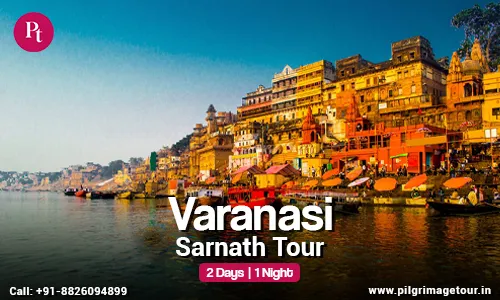
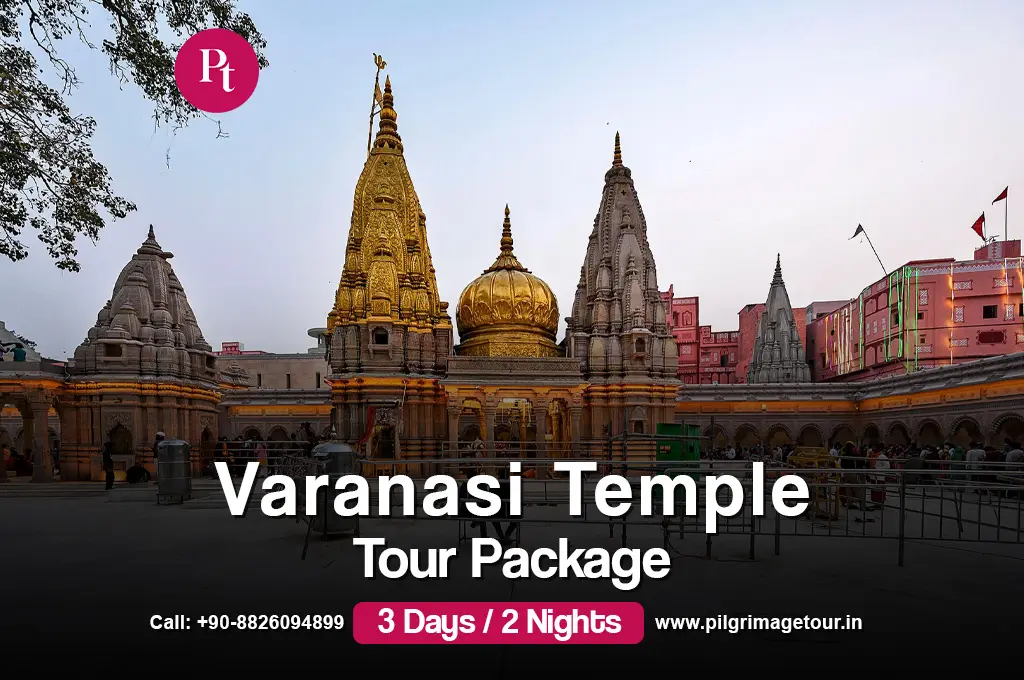
Read MoreThe holy city of Varanasi has always been the ‘Moksha Dwar’ for pilgrims who visit the city with the hope of getting salvation from the cycle of birth and rebirth. Our Varanasi temple tour package runs for 2 nights and 3 days. It covers Kashi Vishwanath, Annapurna, Sankat Mochan, Tulsi Manas Mandir, Bharat Mata Mandir and BHU, with the evening Ganga Aarti, a sunrise boat ride and a half-day trip to Sarnath.
Hotel stay, airport or station transfers and sightseeing by vehicle are part of the package. Temple tickets are not: Sugam Darshan and the Mangala Aarti are booked separately on the temple trust’s website.
The city is well known for its Kashi Vishwanath temple. The Ghats of Varanasi, Banarasi paan and the famous Banarasi silk are some of the other things Varanasi is known for across the country.
Varanasi, also called Kashi and Banaras, is one of the oldest continuously inhabited cities in the world and one of the seven sacred cities (Sapta Puri) of Hinduism. The Kashi Vishwanath Dham Corridor, inaugurated on 13 December 2021, now gives pilgrims a direct open-air walkway from the Jyotirlinga to the Ganga. More than 25 crore devotees visited the Dham between December 2021 and October 2025, according to All India Radio.
| Detail | What to expect |
|---|---|
| Duration | 2 nights / 3 days |
| Starts and ends | Varanasi airport or railway station |
| Temples covered | Kashi Vishwanath, Annapurna, Sankat Mochan, Tulsi Manas Mandir, Bharat Mata Mandir, BHU |
| Experiences | Evening Ganga Aarti, sunrise boat ride on the Ganga, Sarnath half-day trip |
| Included | Hotel stay, breakfast and dinner, transfers, sightseeing by vehicle, Day 2 boat ride |
| Not included | Sugam Darshan, Mangala Aarti and other temple tickets; Sarnath entry tickets |
| Best time | October to March |
The Kashi Vishwanath Temple is open 365 days a year. It opens at 2:30 AM for Mangala Aarti ticket holders, and General Darshan starts at 4:00 AM. The temple closes at about 11:00 PM, after Shayan Aarti. General Darshan is free; only the optional services below are ticketed.
| Session | Timing | Note |
|---|---|---|
| Temple Opens | 2:30 AM | Entry only for Mangala Aarti ticket holders, till 3:00 AM |
| Mangala Aarti | 3:00 to 4:00 AM | Ticket ₹500 |
| General Darshan | 4:00 to 11:00 AM | Free; mornings are usually the busiest |
| Darshan paused | 11:00 AM to 12:20 PM | During Bhog Aarti rituals |
| Bhog Aarti | 11:15 AM to 12:20 PM | Ticket ₹300 |
| Afternoon Darshan | 12:20 to 7:00 PM | Lighter crowds on weekday afternoons |
| Sapta Rishi / Sandhya Aarti | 7:00 to 8:15 PM | Ticket ₹300 |
| Night Darshan | 8:30 to 9:00 PM | Free |
| Shringaar Aarti | 9:00 to 10:15 PM | Ticket ₹300 |
| Shayan Aarti | 10:30 to 11:00 PM | Free; temple closes after it |
These timings and prices are from the trust’s daily schedule, checked on 13 October 2026. The trust’s rituals page gives slightly different windows for Bhog Aarti (11:30 AM to 12:00 PM) and Sapta Rishi Aarti (7:00 to 8:30 PM). Festival days run on special schedules, so check before you go.
Sugam Darshan is the paid Darshan facility of the Shri Kashi Vishwanath Temple Trust. You get a separate queue, though on crowded days you can still wait.
Note: General Darshan (free entry) remains the most common mode of Darshan. Sugam Darshan does not grant exclusive access to the sanctum; it simply provides a dedicated, shorter queue.
The Mangala Aarti costs ₹500 per person on normal days, and children under 12 go free. The trust sells two kinds of tickets, and each uses a different gate.
| Booking type | Booking opens | Dates you can book | Entry gate | Seating |
|---|---|---|---|---|
| General | 11:00 AM daily | Next 30 days | Gate No. 1 (Dhundhiraj Ganesh) | South LED area |
| Tatkal | 11:00 AM daily | Next day only | Gate 4B | North LED area |
Entry for both is between 2:30 and 3:00 AM. Carry a hard copy of the ticket and an ID card; the date cannot be changed. When we checked the booking page on 13 October 2026, General tickets were sold out for every date up to 11 November, while Tatkal showed 100 seats on most days. If your trip is less than a month away, plan on Tatkal and book it at 11 AM the day before.
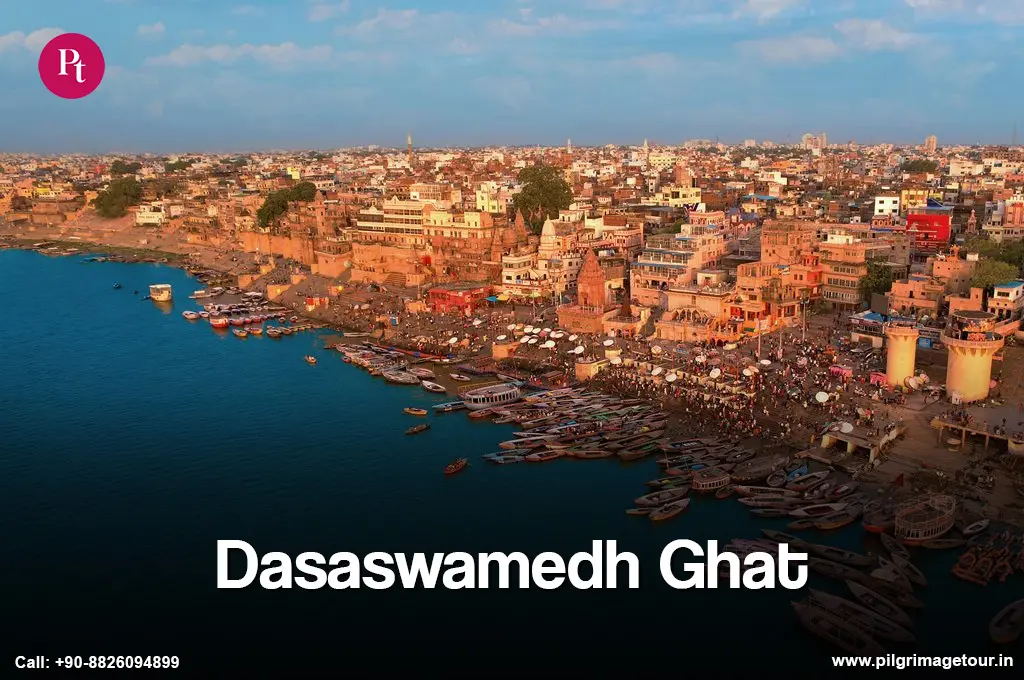
The Ganga Aarti at Dashashwamedh Ghat is the best-known evening ritual in Varanasi. A team of priests performs it in unison every evening at sunset, with large brass lamps, conch shells, flower offerings and Vedic chants on the steps of the Ghat. It lasts about 45 minutes.
Sarnath, about 10 km from Varanasi city centre, is one of the four most sacred sites of Buddhism. It was here that Siddhartha Gautama, after attaining enlightenment at Bodh Gaya, delivered his first sermon (Dhammacakkappavattana Sutta) to five disciples, setting the Wheel of Dharma in motion.
Entry and timings: the museum is open 9:00 AM to 5:00 PM and closed on Fridays. Entry is ₹5, and children under 15 go free, as per the ASI Sarnath Museum. The excavated site is open from sunrise to sunset and has its own ASI ticket.
Dedicated to Lord Shiva as the ‘Lord of the Universe’, the Kashi Vishwanath Jyotirlinga is the most sacred temple in Varanasi and one of the 12 Jyotirlingas. The present temple was rebuilt in 1780 by Maharani Ahilyabai Holkar of Indore after the earlier temple was demolished. In 1835, Maharaja Ranjit Singh of Punjab donated about one tonne of gold for plating the shikhara. The Kashi Vishwanath Corridor (2021) connects the temple complex directly to the Ganga Ghats.
Dedicated to Lord Hanuman, Sankat Mochan Temple is one of the most visited temples in Varanasi. ‘Sankat Mochan’ means ‘the reliever of troubles’; devotees pray here for help in times of difficulty. According to tradition, the temple was founded by the saint-poet Tulsidas, author of the Ramcharitmanas. It is particularly crowded on Tuesdays and Saturdays.
Located close to the Kashi Vishwanath Temple, the Annapurna Temple is dedicated to Goddess Annapurna, the deity of food and nourishment. Devotees believe Varanasi is sustained by her grace. Her golden idol is displayed only for about five days a year, from Dhanteras to Annakut around Diwali.
Tulsi Manas Mandir, in the Durgakund area near Durga Kund Temple and Sankat Mochan, depicts scenes from the Ramcharitmanas, the devotional epic composed by Goswami Tulsidas. Its white marble walls are inscribed with verses from the Ramcharitmanas. The temple was completed in 1964.
A unique temple dedicated not to a deity but to Mother India (Bharat Mata). The temple houses a relief map of undivided India carved in marble. It was inaugurated by Mahatma Gandhi in 1936 and stands on the campus of Mahatma Gandhi Kashi Vidyapith.
The most famous and busiest Ghat in Varanasi; the name refers to the ten horses sacrificed in a yajna. According to tradition, Lord Brahma performed this yajna here. It is the main site of the evening Ganga Aarti. The Ghat is busy from pre-dawn to late night, as boats line up from early morning and devotees from across India come for a holy dip in the Ganga.
The southernmost major Ghat in Varanasi, at the confluence of the Assi river and the Ganga. The morning Aarti here, part of Subah-e-Banaras, is held around sunrise. The Ghat is popular for boat rides and sunrise photography, and many Varanasi heritage walks begin here.
Manikarnika is Varanasi’s primary cremation Ghat and one of the most sacred sites in Hinduism. Hindu tradition holds that being cremated at Manikarnika provides moksha, liberation from the cycle of birth and rebirth. The sacred fire here is said to have burned continuously for thousands of years.
If you have extra time, these can be added to the tour on request:
For pilgrims planning on their own, the government’s Kashi Darshan portal (Darshan.kashi.gov.in) sells passes for the Kashi Darshan Bus Seva and guided heritage walks. The bus runs a morning trip with Mangala Aarti and Subah-e-Banaras, and an evening trip with the Ganga Aarti and VIP Darshan at Kashi Vishwanath. The heritage walks are Divya Kashi and Assi Kashi in the early morning, and Old Kashi in the evening. Prices and timings are shown on the portal at booking. These are shared group services; our package adds the hotel, transfers, Sarnath and a tour representative.
Lal Bahadur Shastri International Airport, Varanasi (VNS), at Babatpur, receives flights from Delhi, Mumbai, Bengaluru, Kolkata, Hyderabad, Chennai and other cities. The airport is about 25 km from the city centre, as per Incredible India; the drive to your hotel may be longer or shorter.
Varanasi Junction (BSB) and Pt. Deen Dayal Upadhyaya Junction (DDU, formerly Mughalsarai, about 18 km from Varanasi) are the main railheads, and Banaras station (BSBS) also handles long-distance trains.
Varanasi is about 820 km from Delhi (12 to 14 hours via the Yamuna, Agra-Lucknow and Purvanchal expressways) and about 125 km from Prayagraj (2.5 to 3 hours on NH-19). The UP State Road Transport Corporation (UPSRTC) and private buses connect Varanasi to Prayagraj, Lucknow and other UP cities. Many pilgrims combine both cities on our Kashi Prayag tour.
There is no formal dress code at Kashi Vishwanath, but modest, traditional clothes are recommended. Footwear you can slip off easily saves time at the gates.
 10+ Places You’ll See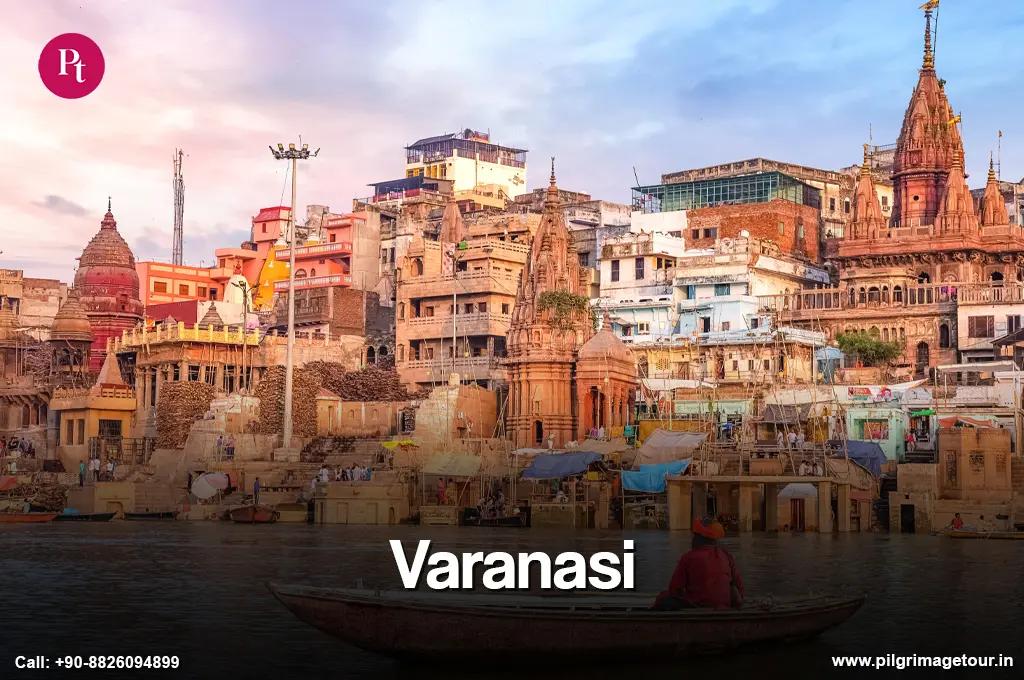

Varanasi Temple Tour Package 2026

3 Days / 2 Nights

Daily Breakfast

Private AC Vehicle

Varanasi
Varanasi
Varanasi → Sarnath → Varanasi
Upon your arrival at the nearest railway station/airport you'll be greeted by our tour representative who then escorts you to hotel. Check into hotel and later proceed to witness the spell-bounding Ganga Aarti at the Dasaswamedh Ghat. You could also take a boat ride on the Ganges while visualizing the Ganga Aarti. Back to hotel for dinner and night stay.
Early morning, we embark on a mystical boat ride on River Ganges. It is indeed an out-of-the-world experience as you sail past the Ghats and catch glimpses of people taking their holy dip, offering Surya Namaskar, chanting mantras and so on. Later on we proceed to visit the famous Kashi Vishwanath temple followed by other temples such as Sankat Mochan temple, Annapurna temple, Manas Mandir, Bharat Mata Mandir, BHU. Back to hotel for breakfast.
Later during the day we make an excursion to Sarnath - the historical place where Lord Buddha is believed to have delivered his first sermon. The places we visit at Sarnath include Chaukhandi Stupa, Dhamekh Stupa, Buddha temples, and the archaeological museum.
We will be back to Varanasi by evening and later can make use of the evening for some shopping. Back to hotel for dinner and night stay.
Post breakfast you are transferred to railway station/airport where our representative sees you off and you depart for your onward journey back home.
Ans: The tour covers Kashi Vishwanath Jyotirlinga, Annapurna Temple, Sankat Mochan Temple, Tulsi Manas Mandir, Bharat Mata Mandir and a visit to BHU, followed by a Sarnath excursion covering Dhamek Stupa, Chaukhandi Stupa and the Sarnath Archaeological Museum.
Ans: Two full days are enough for the main temples, the Ganga Aarti, a boat ride and Sarnath. Day 2 is long, and the morning queue at Kashi Vishwanath decides how relaxed it feels.
Ans: Yes, if they can manage some walking. Vehicles stop near Godowlia, so the last stretch to Kashi Vishwanath is on foot through narrow lanes, and the Ghats have steep steps. There is no age limit for Darshan.
Ans: The temple opens at 2:30 AM for Mangala Aarti ticket holders, and free General Darshan starts at 4:00 AM. Regular Darshan pauses from 11:00 AM to 12:20 PM for Bhog Aarti. The day’s Aartis are Mangala (3 AM), Bhog (11:15 AM), Sapta Rishi/Sandhya (7 PM), Shringaar (9 PM) and Shayan (10:30 PM), and the temple closes at about 11:00 PM.
Ans: Book online at shrikashivishwanath.org or on the temple trust’s app. It costs ₹250 per person and runs from 6 AM to 6 PM, except during Aartis and some festival days. Carry a printed copy of the booking.
Ans: Buy the ₹500 ticket on the temple trust’s website. General booking covers the next 30 days and uses Gate No. 1; Tatkal opens at 11 AM for the next day and uses Gate 4B. Both enter between 2:30 and 3:00 AM with a printed ticket and ID.
Ans: No. Mobile phones, cameras and electronic gadgets are not allowed inside. Use the lockers near the gates or leave them at the hotel.
Ans: Every evening at sunset, around 5:45 to 6:00 PM from October to March and around 6:45 to 7:00 PM from April to September. Arrive 30 to 45 minutes early for a spot on the steps, or watch from a boat.
Ans: Yes. The Kashi Vishwanath Dham Corridor, inaugurated on 13 December 2021, is open to all pilgrims free of charge. It connects the Jyotirlinga directly to the Ganga Ghats.
Ans: October to March. Dev Deepawali falls on Tuesday, 24 November 2026, when the Ghats are lit with lakhs of Diyas. Mahashivratri (February/March) is the most auspicious time for Shiva Darshan but extremely crowded, and Shravan (July to August) is spiritually significant. From April to June, avoid Ghat activities at midday.
Ans: About 10 km from the city centre. Our tour covers Sarnath on Day 2 as a half-day excursion.
Need help choosing your trip or booking?
We are here for you.