- Home
- Jyotirlinga Tours
It is a widely known fact that Lord Shiva had manifested himself in the form of a Shiva Linga during the night of Aridra Nakshatra.
Read More - Spiritual Tours
- Travel Guide
- Contact us
- Enquiry Now

It is a widely known fact that Lord Shiva had manifested himself in the form of a Shiva Linga during the night of Aridra Nakshatra.
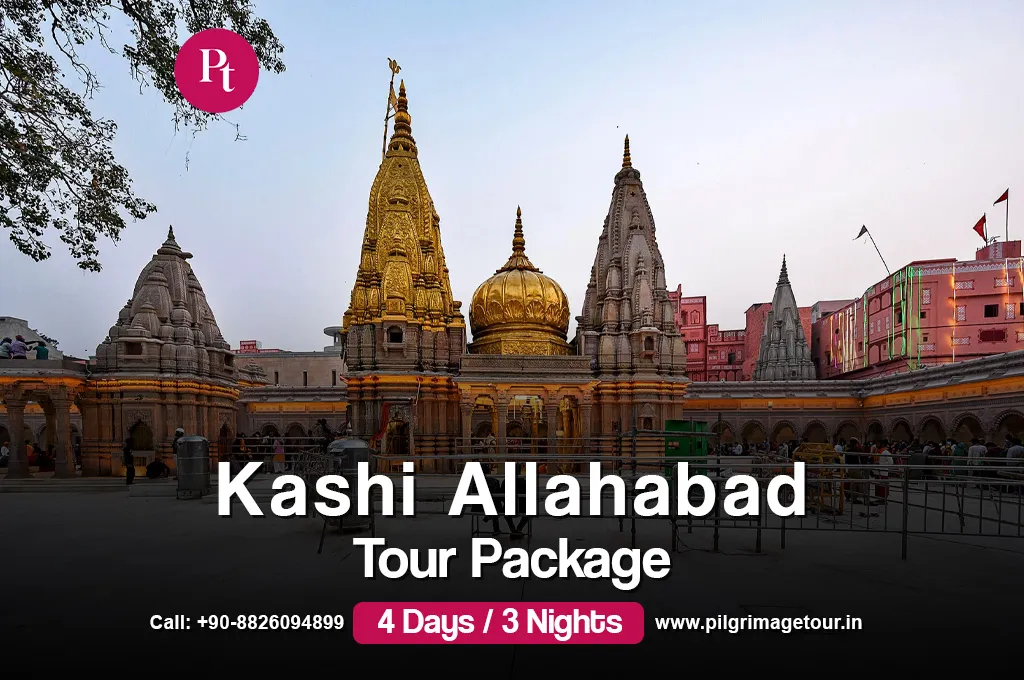
Read MoreThe Kashi Prayagraj tour package combines two of India's most sacred cities in a single, deeply spiritual 4-day journey from Delhi. In Varanasi — one of the world's oldest continuously inhabited cities — you visit the Kashi Vishwanath Temple, one of the 12 Jyotirlingas of Lord Shiva, and experience the famous Ganga Aarti at Dashashwamedh Ghat. In Prayagraj, you stand at Triveni Sangam — the sacred confluence of the Ganga, Yamuna, and the mythical Saraswati — one of the holiest spots in Hinduism.
This tour covers the full spiritual arc of Kashi and Prayag: temple Darshan, Ghat walks, a sunrise boat ride on the Ganga, Buddhist heritage at Sarnath, and the profound experience of bathing at the Sangam. For pilgrims and travellers alike, few itineraries in North India offer this breadth in just 4 days.
| Tour Name | Kashi Prayagraj Tour Package |
| Duration | 4 Days / 3 Nights |
| Starting & Ending Point | Delhi (Airport / Railway Station) |
| Destinations Covered | Delhi → Varanasi → Prayagraj → Delhi |
| Distance: Delhi–Varanasi | ~820 km by train (approx. 8–9 hrs Rajdhani/Shatabdi) |
| Distance: Varanasi–Prayagraj | ~120 km | Approx. 2.5 Hours by road |
| Meals | Daily Breakfast |
| Transport | Train (Delhi–Varanasi) + Private AC Cab (local sightseeing) |
Kashi (Varanasi) and Prayagraj are spiritually inseparable in Hindu tradition. Kashi is the city where Lord Shiva himself is believed to reside — the Kashi Vishwanath Jyotirlinga is said to grant moksha to those who die here. Prayagraj is Teertha Raj — the king of all pilgrimage sites — where the Ganga, Yamuna, and mythical Saraswati meet at Triveni Sangam.
Combining both in one tour means you complete two of the most significant acts in a Hindu pilgrim's life: Darshan at a Jyotirlinga and a holy dip at the Sangam. The distance between the two cities is only 120 km, making this one of North India's most naturally paired pilgrimage routes.
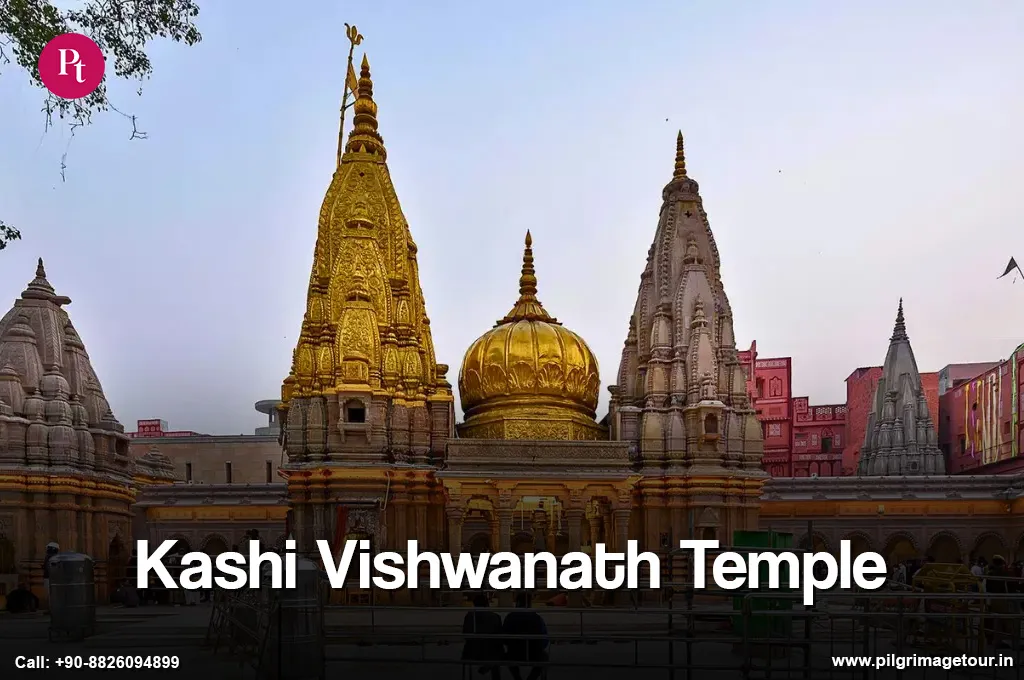
The Kashi Vishwanath Temple is the most sacred Jyotirlinga in Varanasi and one of the 12 Jyotirlingas of Lord Shiva across India. According to the Skanda Purana, Kashi rests on the tip of Lord Shiva's trident — those who die in Kashi are believed to receive the Tarak Mantra from Shiva himself, granting moksha. The present temple structure was rebuilt in 1780 by Maharani Ahilyabai Holkar of Indore after the original was demolished in 1669.
| Temple Opening Hours | 2:30 AM — 11:00 PM daily |
| Darshan Break | 11:00 AM — 12:30 PM (closed for ritual) |
| General Darshan | Free — no entry charge |
| Sugam (VIP) Darshan | INR 250 per person (subject to revision; verify at official portal) |
| Sparsh Darshan (touch Shivlinga) | Approx. INR 300 with puja — limited slots, book in advance |
| Official Booking Portal | shrikashivishwanath.org |
| Daily Aartis (5 total) | Mangala 3 AM | Bhog 11:15 AM | Sandhya 7 PM | Shringaar 9 PM | Shayan 10:30 PM |
| Corridor Entry | FREE — walk in from any Ghat along the Ganga riverfront |
| 2026 Update | AI chatbot 'Ask Nandi' live at shrikashivishwanath.org for crowd and darshan queries |
Dress code: Modest attire expected. No shorts or sleeveless tops. Mobile phones are not permitted inside the sanctum — deposit at the locker counter near the entrance (INR 20–30). Leather items not allowed inside. Sugam Darshan entry gate: Gate No. 4, near Godowlia / Shapuri Mall area.
The Ganga Aarti at Dashashwamedh Ghat is Varanasi's most famous daily ritual — a synchronized ceremony performed by 7 priests every evening, each wielding a large tiered diya in unison while Vedic chants, conch shells, and bells fill the air. The ceremony lasts approximately 45 minutes and draws thousands of pilgrims and visitors each day.
| Aarti Timing — Winter (Oct–Feb) | Approx. 5:45–6:00 PM (sunset-dependent) |
| Aarti Timing — Summer (Mar–Jun) | Approx. 7:00–7:30 PM |
| Duration | Approx. 45 minutes |
| Ghat-side seating | Free — arrive 30–40 minutes early for a good spot |
| Boat darshan (shared) | INR 150–300 per person; negotiate on the Ghat |
| Boat darshan (private rowboat) | INR 1,500–2,200 (sunset/sunrise premium applies) |
| Subah-e-Banaras (sunrise aarti) | Assi Ghat, daily at sunrise — quieter and deeply atmospheric |
Boat Tip: For the Ganga Aarti, boats anchor mid-river facing the Ghat. From the water you can see all 7 priests simultaneously — a more panoramic view than from the crowded steps. Agree on full price (ceremony duration + wait + return) before boarding. Most boatmen now accept UPI/PhonePe.
Triveni Sangam is the confluence of three rivers: the Ganga, Yamuna, and the mythical Saraswati (believed to flow invisibly underground). The confluence is visible — the brown Ganga water and the blue-green Yamuna water can be seen meeting at the point, making the boundary of the two rivers one of the most photographed natural phenomena in India.
Prayagraj was renamed from Allahabad in October 2018. The Maha Kumbh Mela 2025 — held here from January 13 to February 26, 2025 — was the largest peaceful gathering in human history, drawing an estimated 40–45 crore pilgrims. In 2026, the annual Magh Mela continues at Triveni Sangam, keeping the sacred energy of the Kumbh alive for those who missed it.
Prayagraj Fort (also called Akbar's Fort or Allahabad Fort) was built by Mughal Emperor Akbar in 1583 on the banks of the Yamuna, near the Sangam. It is a monument of national importance as per the Archaeological Survey of India. However, it is currently under Indian Army control and most of the fort interior is not open to the general public.
What visitors can access:
Important: Do not plan the Prayagraj Fort as a full-day attraction. Much of it is off-limits. The Patalpuri Temple and Akshayavat visit typically takes 45–60 minutes. Combine with the nearby Bade Hanuman Mandir (a temple with a large reclining Hanuman idol on the Sangam bank) for a complete Sangam area experience.
Sarnath is one of the four holiest sites in Buddhism and a UNESCO World Heritage candidate. Located 13 km from Varanasi, it is where Siddhartha Gautama — having attained enlightenment at Bodh Gaya — gave his first sermon to five disciples in approximately 528 BCE. This event, called the Dhammacakkappavattana Sutta, is considered the founding moment of Buddhism as a religion.
Museum timings: 10 AM to 5 PM. Closed on Fridays. Entry: INR 20 (Indians), INR 300 (foreigners). Photography is permitted in the grounds but not inside the museum. The entire Sarnath complex can be explored in 2–3 hours.
All packages start from Delhi and include hotel accommodation (double sharing), daily breakfast, private AC cab for local sightseeing, driver allowances, fuel, parking fees, and state taxes. Train or flight fares Delhi–Varanasi and Prayagraj–Delhi are not included. 5% GST is charged additionally on the base package price.
| Package | Hotel Category | Price/Person | Original Price | You Save |
|---|---|---|---|---|
| Standard | 2-Star Hotels | INR 7,500 | INR 8,000 | INR 500 |
| Deluxe | 3-Star Hotels | INR 10,000 | INR 13,000 | INR 3,000 |
| Luxury | 4-Star Hotels | INR 14,000 | INR 17,000 | INR 3,000 |
Prices are per person on double-sharing basis. 5% GST charged additionally. Train/flight fares excluded. Rates not valid during Christmas, New Year, Diwali, Durga Puja, Dev Deepawali, or Mahashivratri.
| Season | Months | What to Expect |
|---|---|---|
| Winter (Best) | Oct – Feb | 15–25°C. Best weather. Ganga Aarti and sunrise boat ride at their atmospheric best. Recommended for all ages. |
| Dev Deepawali | Nov (Kartik Purnima) | Most spectacular Ganga Aarti of the year. Thousands of diyas lit on all Ghats. Book 2–3 months early. |
| Mahashivratri | Feb/Mar | Most auspicious for Kashi Vishwanath darshan. Massive crowds. Book far in advance. |
| Summer | Mar – May | 30–42°C. Manageable early morning; hot afternoons. Start all activities before 9 AM. |
| Monsoon | Jun – Sep | Heavy rainfall. Ghats can flood. Not recommended for first-time visitors. |
Multiple trains connect Delhi to Varanasi. For this tour, overnight sleeper trains are recommended for Day 1 travel — they depart Delhi in the evening and arrive in Varanasi early morning, giving you a full day in the city. Popular options: Kashi Express, Mahanagari Express, and Shivganga Express (12–13 hrs). The Vande Bharat Express (train no. 22436, 8 hrs) is the fastest but is a daytime train — departs Delhi 6 AM, reaches Varanasi 2 PM; suitable for same-day travel if Ganga Aarti same evening is not a priority. Book on IRCTC 60–90 days in advance during peak season.
Lal Bahadur Shastri International Airport (VNS), Varanasi, has direct flights from Delhi (approx. 1.5 hrs), Mumbai, Bangalore, and Kolkata. Flight time from Delhi: ~1.5 hours.
From Varanasi to Prayagraj (120 km), private cab takes approximately 2.5 hours via NH19. Multiple trains also connect the two cities in 1.5–2 hours. The tour package cab handles this transfer on Day 3.
Prayagraj Junction is well-connected to Delhi by the Prayagraj Express, Duronto Express, and Humsafar Express (7–9 hrs). Book tickets well in advance, especially for January–February (Magh Mela season).
 10+ Places You'll See

Kashi Prayagraj Tour Package

4 Days / 3 Nights

Breakfast Included

Train + AC Cab

Delhi
Delhi
Delhi → Varanasi → Prayagraj → Delhi
You depart Delhi by overnight sleeper train (recommended: depart evening, arrive Varanasi early morning) or early morning flight. Overnight trains take 12–13 hours and are ideal for Day 1 so you arrive fresh. Upon arrival at Varanasi Junction or Lal Bahadur Shastri International Airport, a tour representative transfers you to the hotel. Rest, freshen up, and proceed to Dashashwamedh Ghat in the evening for the Ganga Aarti.
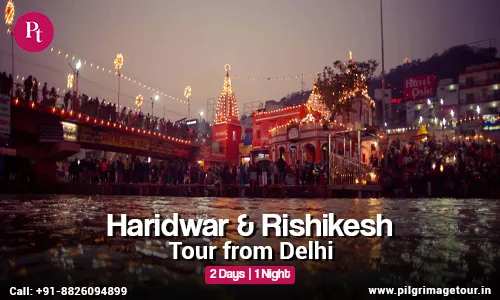
The Ganga Aarti is performed by 7 priests simultaneously at Dashashwamedh Ghat every evening, each holding a large tiered brass diya, in a choreographed ritual accompanied by conch shells, bells, and Vedic chants. In winter, the aarti begins around 6:00 PM; in summer, around 7:00–7:30 PM. Arrive 30–40 minutes early for a good viewing spot on the Ghat steps. Boat darshan from the river is equally powerful — shared boats at INR 150–300 per person.
Tip: If arriving by train, Varanasi Junction is the main railway station. For Dashashwamedh Ghat, ask the cab to drop you at Godowlia Chowk — the Ghat is a 5-minute walk through the lanes. No vehicles can enter the Ghat area directly.
Dinner and overnight stay in Varanasi.
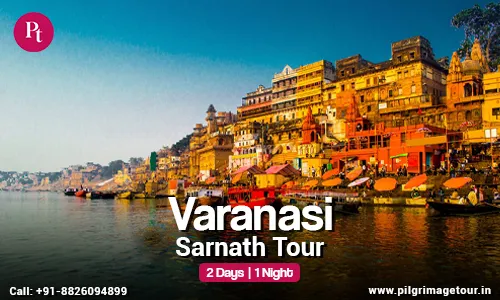
Rise before dawn for a sunrise boat ride on the Ganga — the signature experience of any Varanasi visit. As the sun rises over the eastern bank, the western Ghats come alive with pilgrims bathing, priests performing puja, and the city waking up in a way that has remained largely unchanged for centuries. The boat ride costs INR 1,500–2,000 for a private rowboat (negotiate on the Ghat) and typically lasts 45–60 minutes.
After breakfast, proceed to the Kashi Vishwanath Temple — the primary Jyotirlinga of Lord Shiva in Varanasi, believed to have been the site of Shiva's first self-manifestation as a pillar of infinite light. The temple is one of the 12 Jyotirlingas and draws over 1 lakh pilgrims on regular days.
2026 Update — Kashi Vishwanath Dham Corridor: Inaugurated on December 13, 2021, the Corridor is a 5-lakh sq ft complex directly connecting the temple to the Ganga riverfront. Entry is completely FREE. Walk in from any Ghat along the riverfront. The Corridor has transformed the darshan experience — no more narrow gully entry. Sugam (VIP) Darshan: INR 250/person; book at shrikashivishwanath.org. General darshan is free. Darshan closes from 11 AM to 12:30 PM daily for ritual. Temple opens at 2:30 AM; closes at 11 PM.
Post temple darshan, explore Varanasi's famous Ghats on foot: Manikarnika Ghat (the sacred cremation Ghat, where funeral pyres burn continuously), Assi Ghat (the southern anchor of the Kashi pilgrimage circuit), Kedar Ghat, and Hanuman Ghat. Each Ghat has its own ritual significance — walking the Ghat sequence is itself a meditative experience.
In the afternoon, visit Ramnagar Fort — an 18th-century sandstone fort on the eastern bank of the Ganga, built by Maharaja Balwant Singh in 1750. The fort is built in Mughal architectural style with carved balconies, open courtyards, and pavilions. It houses a museum (Saraswati Bhawan) with vintage cars, royal costumes, and manuscripts. Open 10 AM to 5 PM; museum entry INR 20–80.
Evening: attend the Ganga Aarti at Dashashwamedh Ghat (Day 2 offers more time to explore beyond Day 1 arrival). Return to hotel for dinner and overnight stay.
Morning visit to Sarnath — one of Buddhism's four holiest sites, located 13 km from Varanasi. It was here that the Buddha gave his first sermon, the Dhammacakkappavattana Sutta (Setting the Wheel of Dharma in Motion), to his first five disciples after attaining enlightenment at Bodh Gaya. Sarnath is part of the Buddhist Pilgrimage Circuit and draws visitors from across Asia.
Key sites at Sarnath:
Also included: New Vishwanath Temple (BHU Birla Mandir) — Note: this is a Hindu temple on the Banaras Hindu University campus, dedicated to Lord Vishwanath. It is a modern temple (1966) inspired by the original Kashi Vishwanath architecture. It is not the same as the Kashi Vishwanath Jyotirlinga — a common point of confusion.
After lunch, depart for Prayagraj — approximately 120 km, 2.5 hours by road. Check into hotel. Evening at leisure to explore Prayagraj's old city or rest.
Note on Durga Temple (Varanasi): The Durga Temple near BHU is also included in many itineraries. It is a 18th-century temple dedicated to Goddess Durga, known for its red exterior and the resident monkeys. Entry is free; open all days.
Dinner and overnight stay in Prayagraj.
Morning visit to Triveni Sangam — the sacred confluence of the Ganga and Yamuna rivers, where the mythical Saraswati is believed to join invisibly beneath the surface. Taking a dip at the Sangam is considered one of the most spiritually potent acts in Hindu tradition, said to cleanse the sins of many lifetimes. The actual confluence point is 4–5 km from the Ghat and accessible only by boat.
Sangam Boat: Shared boats to the Sangam cost approximately INR 200–300 per person for the round trip. The boatman waits at the confluence point while you bathe and perform rituals. Carry a change of clothes. Negotiation is standard — agree on the full price (including wait time) before boarding.
After the Sangam dip, visit Prayagraj Fort (Akbar's Fort) — a massive Mughal fort built by Emperor Akbar in 1583 on the banks of the Yamuna, near the Sangam. Important visitor note: the fort is under Indian Army control and most of the interior is not open to the public. The accessible areas include the Patalpuri Temple (an ancient underground temple dedicated to Lord Vishnu), the Akshayavat (the immortal banyan tree, believed to be indestructible), and the Ashoka Pillar (a 10.6-metre polished sandstone pillar dating to 232 BCE). The impressive outer walls and river-facing ramparts can be viewed from outside. Timings for accessible sections: typically 10 AM to 5 PM, subject to Army clearance.
Post sightseeing, afternoon transfer to Prayagraj Junction railway station or Prayagraj Airport (IXD) for your return journey to Delhi. Tour concludes here.
Train Recommendation for Return: Prayagraj to Delhi is well-connected by trains including the Prayagraj Express, Duronto Express, and Humsafar Express. Journey time approximately 7–9 hours. Book 2–3 weeks in advance during peak season.
| City | Standard / Similar | Deluxe / Similar | Luxury / Similar | No of Nights |
|---|---|---|---|---|
| Varanasi | Hotel Temple View | Hotel Ganges Grand | Hotel Radisson Varanasi | 02 |
| Prayagraj | Hotel Prayag Inn | Hotel Kanha Shyam | Hotel Clarks Inn | 01 |
The Kashi Prayagraj tour package is a 4-day pilgrimage from Delhi covering Varanasi (Kashi) and Prayagraj. In Varanasi, you visit the Kashi Vishwanath Jyotirlinga, attend the Ganga Aarti at Dashashwamedh Ghat, and explore the sacred Ghats. In Prayagraj, you visit Triveni Sangam — the confluence of the Ganga, Yamuna, and Saraswati. Package starts from INR 7,500 per person plus 5% GST.
Included: hotel accommodation (double sharing), daily breakfast, private AC cab for all local sightseeing, driver allowances, fuel, parking, and state taxes. Excluded: train/flight fares Delhi–Varanasi and Prayagraj–Delhi, 5% GST, temple darshan fees, boat charges, and personal expenses.
Yes. General darshan at Kashi Vishwanath Temple is free. Sugam (VIP) Darshan costs INR 250 per person and offers a dedicated faster queue — book at shrikashivishwanath.org. Sparsh Darshan (touching the Shivlinga) is approximately INR 300 with puja services, available in limited slots.
The Ganga Aarti at Dashashwamedh Ghat happens every evening. In winter (October–February), it begins around 5:45–6:00 PM. In summer, around 7:00–7:30 PM. Arrive 30–40 minutes early for Ghat-side seating. Boat darshan offers a panoramic view — available at INR 150–300 for shared boats.
Prayagraj Fort is under Indian Army control and most of the interior is not open to the public. Visitors can access the Patalpuri Temple (an ancient underground Vishnu temple), the Akshayavat (immortal banyan tree), and the Ashoka Pillar (232 BCE). The impressive outer walls and riverfront are also viewable from outside and from the Sangam boat.
Triveni Sangam in Prayagraj is the confluence of three rivers: Ganga, Yamuna, and the mythical Saraswati (invisible underground). It is considered one of the holiest spots in Hinduism — a dip here is believed to wash away the sins of many lifetimes. It is the site of the Kumbh Mela, held every 12 years.
Sarnath, 13 km from Varanasi, is where the Buddha gave his first sermon after attaining enlightenment. It is one of Buddhism's four holiest sites. Key attractions include the Dhamek Stupa (500 CE), the Sarnath Museum (housing the original Lion Capital of Ashoka — India's national emblem), the Chaukhandi Stupa, and Mulagandhakuti Vihara. Closed on Fridays.
The Kashi Vishwanath Dham Corridor is a 5-lakh sq ft development project inaugurated on December 13, 2021, connecting the Kashi Vishwanath Temple directly to the Ganga riverfront. It has transformed the darshan experience — entry is now free from any Ghat-side entrance. The corridor features promenades, galleries, temples, and a direct view of the Ganga from inside the complex.
October to February is the ideal time — weather is pleasant (15–25°C), the Ganga Aarti is atmospheric in the cool evening air, and the sunrise boat ride is at its best. Dev Deepawali (Kartik Purnima, November) is the most visually spectacular night of the year — thousands of diyas are lit on all Ghats. Avoid monsoon (June–September) for a first visit.
Yes, with some planning. The sunrise boat ride and Ganga Aarti are accessible to all ages. The Kashi Vishwanath Corridor now has ramps and accessible pathways. Varanasi's Ghat lanes involve uneven steps — a walking stick is helpful for elderly visitors. The Sugam Darshan option at Kashi Vishwanath avoids long queues and is recommended for senior visitors.
Yes. Pilgrimage Tour India offers customised itineraries based on departure city, group size, hotel category, and budget. Contact via phone/WhatsApp (+91-8826094899) or email (info@pilgrimagetour.in).
Need help choosing your trip or booking?
We are here for you.