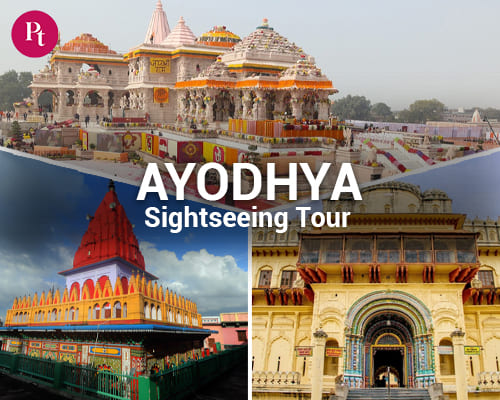
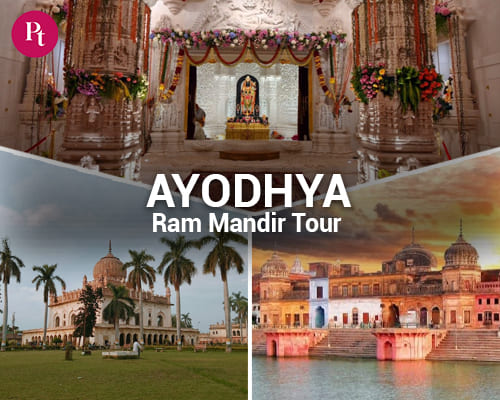
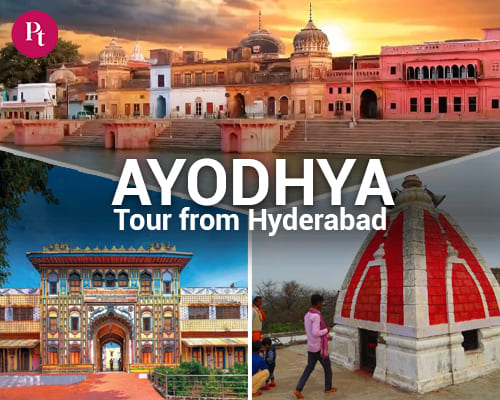
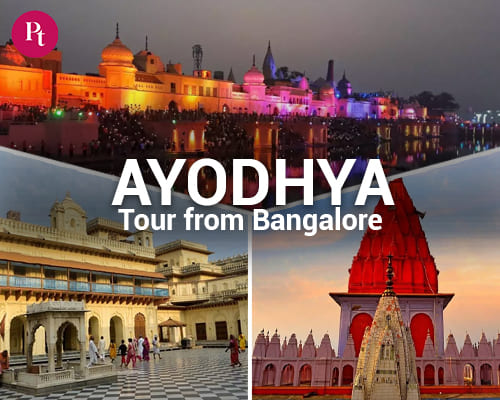
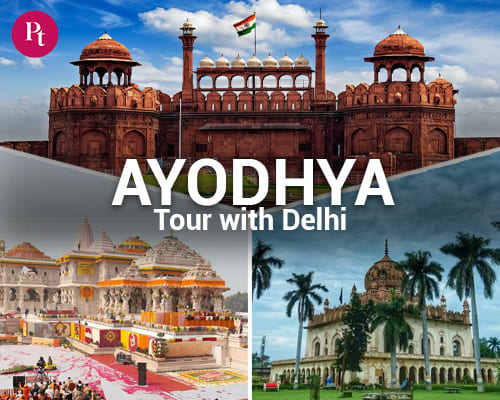
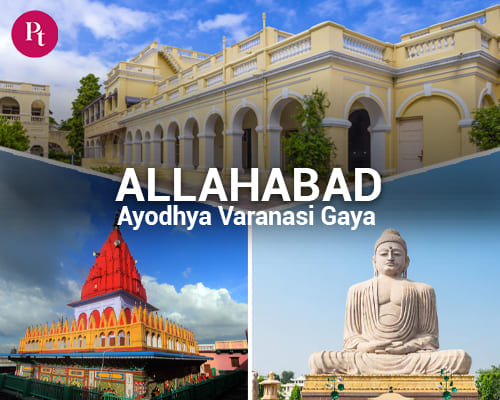
Our Ayodhya tour packages introduce you to the centuries-old history and traditions of this city. Each package covers Ram Mandir Darshan, Hanuman Garhi and Kanak Bhawan, with a private vehicle arranged for you and a hotel stay on the overnight tours. You can pick a one day Ayodhya tour, a 2 day trip, or a longer circuit with Prayagraj and Varanasi. Prices start at ₹8,900 per person.
Ayodhya stands on the banks of the Saryu River and was the capital of the ancient Kosala kingdom. It is believed to be the birthplace of Lord Ram and the centre stage of events in the Ramayana. Jain tradition also recognises it as the place where five Tirthankaras were born. The main attraction is the Ram Janmabhoomi temple in the Ramkot area, where Lord Ram is said to have been born. Besides temples, Ayodhya has the Gulab Bari, the tomb of Nawab Shuja-ud-Daula, set in a rose garden.
With our Ayodhya packages, you visit religious sites with a long history. A few of them are Ram Janmabhoomi, Hanuman Garhi Temple, Nageshwarnath Temple, Sita Ki Rasoi and Dashrath Bhawan.
The Ayodhya pilgrimage tour also leaves time for the local culture. You can try the traditional food, join a festival if your dates match, and buy handicrafts and souvenirs.
Popular Ayodhya Tour Packages
These are starting prices per person, and 5% GST is extra. The Hyderabad and Bangalore packages do not include flight or train fare. The Ayodhya Ram Mandir Tour starts and ends in Ayodhya.
Which Ayodhya Tour Package Suits You
- One day in hand: the Ayodhya Sightseeing Tour covers Ram Janmabhoomi, Hanuman Garhi, Kanak Bhawan and the Ram Katha Museum.
- First visit or a family trip: the 2 day Ayodhya Ram Mandir Tour adds Dashrath Mahal, the evening Saryu Aarti and a second Darshan the next morning.
- From Hyderabad or Bangalore: the 3 day packages cover the hotel, transfers and sightseeing in Ayodhya. You book your own flight or train.
- Delhi with Ayodhya: the 5 day package spends two days on Delhi sightseeing before the journey to Ayodhya.
- Ayodhya with Varanasi and Prayagraj: the 5 day circuit adds Triveni Sangam, Kashi Vishwanath and the Ganga Aarti, and ends at Gaya.
- A longer circuit: the 8 day tour adds Chitrakoot, Lucknow and Naimisharanya.
Itineraries can be adjusted to your dates and group. Tell us at the time of enquiry if you are travelling with senior citizens or a large family, because that changes the vehicle and the pace we plan.
What Is Included in Our Ayodhya Packages
Inclusions differ a little from one package to another, so check the page of the tour you choose. Most of them cover the following.
- Included: on overnight tours, hotel stay on double sharing basis with hotel taxes and daily breakfast. On every tour, a private vehicle for sightseeing as per the itinerary, with fuel, parking, state taxes and driver allowance.
- Not included: 5% GST, flight and train fares, entrance fees, boat rides, lunch and dinner unless the package page lists them, travel insurance and personal expenses.
- What changes the price: the number of people sharing the vehicle, the vehicle type, the hotel category and your travel dates. Rates are higher during Ram Navami, Diwali and long weekends.
- Vehicle and hotel on the 2 day tour: 1 to 3 travellers get a sedan, 4 to 6 an Innova Crysta and 7 to 12 a Tempo Traveller. The hotel is Raghav Inn (standard), Ramprastha (deluxe) or Ramayana (luxury), or a similar property if these are full.
- Children on the 2 day tour: a child below 5 years travels free without a seat or bed. Children aged 5 to 12 are charged a child rate.
Ram Mandir Darshan 2026: Timings, Sugam Darshan & Booking
The Shri Ram Janmabhoomi Mandir was inaugurated on 22 January 2024 and is now one of India's major pilgrimage destinations. Built in Nagara style using pink sandstone from Bansi Paharpur, Rajasthan, the temple is 380 feet long, 250 feet wide and 161 feet high, with three floors, 392 pillars and 44 doors, as per the temple Trust. The complex spans 70 acres and includes smaller shrines and a Pilgrims Facility Centre. The main idol is Ram Lalla, the child form of Lord Ram, enshrined in the Garbhagriha. The Ram Darbar, which shows Lord Ram with Sita Mata, Lakshman, Bharat, Shatrughan and Lord Hanuman, was consecrated on the first floor on 5 June 2025 and opened to devotees on 14 June 2025. It is open for Darshan daily alongside the Ram Lalla sanctum, and since August 2026 it needs no separate pass.
Ram Mandir Darshan Timings 2026
| Session | Timing | Note |
|---|
| Mangala Aarti | 4:00 AM | Aarti pass required |
| Shringar Aarti | 6:00 AM | Aarti pass required |
| General Darshan (morning) | 7:00 AM to 12:00 PM | Free entry |
| Midday break | 12:00 PM to 1:00 PM | Darshan paused for Bhog |
| General Darshan (afternoon and evening) | 1:00 PM to 9:00 PM | Free entry |
| Shayan Aarti | 10:00 PM | Last aarti of the day, pass required |
General Darshan is free of charge. These timings are published by the Shri Ram Janmbhoomi Teerth Kshetra Trust and apply from 18 April 2026. The Trust revises them by season, so verify the current schedule at srjbtkshetra.org before your visit. Queues are usually longest in the late morning, when the heat is also at its strongest.
Sugam Darshan and General Darshan (Free Online Passes) 2026
The Trust issues free online passes in two categories, Sugam Darshan and General Darshan, introduced in April 2026. A Sugam Darshan pass covers Ram Lalla, the Ram Parivar and the six temples within the Parkota. A General Darshan pass covers Ram Lalla, the Ram Parivar, the Sheshavatar Temple, the Sapta Mandir and Kuber Tila. One pass admits up to five devotees. Neither pass skips the queue entirely. What you get is a fixed time slot, and that matters most during Ram Navami, Diwali, Kartik Purnima and long weekends.
Book at: online.srjbtkshetra.org, the official portal of the Shri Ram Janmbhoomi Teerth Kshetra Trust. Darshan and aarti passes are free. The Trust does not charge any fee.
Booking window: Slots are limited, so book as soon as your dates are fixed. Aarti passes are fewer and go quickly.
Arrive early: Reach the temple 30 to 45 minutes before your slot for security checks and pass verification. Carry the original ID proof used for the booking.
Phones and photography: Mobile phones, cameras and other electronic devices are not allowed inside the Ram Mandir. Deposit them at the locker counter before security, or leave them at your hotel.
Note on "VIP Darshan": The Shri Ram Janmbhoomi Teerth Kshetra Trust does not offer any paid VIP Darshan. Some travel agencies use the term "VIP Darshan" for their assisted queue management services. These are private arrangements, not official temple offerings. The only official booking is the free pass on the Trust portal. Be cautious of any website or agent charging fees for "VIP Ram Mandir Darshan."
Best Time to Visit Ayodhya
The best time to visit Ayodhya is between October and March, when the weather is pleasantly cool. During these months, temperatures range from about 10°C to 30°C, which is comfortable for sightseeing and for the festivals. Summer afternoons from April to June can cross 40°C, and the monsoon months are humid.
Key festivals and dates for Ayodhya:
- Ram Navami (15 April 2027): The most important festival at Ram Mandir, celebrated on Chaitra Shukla Navami, Lord Ram's birthday. In 2026 it fell on 26 March. Footfall is very heavy, so book accommodation 2 to 3 months in advance.
- Deepotsav (6 November 2026) and Diwali (8 November 2026): The city celebrates the return of Lord Ram from Lanka. On Deepotsav, the Saryu Ghats are lit with lakhs of diyas. Book 2 to 3 months in advance.
- Kartik Purnima (24 November 2026): A major bathing festival on the Saryu River. Thousands take a holy dip at Ram Ki Paidi on this day.
- Vivah Panchami (14 December 2026): Celebrates the marriage of Lord Ram and Sita Mata. Kanak Bhawan temple is the central site for this festival.
How to Reach Ayodhya
Ayodhya is in Uttar Pradesh and is connected by air, rail and road. Here's how you can reach Ayodhya:
By Air
- Nearest Airport: Maharishi Valmiki International Airport, approximately 10 km from Ayodhya Dham.
- From the Airport to Ayodhya: You can take a taxi or other local transport from the airport. If you do not get a direct flight, fly to Lucknow and continue by road.
By Train
- Railway Stations: Ayodhya has two stations. Ayodhya Dham Junction is the main one, with good connectivity to Delhi, Lucknow and Varanasi. Ayodhya Cantt, earlier called Faizabad Junction, is the second. Check which station is printed on your ticket.
- Popular Trains: From Delhi, the Vande Bharat Express (22426) runs from Anand Vihar Terminal to Ayodhya Cantt in about 8 hours 20 minutes, six days a week. The Ayodhya Express (14206) is the overnight option. Check running days on IRCTC before you book.
By Road
- From Nearby Cities: Ayodhya is well connected by road. You can drive or take a bus from nearby cities like Lucknow (about 130 km), Varanasi (about 200 km) or Kanpur (about 225 km).
- Road Networks: National Highway 27 (NH 27) connects Ayodhya with Lucknow and Gorakhpur, and state highways link it to other towns.
Approximate distances to Ayodhya:
| From | By Road | By Rail |
|---|
| Lucknow | About 130 km | 135 km |
| Gorakhpur | About 140 km | 164 km |
| Prayagraj | About 160 km | 157 km |
| Varanasi | About 200 km | 191 km |
| Delhi | About 636 km | 628 km (Anand Vihar to Ayodhya Cantt) |
By Bus
- State Transport Buses: Uttar Pradesh State Road Transport Corporation (UPSRTC) and private operators run ordinary and luxury buses to Ayodhya from various cities.
Local Transport
- Auto Rickshaws and Taxis: Once you're in Ayodhya, e-rickshaws, auto rickshaws and taxis are available for getting around the city. Private vehicles are not allowed close to Ram Janmabhoomi, so the last stretch is on foot or by e-rickshaw.
Things to Do in Ayodhya
Here are the places to visit and things you can do in this ancient city:
- Visit the Ram Mandir: The Ram Mandir, dedicated to Lord Ram, is the main attraction. Inaugurated on 22 January 2024, it is built in the Nagara style with Rajasthani pink sandstone. The Ram Darbar on the first floor is also open to devotees.
- Explore Hanuman Garhi: A prominent temple dedicated to Lord Hanuman, about 1 km from Ayodhya railway station. The temple stands on a hill, is reached by 76 steps and gives wide views of the city. By custom, pilgrims visit it before Ram Mandir.
- Discover the Kanak Bhawan: This temple, north-east of Ram Janmabhoomi, is known for its architecture and its association with Lord Ram and Sita. It is believed to have been gifted to Sita by Kaikeyi.
- Visit the Saryu River: Take a walk along the Ghats of the Saryu River. The river holds great significance in Hindu belief, and you can watch the local rituals here. Evening aarti at Ram Ki Paidi Ghat is a highlight.
- See the Treta Ke Thakur Temple: This temple is believed to mark the place where Lord Ram performed his Ashwamedha Yagna. It opens to devotees only once a year, on Kartik Shukla Ekadashi in November. On other days you can see it from outside.
- Visit the Tulsi Smarak Bhavan: This memorial is dedicated to the poet-saint Tulsidas, who wrote the Ramcharitmanas. The complex includes a museum and exhibits about his life and works.
- Walk Through Ramkot: Ramkot is the old fortified area of Ayodhya, traditionally associated with Lord Ram's kingdom in Hindu belief. It houses the Ram Janmabhoomi complex and several important temples.
- Visit the Ram Katha Museum: Learn about the history and cultural heritage of Ayodhya through its artefacts and exhibits.
- Visit the Nageshwarnath Temple: An important temple of Lord Shiva at Ram Ki Paidi, said to have been established by Kush, the son of Lord Ram. It is busiest on Shivratri.
- Explore the Dashrath Mahal: Dashrath Mahal, also known as Dashrath Bhawan or Badi Jagah, is a palace-temple complex in the Ramkot area, traditionally believed to stand on the site of King Dashrath's royal residence. Today it is an active temple housing idols of Lord Ram, Sita, Lakshman, Bharat and Shatrughan. Entry is free. It opens in the morning and again from 4:00 PM, and stays closed in the afternoon. It is close to Hanuman Garhi.
- Take a Boat Ride on the Saryu River: A boat ride at sunrise or sunset is a quiet way to see the Ghats. Boat charges are paid separately.
- Visit Guptar Ghat: A quieter Ghat on the Saryu, linked by tradition to Lord Ram's jal samadhi.
Travel Tips for Ayodhya
- Plan Ahead: Prioritise key sites and keep some free time between temples.
- Reserve Accommodation: Book hotels or guesthouses in advance, especially during Ram Navami, Diwali and long weekends.
- Check Weather: Pack appropriate clothing for the season. Winters (December to February) can be cold at night.
- Dress Modestly: Wear modest attire, especially in temples. Avoid shorts and sleeveless tops inside temple complexes.
- Stay Hydrated: Drink plenty of water, especially in summer, and eat at reputable places.
- Carry Cash: Have some cash on hand. ATMs are available, but smaller vendors near the Ghats may not accept cards.
- Ram Mandir Pass: Book your free Darshan or aarti pass online before you travel. Same-day slots are hard to get in peak season.
- Ram Ki Paidi Ghat: Attend the evening aarti here on the Saryu riverbank. Arrive 30 minutes before sunset for a good spot.
- Saryu boat ride: Available early in the morning and in the evening. The river is at its quietest before sunrise.
Ayodhya Suggested 2-Day Itinerary
Day 1 (Morning): Arrive in Ayodhya and check in at the hotel.
Day 1 (Forenoon): Visit Hanuman Garhi, then go for Ram Mandir Darshan. Arrive before 10 AM if you can, or go after 1:00 PM when Darshan resumes.
Day 1 (Afternoon): Dashrath Mahal and Kanak Bhawan, both in the Ramkot area. Both close in the afternoon and usually reopen around 4:00 PM.
Day 1 (Evening): Saryu Aarti at Ram Ki Paidi. Arrive 30 minutes before sunset.
Day 2 (Morning): Holy dip at Ram Ki Paidi at sunrise, then Nageshwarnath Temple and Guptar Ghat.
Day 2 (Afternoon): Tulsi Smarak Bhavan and the Ram Katha Museum.
Day 2 (Evening): Depart from Ayodhya.
For a one day Ayodhya trip, keep it to Hanuman Garhi, Ram Mandir, Kanak Bhawan and the evening aarti.
Practical Guide: Ram Mandir Visit
Lockers and phones: A locker facility is available outside the main complex. Deposit mobile phones, cameras and bags there before security.
Footwear: Wear slip-on footwear for easy removal.
Queues: Usually shortest between 7 and 10 AM and after 6 PM. Longest on Sundays, Ram Navami and Diwali.
Senior citizens and accessibility: The temple has ramps and lifts. Wheelchairs are available at the main entrance for elderly and differently-abled visitors.
Food: The temple premises are strictly vegetarian. Several pure-veg restaurants and prasad counters are within walking distance on Ram Path.
Parking: Designated parking zones are available off Ram Path.
How to Book Your Ayodhya Tour Package
- Share your travel dates, number of travellers and preferred hotel category.
- We send the itinerary and the price for your group.
- Pay at least 25% of the tour cost in advance to confirm the booking. See how to book for payment options.
- The hotel voucher and tour schedule reach you within 7 days of booking. Driver details are shared one day before the tour starts.
Call or WhatsApp +91-8826094899, or write to info@pilgrimagetour.in.
Cancellation Charges
Charges depend on how close to the tour date you cancel:
- After booking confirmation: 5% of the tour cost
- 45 to 30 days before the tour: 20%
- 29 to 14 days before: 50%
- 13 to 9 days before: 70%
- 8 to 4 days before: 90%
- 3 days or less: 100%