
The fifth day of Navratri is dedicated to Devi Skandamata who is the fifth form of Maa Durga. She is the mother of Skand Kumar who is also known as Lord Kartikeya, who was chosen as the commander-in-chief of Devatas in war against demons. She has four hands and three eyes and a very bright glowing complexion and on her idol she is depicted seating on a lotus flower, so because of which she is also known as Padamasani. She usually holds Kartikeya in his baby form with her one hand and she holds a lotus flower in her right hand. The left hand of Maa Skandmata is always in a position to give boon to her devotees who worship her with pure dedication and love. Skandmata is a daughter of Himalaya and sister of Maa Ganga and she is also worshipped as Parvati, Maheshwari and Maa Gauri.
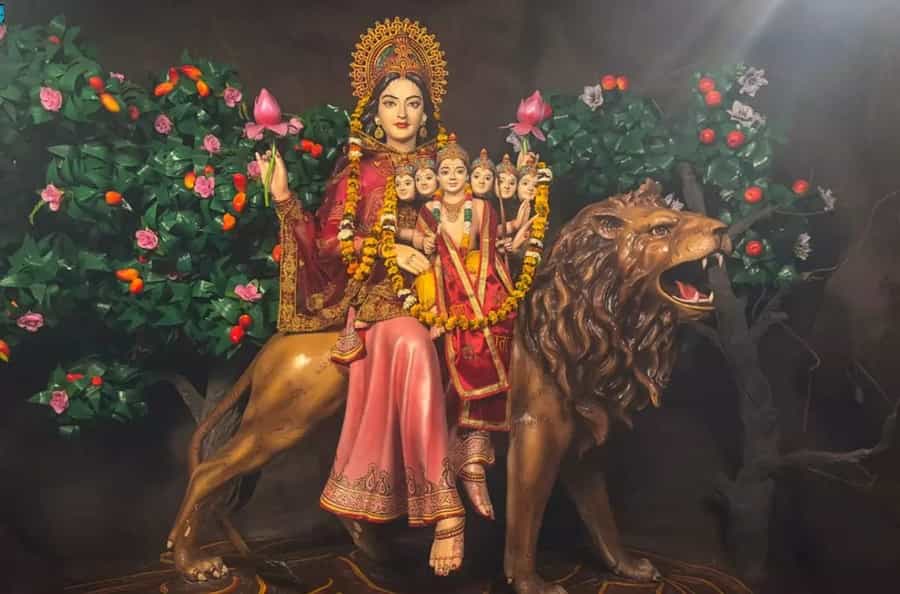
Legend of Maa Skandmata
According to history, when a Rakshas named Tarakasura did performed extremely tough penance. Brahmaji after getting happy from his penance appeared in front of him and asked him for his one wish which he wanted to be fulfilled. Tarakasura after listening to Brahmaji asked for a boon to become immortal. But Brahmaji told him that no one who is born in this world can escape his/her death as it is already written in their destiny and destiny can never be changed. But Tarakasura tried to become clever and thought that Lord Shiva will never get married and asked for a boon that only son of Lord Shiva will kill him and no other person can kill him. Brahmaji fulfilled his wish and left.
After receiving the boon he started considering himself as immortal and started practising evil things and creating problems for Devtas and normal people, due to which Devtas visited Lord Shiva and asked for a solution to this problem. Lord Shiva knew that only his son can kill Tarkasur so he decided to get married. After that Maa Parvati who is also called Skandamata gave birth to Skand Kumar or Lord Kartikeya who further killed the demon Tarakasura in a battle.
Skand Mata and Skand Kumar laid the foundation of Mother Son relationship. Thus, it is said that she loves her devotees like her own sons and daughters and her devotees gets immense love from her when she is happy from their prayers.
It is said worshipping her on this day of Durga Pooja her devotee enters in Vishuddha Chakra’. In this Vishudh form the devotee moves towards the undiluted thoughts and gets free from impure and tensionful thoughts. On this day of Navratri, the devotees experience an immense peace and pleasure of soul and mind.
You can worship Skandamata by chanting these words:
या देवी सर्वभूतेषु माँ स्कंदमाता रूपेण संस्थिता।
नमस्तस्यै नमस्तस्यै नमस्तस्यै नमो नमः।।
She is a true reflection of mother. She never differentiate between her devotees. So, if you want to please Skandamata then you just need to worship her with your pure heart and you don’t need to give her expensive things or donate money to her.
Also Read:


 Call
Call WhatsApp
 Enquiry