
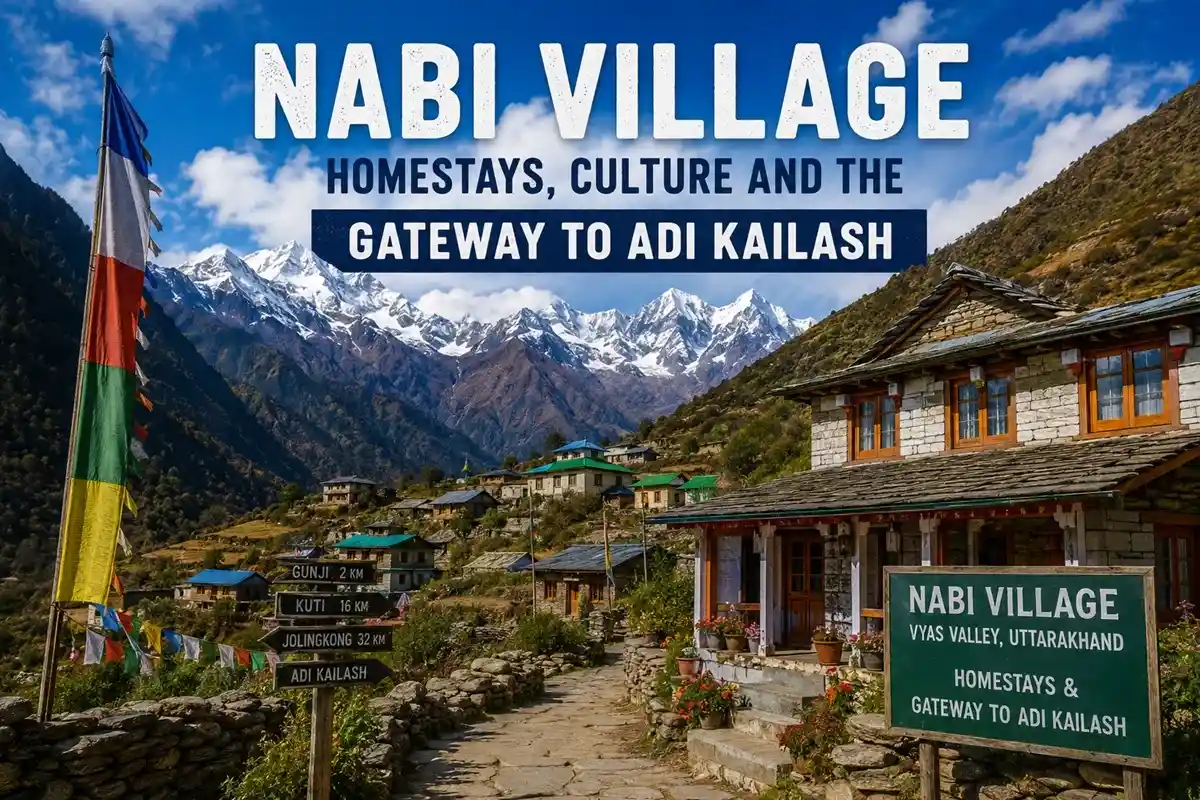
Nabi Village is a small Himalayan hamlet in the Vyas Valley of Pithoragarh district, Uttarakhand, about 2 km from Gunji. It serves as one of the main overnight halts for pilgrims heading toward Adi Kailash and Om Parvat, offering homestays and mountain hospitality along a route that has seen real infrastructure change in recent years.
Quick Facts Box
| Detail | Information |
|---|---|
| Location | Vyas Valley, Dharchula sub-division, Pithoragarh district |
| Altitude | Approx. 3,200 metres (10,500 ft) |
| Distance from Gunji | Approx. 2 km |
| Distance from Dharchula | Approx. 70–80 km, roughly 5–7 hours by road |
| Known for | Homestays, gateway to Jolingkong/Adi Kailash |
| Best time to visit | May to October |
| Permit required | Inner Line Permit (issued from Dharchula) |
| Development scheme | Part of the Vyas Valley cluster covered under the Vibrant Villages Programme |
About Nabi Village?
Nabi sits in the high-altitude Vyas Valley, in the same border stretch as Gunji, Kuti, and Kalapani. It’s one of the last inhabited villages before the road continues toward Jolingkong, the base point for Adi Kailash darshan. Most pilgrims stay in Nabi or nearby Gunji overnight before continuing their yatra the next morning.
Some local residents also pronounce or refer to the village as “Nabiyal,” though official records and maps generally use the name “Nabi.” Its stone-and-timber houses reflect the same Himalayan building style found across the Byans and Vyas valleys — modest homes clustered along the hillside, often with prayer flags and small kitchen gardens. Like other villages in this cluster, many families move down to lower areas such as Dharchula once winter snow sets in, returning each spring as the yatra season resumes.
Vibrant Villages Programme and Recent Development
This part of the Vyas Valley falls within India’s Vibrant Villages Programme, a central government scheme launched in 2023 to develop border villages with better roads, connectivity, and tourism infrastructure. Neighboring Gunji, part of the same village cluster as Nabi, was officially recognized as a Best Tourism Village under this programme in September 2024, and a metalled road extension past Kuti was completed in 2024, shortening the onward journey toward Adi Kailash considerably. Nabi benefits from this same infrastructure push, even though most public recognition so far has centered on Gunji specifically. Homestays in the area are generally understood to be supported through this broader border-village development effort, though travelers should confirm specific scheme details locally rather than assume a single fixed programme name applies to every homestay.

Location, Altitude and How to Reach Nabi Village
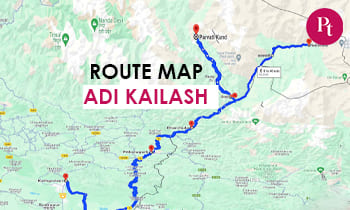
Nabi lies at approximately 3,200 metres (10,500 ft), close to the India-China border region. The common route runs Dharchula → Tawaghat → Narayan Ashram → Sosa → Gala → Budhi → Gunji → Nabi, with the Dharchula-to-Nabi stretch generally covered in 5 to 7 hours. As of recent seasons, parts of this road remain unpaved despite ongoing Border Roads Organisation work, and security checks — involving ITBP, SSB, and local police depending on the location — verify permits along the way during the yatra season (roughly June to September).
Some pilgrims fly by helicopter from Dharchula to Gunji instead of the full road journey; public records indicate this service has operated since 2014, though it remains subject to weather and seasonal government approval rather than a guaranteed year-round option. From Gunji, Nabi is a short 2-km onward trip. Travel beyond Nabi toward Jolingkong requires an Inner Line Permit arranged in Dharchula.
Culture, Homestays and Daily Life
Nabi’s homestay program is central to the visitor experience. Visitors report staying with families who farm and cook using locally grown pulses, vegetables, and mandua (finger millet), a staple grain across this part of the Himalayas. The experience is intentionally simple — home-cooked meals and direct interaction with residents rather than curated tourist activities. Some tour operators arrange short cultural programs for pilgrim groups passing through, featuring local folk music and dance tied to the region’s Rung and Kumaoni heritage, though this depends on the operator and season rather than being a fixed daily offering.
Livelihoods here center on subsistence farming, seasonal tourism income from homestays, and — for some families — supply and logistics work connected to the ITBP and army presence in the valley, a pattern common across Byans Valley border villages.
The Road Journey and What Pilgrims Report
Multiple pilgrim accounts describe the Dharchula-to-Nabi drive as a full-day undertaking, with stops along the way for road work, photos, or rest. The road runs parallel to the Kali (Mahakali) River for much of the way, and travelers commonly note that temperatures drop noticeably as the road climbs, with mobile signal disappearing almost entirely once past Dharchula. Several visitors recommend spending a night in Nabi or Gunji to acclimatize before the further ascent toward Jolingkong, since the altitude jump can otherwise trigger mild altitude sickness.
Spiritual Context and Nearby Attractions
According to Hindu tradition, the Vyas Valley is named after sage Ved Vyasa, said to have meditated in this region — a belief rooted in local legend rather than documented history. One local shrine mentioned in yatra itineraries is a small Manokamna Temple in the village; it’s a modest stop some pilgrim groups visit if they arrive before nightfall, rather than a major, independently documented landmark.
Nearby, Gunji shares much of the same infrastructure and permit checkpoints. Nabhidhang, roughly 15–20 km from Gunji, is the viewpoint for Om Parvat. Kuti village, further along the route, is locally linked to Kunti, mother of the Pandavas in the Mahabharata. Jolingkong, the Adi Kailash base point, lies beyond Nabi and is typically reached the following day.
Best Time to Visit and Practical Tips
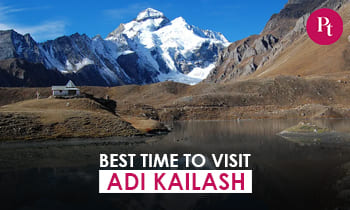
May to October is the recommended window, when roads stay motorable and weather remains stable. Winters bring heavy snowfall that cuts off access almost entirely. Mobile network is extremely limited beyond Dharchula, with BSNL generally the most reliable option; one social media claim about Jio reaching Nabi isn’t independently confirmed, so plan for minimal signal. Carry warm clothing regardless of season, since nights here get considerably colder than Dharchula even in summer.
Key Takeaways
- Nabi Village, sometimes locally called “Nabiyal,” is a homestay-based hamlet in the Vyas Valley, about 2 km from Gunji.
- It functions as an overnight staging point for pilgrims heading toward Adi Kailash and Om Parvat.
- The surrounding Vyas Valley cluster falls under India’s Vibrant Villages Programme, which has driven recent road and tourism infrastructure improvements.
- A Dharchula-Gunji helicopter service has reportedly operated since 2014, though it remains weather- and season-dependent.
- The village sits within a restricted border zone, so an Inner Line Permit from Dharchula is required to visit.
Nabi Village may be a small stop on a much larger pilgrimage route, but its homestays and mountain hospitality often end up being one of the most memorable parts of the entire Adi Kailash journey.
FAQs
Q1. Where is Nabi Village located?
In the Vyas Valley, Dharchula sub-division of Pithoragarh district, Uttarakhand, about 2 km from Gunji.
Q2. Is “Nabiyal” the official name of the village?
No, it’s a local pronunciation some residents use; official records generally use “Nabi.”
Q3. Is a permit required to visit Nabi Village?
Yes, an Inner Line Permit issued from Dharchula, since it lies within a restricted border zone.
Q4. How do I reach Nabi Village?
By road via Dharchula, Tawaghat, and Gunji (roughly 70–80 km, 5–7 hours), or by helicopter from Dharchula to Gunji plus a short onward drive.
Q5. What is the altitude of Nabi Village?
Approximately 3,200 metres (10,500 ft).
Q6. Is mobile network available in Nabi Village?
Coverage is extremely limited; BSNL is generally the most reliable option beyond Dharchula.
Q7. What is the best time to visit Nabi Village?
May to October, when roads are motorable and weather is stable.
Q8. Can I stay overnight in Nabi Village?
Yes, homestays run by local families are the main accommodation option and a highlight of the visit.
Q9. Is Nabi Village part of the Vibrant Villages Programme?
It falls within the broader Vyas Valley cluster covered under this scheme, though public recognition has focused mainly on neighboring Gunji.
Q10. Is there a helicopter option to reach near Nabi Village?
Yes, a Dharchula-Gunji helicopter service has reportedly run since 2014, subject to weather and seasonal approval.
Q11. What do people in Nabi Village do for a living?
Mainly subsistence farming, seasonal homestay tourism, and some work connected to the local ITBP and army presence.
Q12. Is Nabi Village open to tourists without a yatra permit?
No, since it lies in a restricted border area, visits are only possible as part of a permitted Adi Kailash or Om Parvat itinerary.
Must Reads on:


 Call
Call WhatsApp
 Enquiry