
India is called the land of many gods, and it is home to thousands of temples and hundreds of festivals. This guide lists 25 must visit temples of India, grouped by region, with where each one is, a few verified facts and one practical tip. If you are planning a trip to the famous temples in India, our South India Temple Tour Package is one ready-made route to start from.
Darshan timings, booking rules and entry conditions change often, so confirm them on each temple’s official website before you travel.
Must Visit Temples in North India
Vaishno Devi Temple, Katra (Jammu and Kashmir)
- Location: Trikuta hills, reached from Katra in Reasi district
- Distance: About 50 km from Jammu to Katra, then about 13 km on foot from Katra to the Bhawan. The Banganga route measures closer to 14 km
- Access: Katra has its own railway station. Ponies and a helicopter to Sanjichhat are available
- Booking: Yatra registration (parchi) is mandatory and free, from the Shrine Board website or the Katra counter. It sets your departure time
- Season: Open through the year
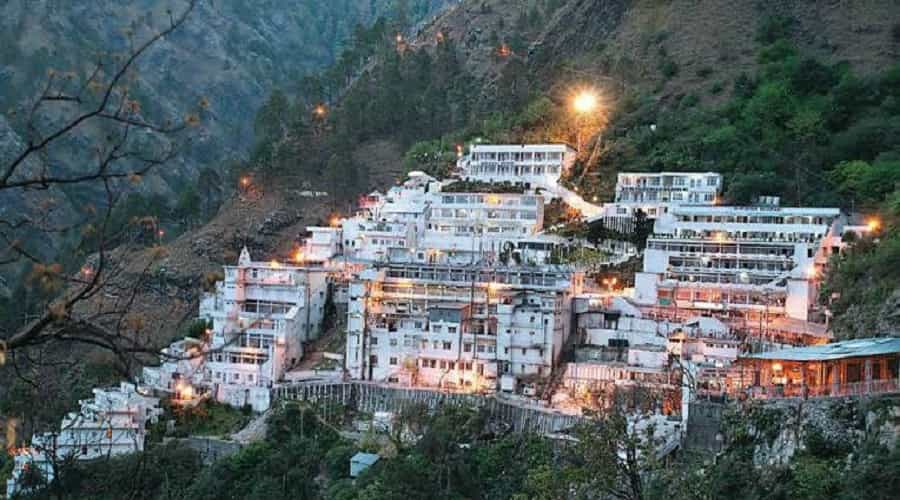
Vaishno Devi is a famous cave shrine in the Trikuta hills, dedicated to Mata Vaishno Devi and reached from the town of Katra in Reasi district. Katra is about 48 km north of Jammu, according to J&K Tourism. The Shrine Board gives the walk from Katra to the Bhawan as about 12 km, and the Banganga route is closer to 14 km. Register for a yatra slip with the Shrine Board before you start walking.
Amarnath Cave Temple (Jammu and Kashmir)
- Location: Kashmir Himalayas at 3,888 m, about 141 km from Srinagar
- Routes: Baltal is about 14 km. The Shrine Board gives about 32 km for the Pahalgam route, while the traditional walk from Nunwan base camp is usually quoted as 48 km
- 2026 yatra: Ran from 3 July to 28 August. Both routes were declared no-fly zones, so there were no helicopter services
- Booking: Registration and a compulsory health certificate are required
- Season: Summer only
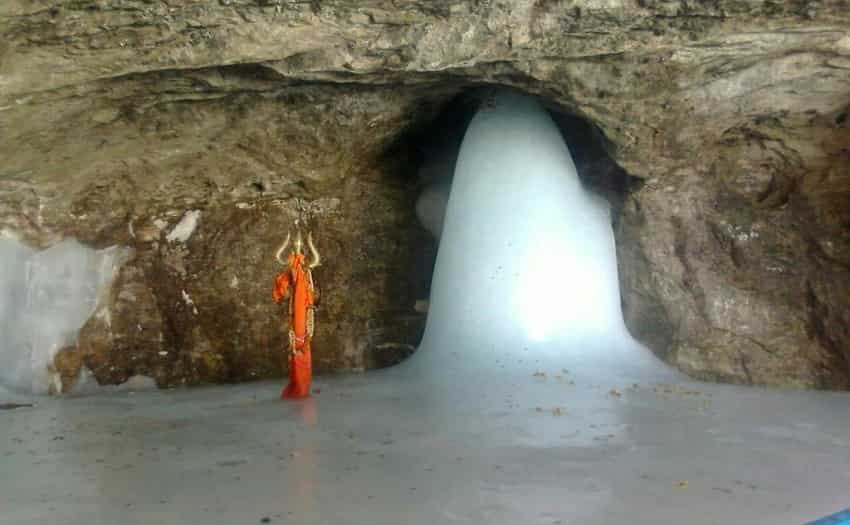
Amarnath is a cave shrine at 3,888 m, about 141 km from Srinagar, where a naturally formed ice lingam is worshipped. The yatra runs only in summer, and the Shri Amarnathji Shrine Board announces the dates each year. Registration is mandatory and a health certificate is required. The two routes are Baltal, about 14 km, and Pahalgam, about 46 to 48 km.
Golden Temple (Harmandir Sahib), Amritsar (Punjab)
- Location: Amritsar, Punjab
- Entry: Open to visitors of all faiths. Cover your head and remove your shoes
- Langar: A free vegetarian meal is served to all visitors
- Good to know: The four entrances face four directions, a deliberate sign of openness
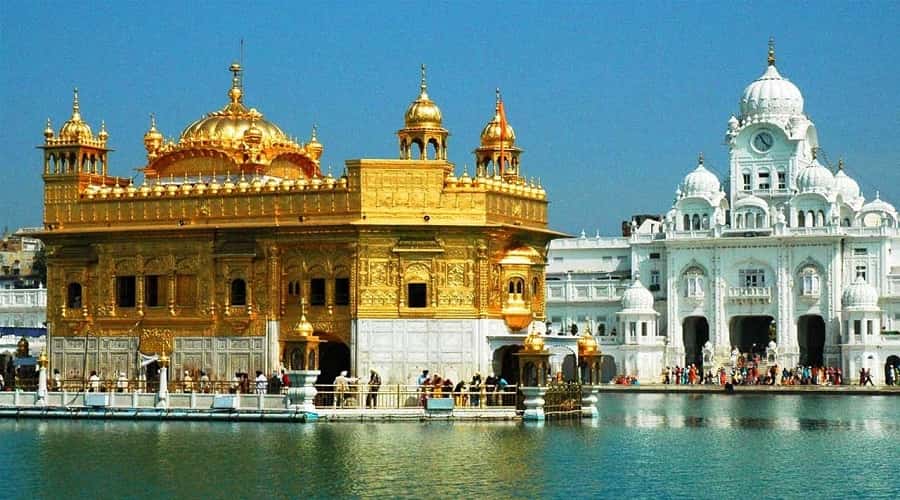
The Golden Temple is the holiest gurdwara of Sikhism and stands in the middle of a sacred pool in Amritsar. Guru Arjan Dev completed it in 1604 with the installation of the Adi Granth. Visitors of every faith are welcome. Cover your head, remove your shoes, and try the free vegetarian meal (langar) served to all visitors.
Kedarnath Temple (Uttarakhand)
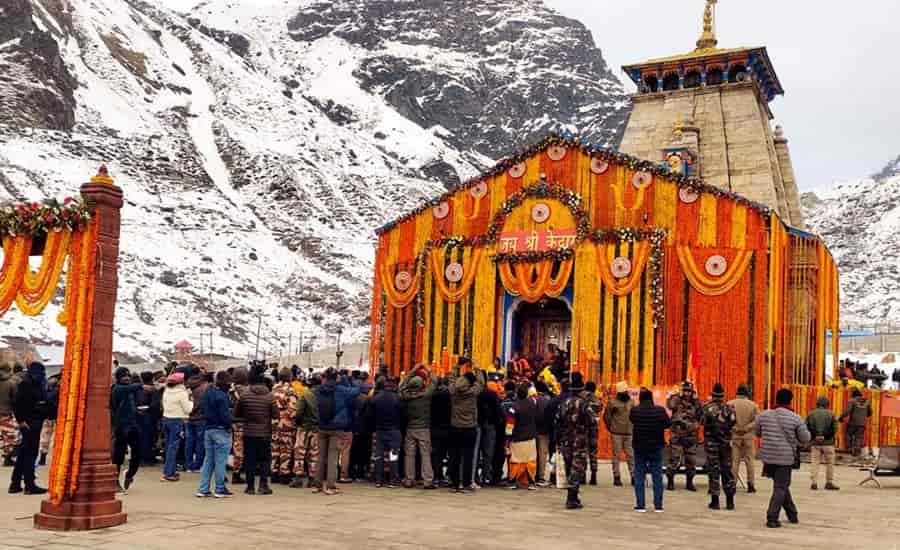
Kedarnath is one of the 12 Jyotirlingas of Shiva and part of the Chota Char Dham, set at 3,583 m in the Garhwal Himalayas. The road ends at Gaurikund, and the trek from there is about 16 km. The temple is open only in the warmer months, with dates announced each year. Register on registrationandtouristcare.uk.gov.in and book helicopter seats through heliyatra.irctc.co.in. Our Kedarnath Dham guide covers the route in detail.
- Location: Rudraprayag district, Uttarakhand, at about 3,580 m (the district gives 3,586 m)
- Trek: About 16 km from Gaurikund. Some sources give 17 km
- Season: Portals opened on 22 April in 2026 and close around Bhai Dooj in November
- Booking: Free registration at registrationandtouristcare.uk.gov.in. Helicopter seats through heliyatra.irctc.co.in
Badrinath Temple (Uttarakhand)
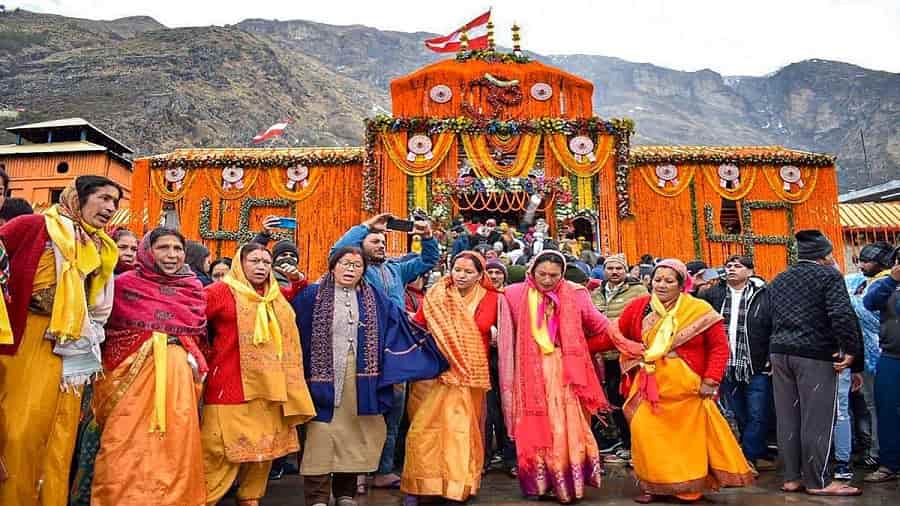
Badrinath is a Vishnu temple on the banks of the Alaknanda in Chamoli district, at about 3,133 m. It is one of the four Char Dham sites of India and also part of the Chota Char Dham of Uttarakhand. The temple closes in winter, and the deity is worshipped at Joshimath during that period. Read the Badrinath Dham guide before you plan the trip.
- Location: Chamoli district, on the Alaknanda, at about 3,133 m
- Deity: Vishnu
- Season: Portals opened on 23 April in 2026. The temple closes in winter, and the deity is worshipped at Joshimath until it reopens
- Booking: Yatra registration is done on the Uttarakhand tourist care portal
Kashi Vishwanath Temple, Varanasi (Uttar Pradesh)
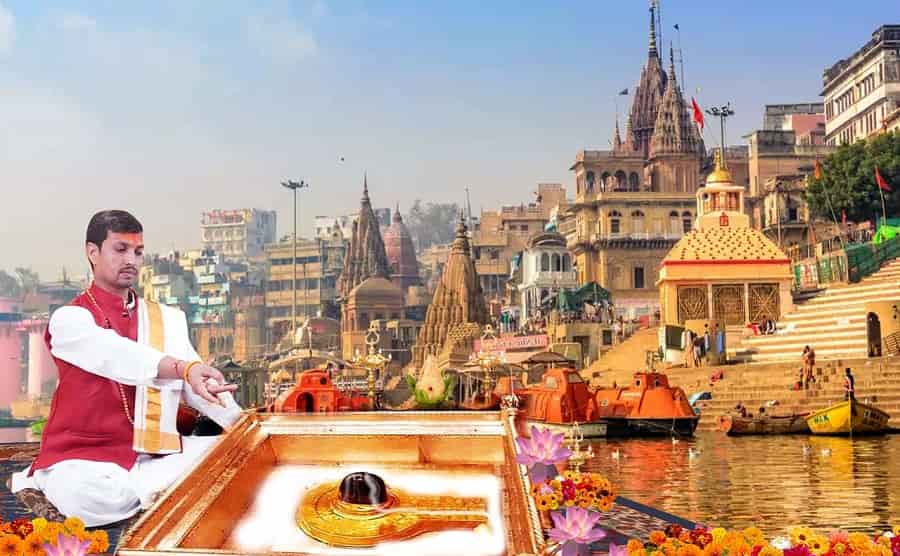
Kashi Vishwanath stands on the western bank of the Ganga in Varanasi. It is one of the Jyotirlinga temples of India, so Lord Shiva is worshipped here as a Jyotirlinga. According to tradition, worship in Kashi leads to moksha, freedom from the cycle of birth and death. The Kashi Vishwanath Corridor, opened in December 2021, links the temple with the Ganga ghats. Mangala Aarti starts around 3 am and needs advance booking on the temple trust’s official website. More in our Kashi Vishwanath Temple guide.
- Location: Western bank of the Ganga, Varanasi
- Corridor: Opened in December 2021, linking the temple to the ghats
- Mangala Aarti: Around 3 am. The official schedule lists it between 3 and 4 am
- Booking: Aarti slots are booked in advance on the temple trust’s official website
Ram Mandir, Ayodhya (Uttar Pradesh)
- Location: Ayodhya, on the Saryu river
- Darshan: Free for all devotees
- Aarti: Entry passes are free but limited in number, booked on srjbtkshetra.org with a mobile OTP
- Timings: Revised since the opening, so check the Trust’s site before you travel
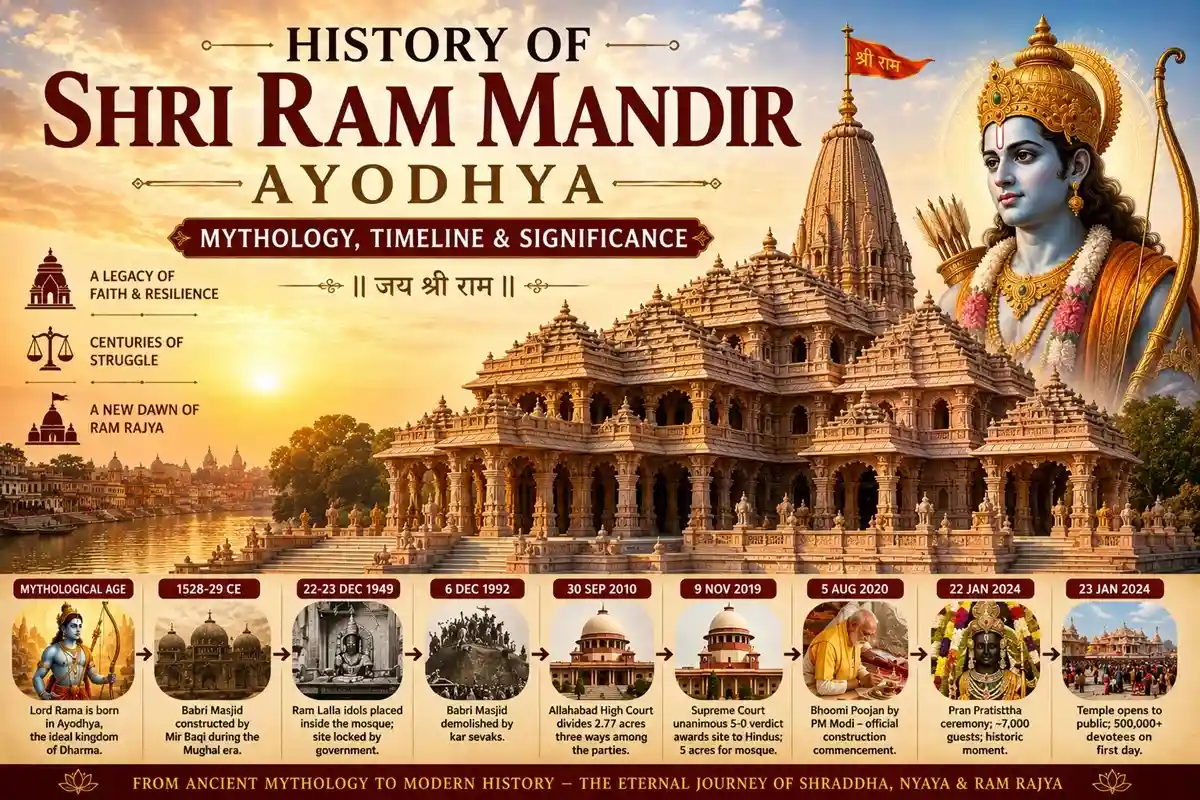
The Ram Janmabhoomi temple was consecrated on 22 January 2024 and opened to devotees the next day. It is dedicated to Ram Lalla, the child form of Lord Ram. Darshan slots and aarti passes are managed by the Shri Ram Janmabhoomi Teerth Kshetra Trust, and timings have been revised since the opening, so check the trust’s official site. Ayodhya pairs easily with Varanasi. Our Ram Mandir guide has the travel details.
Swaminarayan Akshardham, Delhi
- Location: East Delhi, on the Yamuna
- Access: Akshardham metro station is about 350 m from the entrance
- Closed: Every Monday
- Rule: Phones, cameras and other electronics are not allowed. A free cloakroom is at the gate
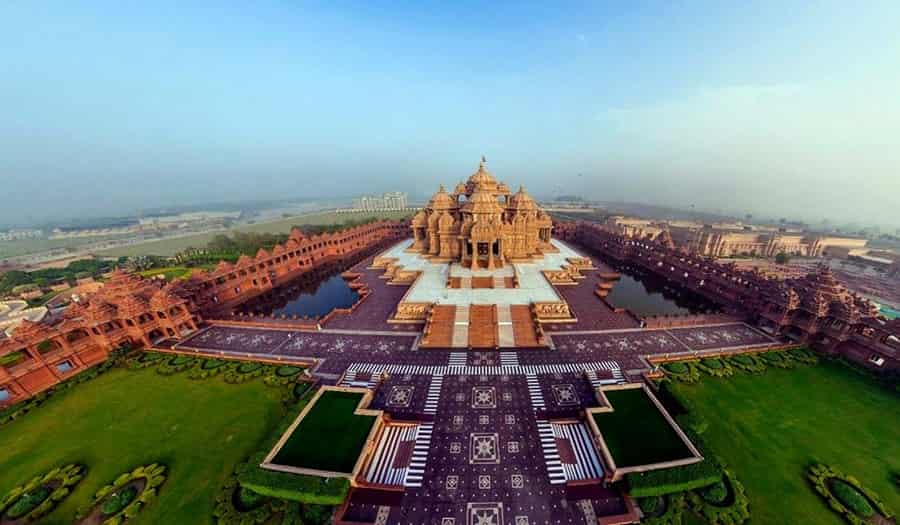
Akshardham, built by BAPS and dedicated to Bhagwan Swaminarayan, opened on 6 November 2005 on the banks of the Yamuna. Akshardham metro station is about 350 m from the entrance. The complex is closed on Mondays. Mobile phones, cameras and other electronics are not allowed inside, so use the free cloakroom.
Must visit temples in West and Central India
Mahakaleshwar Temple, Ujjain (Madhya Pradesh)
- Location: Ujjain, Madhya Pradesh, near the Shipra river
- Bhasma Aarti: Around 4 am
- Booking: Advance registration through the temple’s official portal
- Dress: Men usually wear a dhoti inside the sanctum for the aarti
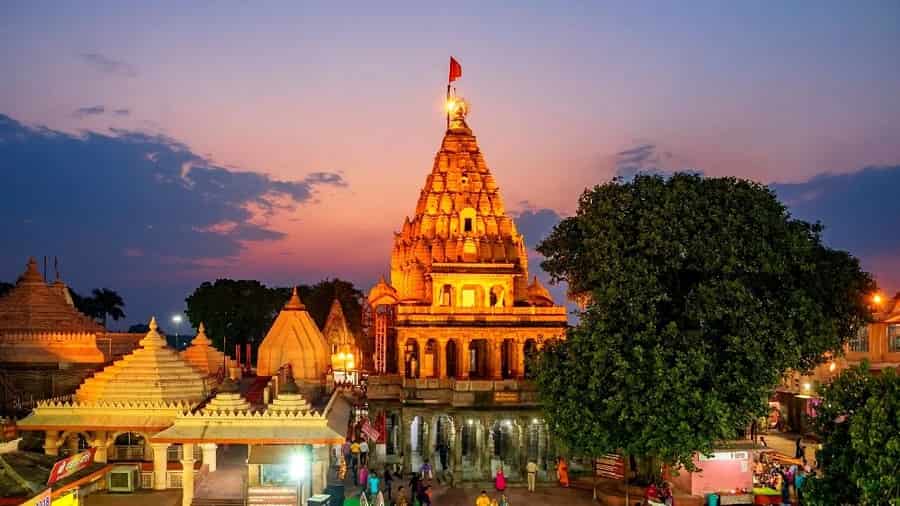
Mahakaleshwar is one of the 12 Jyotirlingas and stands near the Shipra river. It is known as the south-facing Jyotirlinga. The pre-dawn Bhasma Aarti, around 4 am, is its best-known ritual and needs advance registration through the temple’s official portal. Dress rules apply, and men usually wear a dhoti for the sanctum. Our guide to the 12 Jyotirlingas of Lord Shiva lists the others.
Khajuraho Group of Temples (Madhya Pradesh)
- Location: Chhatarpur district, Madhya Pradesh
- Faiths: Hindu and Jain temples
- Status: UNESCO World Heritage Site since 1986
- Survival: Around 20 of the 85 temples recorded in the 12th century still stand
- Start with: Kandariya Mahadeva (1017 to 1029 CE) and Lakshmana (954 CE) in the Western Group
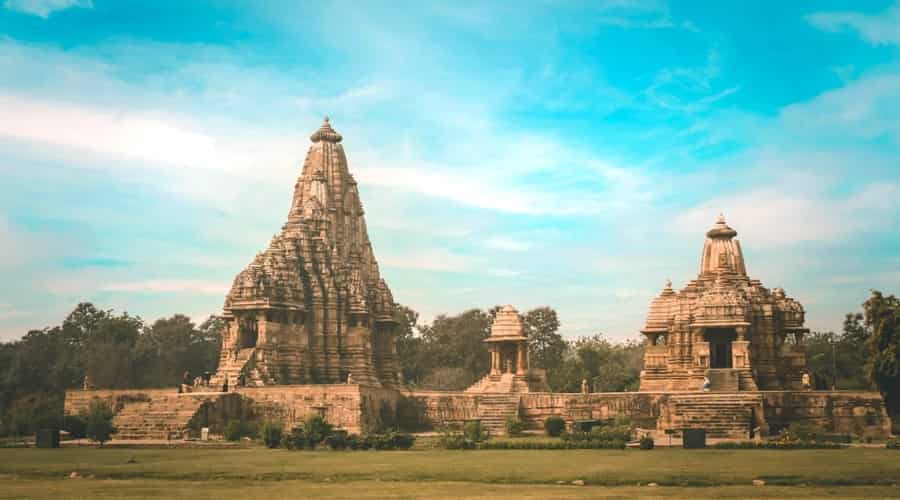
Khajuraho is a group of Hindu and Jain temples in Chhatarpur district, built mostly between 950 and 1050 CE by the Chandela dynasty. UNESCO listed it as a World Heritage Site in 1986. Only around 20 of the 85 temples recorded in the 12th century survive. The Western Group, with the Kandariya Mahadeva and Lakshmana temples, is the main one to see.
Somnath Temple, Veraval (Gujarat)
- Location: Prabhas Patan, near Veraval, Gir Somnath district, Gujarat
- Present temple: Completed in May 1951
- Access: Veraval railway station is about 7 km away
- Timings: Posted on the Somnath Trust website, somnath.org
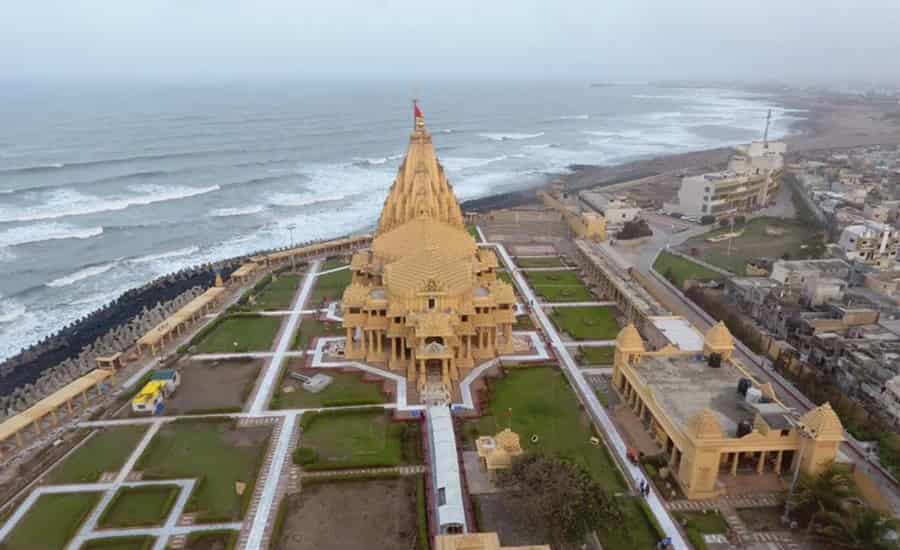
Somnath is believed to be the first of the 12 Jyotirlingas of Shiva. It is a beautifully carved Shiva temple on the Arabian Sea coast at Prabhas Patan, near Veraval. The temple was destroyed and rebuilt several times, and the present structure was completed in May 1951. Veraval railway station is about 7 km away. Mahashivratri is celebrated here every year and draws large crowds, so book stays early if you plan to visit then.
Dwarkadhish Temple, Dwarka (Gujarat)
- Location: Dwarka, Devbhumi Dwarka district, Gujarat, beside the Gomti
- Height: The spire rises to about 78 m
- Access: Dwarka has a railway station. The nearest airport is Jamnagar, about 130 km away
- Good to know: Steps beside the temple lead down to the Gomti for ritual bathing
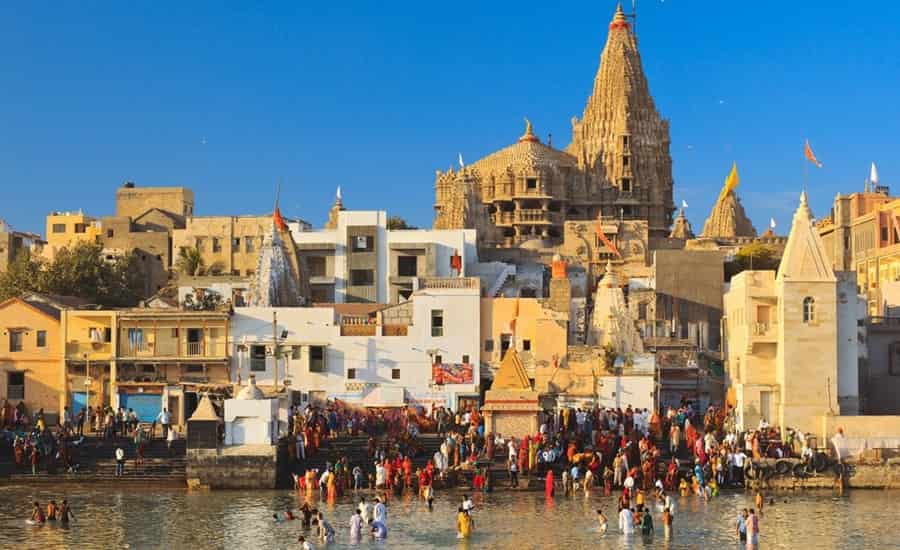
Dwarkadhish Temple, also called Jagat Mandir, is dedicated to Lord Krishna as the King of Dwarka and is the Char Dham of the west. The five-storey main shrine rests on 72 pillars, and the spire rises to about 78 m. Dwarka has its own railway station, and the nearest airport is Jamnagar, about 130 km away.
Siddhivinayak Temple, Mumbai (Maharashtra)
- Location: Prabhadevi, Mumbai
- Access: About a 20-minute walk from Parel and Dadar railway stations
- Booking: Online darshan booking through the temple trust at siddhivinayak.org
- Rule: Photography inside is not allowed
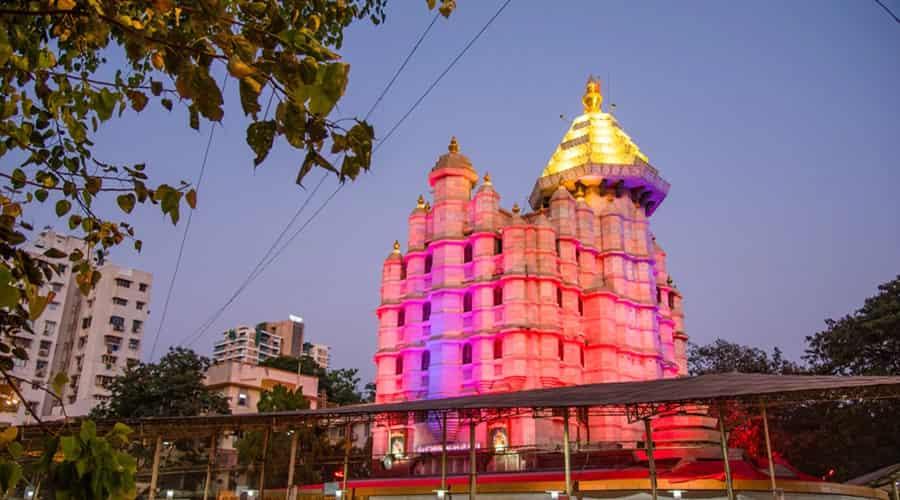
Siddhivinayak Temple in Prabhadevi is dedicated to Lord Ganesha and was consecrated on 19 November 1801. The black stone idol has its trunk tilted to the right, which is unusual. Tuesday is the busiest day, so expect long queues. The temple trust offers online darshan booking at siddhivinayak.org, and photography inside is not allowed.
Shirdi Sai Baba Temple, Shirdi (Maharashtra)
- Location: Shirdi, Maharashtra, about 83 km east of Nashik
- Access: Shirdi airport is about 14 km from the temple, and Sainagar Shirdi is the railway station
- Booking: Darshan and rooms at online.sai.org.in, the Sansthan Trust portal
- Entry: Open to devotees of all faiths
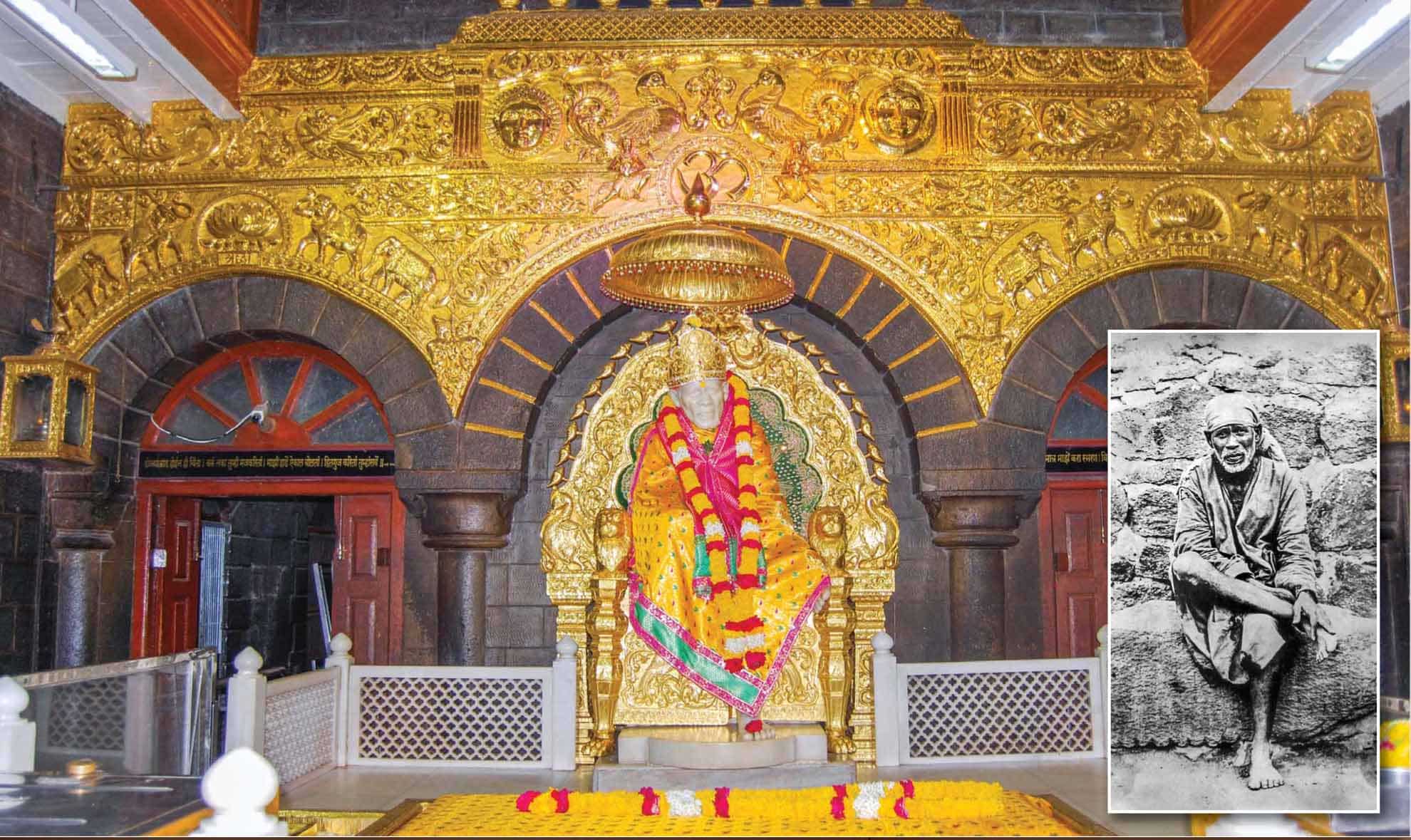
The Samadhi Mandir in Shirdi holds the tomb of Sai Baba, who attained samadhi on 15 October 1918. Devotees of all faiths take darshan here. The Shri Saibaba Sansthan Trust takes darshan and accommodation bookings at online.sai.org.in. Shirdi has its own airport, about 14 km from the temple.
Must visit temples in East and Northeast India
Mahabodhi Temple, Bodh Gaya (Bihar)
- Location: Bodh Gaya, about 15 km from Gaya
- Status: UNESCO World Heritage Site, inscribed in 2002
- Height: The main temple is about 50 m tall and dates to the 5th or 6th century CE
- Entry: Open to visitors of all faiths
- Season: October to March is the comfortable window
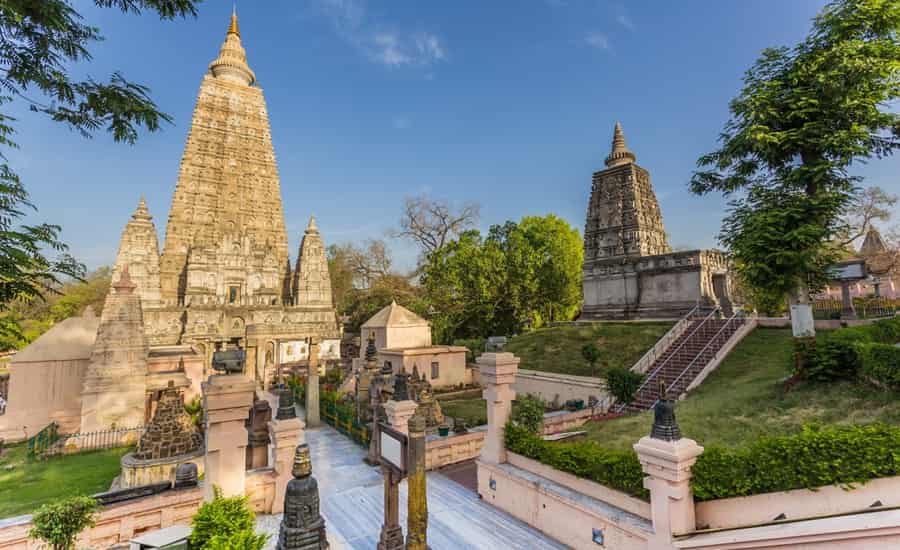
Located in the Gaya district of Bihar, the Mahabodhi Temple is a famous pilgrimage site and a UNESCO World Heritage Site, inscribed in 2002. It is a Buddhist temple that draws followers from all over the world, because this is the place where Lord Buddha attained enlightenment. The main temple is about 50 m tall and dates to the 5th or 6th century CE. Bodh Gaya is about 15 km from Gaya. See our Buddhist tour in India page for related sites.
Jagannath Temple, Puri (Odisha)
- Location: Puri, Odisha
- Height: About 65 m (214 ft)
- Rath Yatra: Held every year in the month of Ashadha, usually June or July. The chariots travel to the Gundicha Temple, about 3 km away
- Nabakalebara: Last held in 2015, next expected in 2034
- Entry: Only Hindus are allowed inside
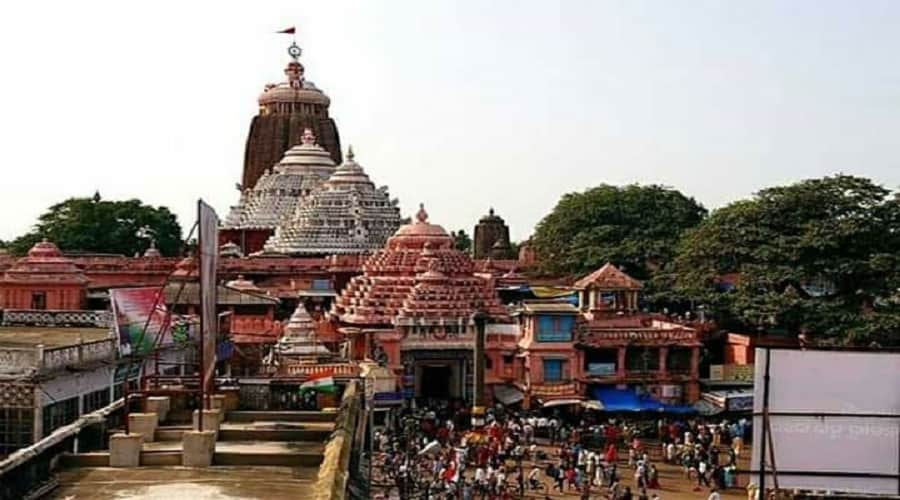
Jagannath Temple in Puri is dedicated to Lord Jagannath, a form of Vishnu, and is one of the four Char Dham sites, the Dham of the east. The temple is about 65 m (214 ft) high. Its wooden idols are replaced with new ones in a ritual called Nabakalebara, held every 12 to 19 years. The Rath Yatra falls in the month of Ashadha, usually June or July, when the deities travel in chariots to the Gundicha Temple, about 3 km away. Only Hindus are allowed inside. Read the Jagannath Temple guide and our page on religious festivals of India.
Konark Sun Temple (Odisha)
- Location: Konark, Puri district, about 35 km from Puri
- Design: 24 carved wheels and seven horses
- Status: UNESCO World Heritage Site since 1984, maintained by the Archaeological Survey of India
- What stands: The main tower has collapsed. The hall in front of it still stands
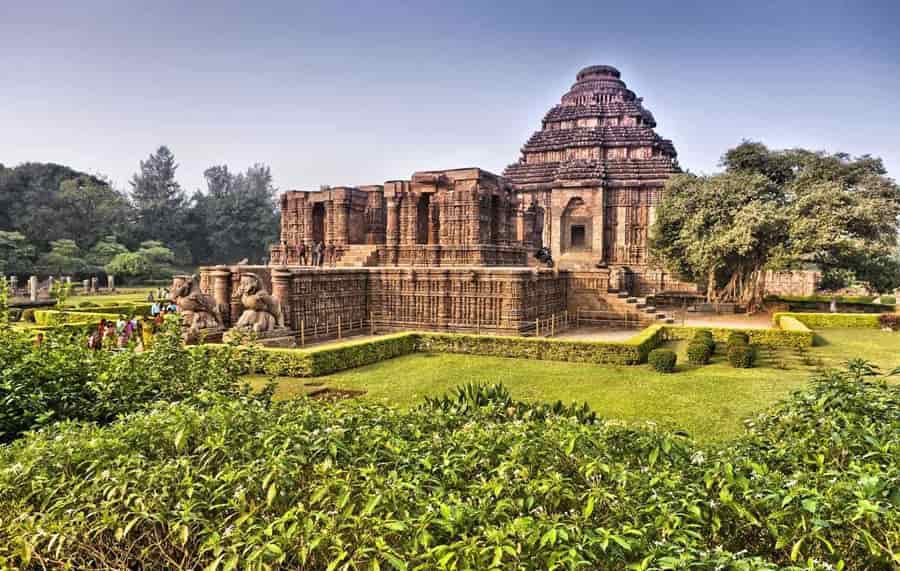
Konark was built around 1250 CE by King Narasimhadeva I of the Eastern Ganga dynasty and is shaped like the chariot of the Sun God, with 24 carved wheels. UNESCO listed it as a World Heritage Site in 1984, and the Archaeological Survey of India maintains it. Konark is about 35 km from Puri, so most visitors combine the two. The main tower has collapsed, but the hall in front still stands.
Kamakhya Temple, Guwahati (Assam)
- Location: Nilachal Hill, Guwahati
- Access: About 20 km from Guwahati airport and about 7 km from Kamakhya Junction
- Ambubachi Mela: Held in June. The temple closes for four days. In 2026 the doors closed on 22 June and reopened on 26 June
- Crowds: The paid special darshan pass, listed at 501 rupees, is suspended during the mela
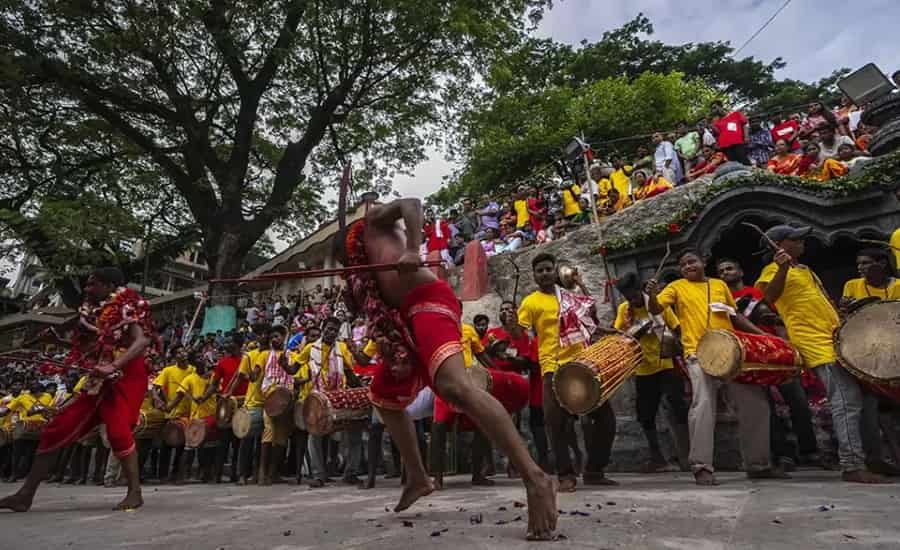
Kamakhya Temple stands on Nilachal Hill and is counted among the 51 Shakti Peethas. The sanctum has no idol. The goddess is worshipped in the form of a stone over which a natural spring flows. The Ambubachi Mela, held in June, closes the temple for four days and draws very large crowds. The temple is about 20 km from Guwahati airport and about 7 km from Kamakhya Junction railway station.
Must visit temples in South India
Tirupati Balaji Temple, Andhra Pradesh
- Location: Tirumala hills at about 850 m, roughly 22 km from Tirupati town
- Crowds: 25.46 lakh darshans in May 2026, with 98,058 on the busiest day, 24 May, according to TTD figures reported by ETV Bharat
- Booking: Tirumala Tirupati Devasthanams (TTD) runs the temple and takes bookings on its official site
- Access: Pilgrims can walk up the Alipiri footpath instead of taking the road
- Prasad: The Srivari laddu carries a GI tag
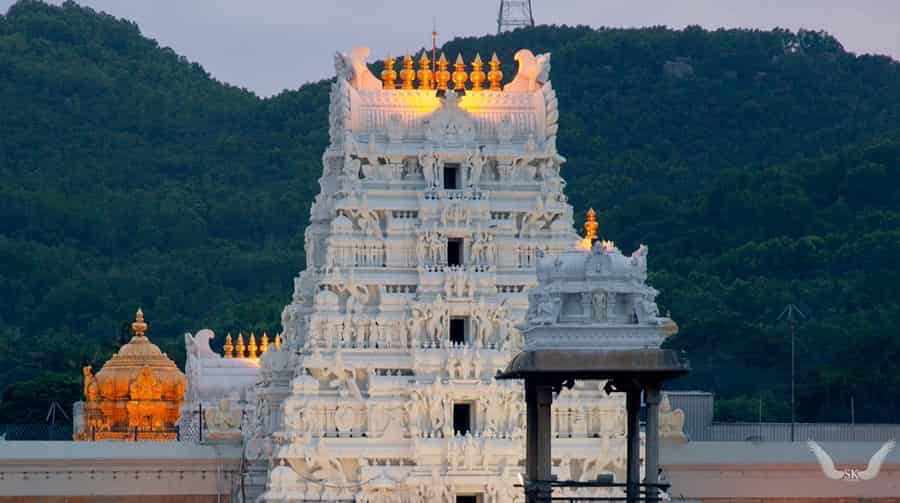
Tirupati Balaji is one of the most visited temples in India. The Venkateswara Temple sits on the Tirumala hills at about 850 m, roughly 22 km from Tirupati town, and Venkateswara is worshipped as a form of Vishnu. Only the Ananda Nilayam, the tower above the sanctum, is gold plated. The rest of the temple is not made of gold. Tirumala Tirupati Devasthanams (TTD) runs the temple and its bookings. The temple recorded about 23.8 lakh darshans in May 2025 alone, so book early.
Meenakshi Amman Temple, Madurai (Tamil Nadu)
- Location: Madurai, Tamil Nadu. Madurai Junction is about 2 km away
- Area: About 14 acres
- Hall: The Aayiram Kaal Mandapam has 985 carved pillars
- Timings: Morning and evening sessions with an afternoon break
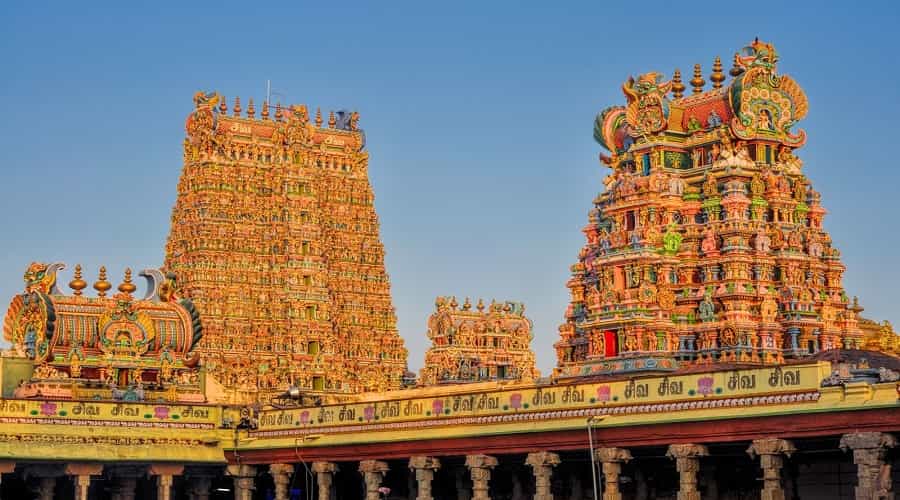
The temple is dedicated to Meenakshi, a form of Parvati, and her consort Sundareswarar, a form of Shiva. The complex covers about 14 acres and has 14 gopurams. The tallest, on the south side, is about 52 m (170 ft). Inside are the Aayiram Kaal Mandapam, a hall of 985 carved pillars, and the Golden Lotus Tank. Madurai Junction is about 2 km away. The temple opens in morning and evening sessions with an afternoon break.
Ramanathaswamy Temple, Rameswaram (Tamil Nadu)
- Location: Rameswaram island, Tamil Nadu
- Distance: About 170 km from Madurai, three to four hours by road
- Access: Rameswaram railway station is about 2 km from the temple
- Corridors: The outer corridor has roughly 1,200 pillars
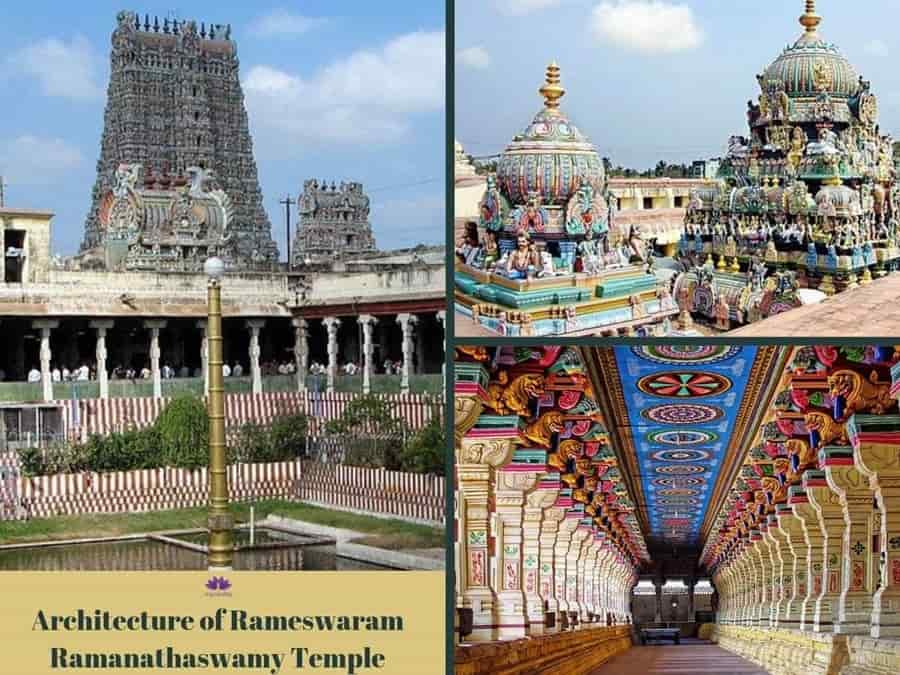
Ramanathaswamy Temple on Rameswaram island is both a Jyotirlinga temple and one of the four Char Dham sites, the Dham of the south. Pilgrims bathe in the sea at Agni Theertham and then at the 22 theerthams inside the temple. Madurai is the nearest airport, roughly 170 km away. More in our Rameswaram Temple guide.
Brihadisvara Temple, Thanjavur (Tamil Nadu)
- Location: Thanjavur, Tamil Nadu, in the Cauvery delta
- Status: UNESCO inscription in 1987, extended in 2004 as the Great Living Chola Temples
- Height: Published figures for the vimana run from about 60 m to 65 m, depending on the source
- Nearby: Gangaikonda Cholapuram and Darasuram complete the UNESCO group
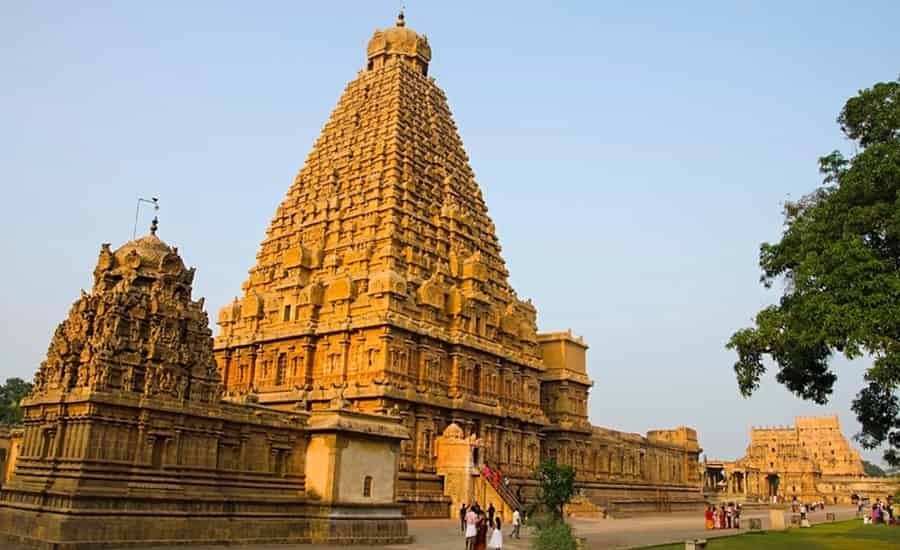
Brihadisvara Temple is dedicated to Shiva and was built between 1003 and 1010 CE in the reign of Rajaraja Chola. It is part of the Great Living Chola Temples, which UNESCO listed in 1987. The 13-storey vimana, the tower over the sanctum, is about 61 m high according to UNESCO.
Sri Ranganathaswamy Temple, Srirangam (Tamil Nadu)
- Location: Srirangam island between the Kaveri and Kollidam rivers, Tiruchirappalli
- Layout: Seven enclosing walls and 21 gopurams
- Rajagopuram: About 73 m tall, completed in 1987
- Access: A bridge connects Tiruchirappalli to the island
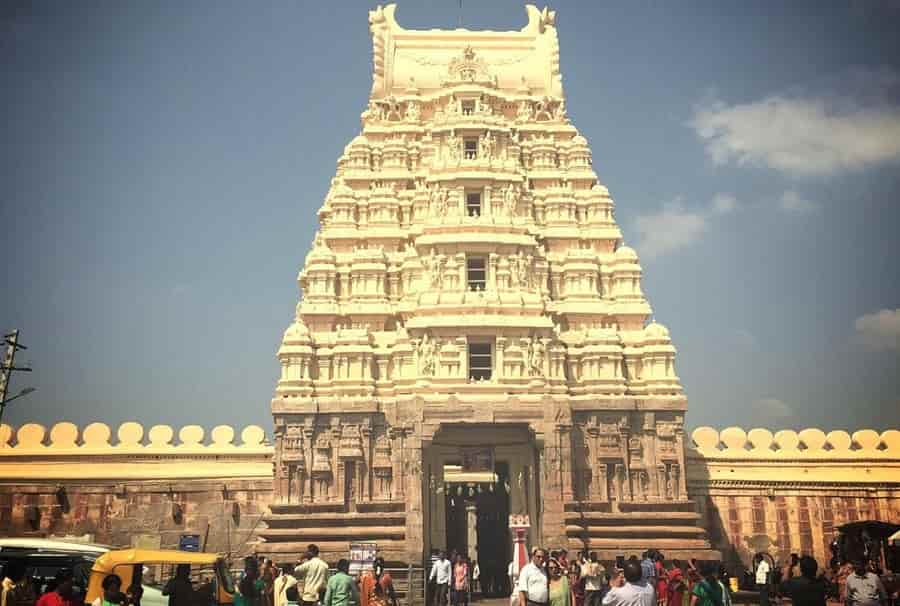
The temple stands on Srirangam island between the Kaveri and Kollidam rivers in Tiruchirappalli. It is dedicated to Vishnu in a reclining form and is widely described as the largest functioning Hindu temple complex. It has seven enclosing walls and 21 gopurams, and the Rajagopuram on the south side is about 73 m tall.
Sree Padmanabhaswamy Temple, Thiruvananthapuram (Kerala)
- Location: East Fort, Thiruvananthapuram. The railway station is about 2 km away
- Entry: Only Hindus are allowed inside
- Dress code: Men wear a mundu with the torso bare. Women wear a saree or set-mundu
- Phones and cameras: Not allowed. Lockers are near the entrance
- Timings: The temple closes for a few hours at midday
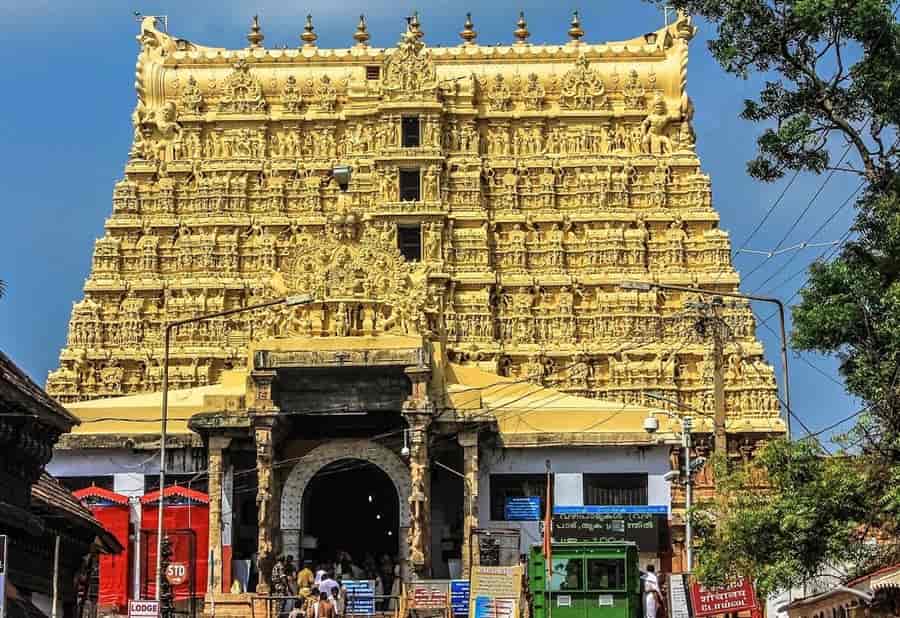
The temple in East Fort is dedicated to Vishnu reclining on the serpent Ananta and is counted among the 108 Divya Desams. Only Hindus are allowed inside. A strict dress code applies: men wear a mundu without a shirt, and women wear a saree or set-mundu. Phones and cameras must be left in the lockers, and the temple closes for a few hours at midday.
Sabarimala Ayyappa Temple, Pathanamthitta (Kerala)
- Location: Pathanamthitta district, about 914 m above sea level and 4 km uphill from Pamba
- Season: The Mandalam and Makaravilakku season runs from mid-November to around 20 January. The temple also opens briefly each Malayalam month
- Booking: Virtual queue booking through the Travancore Devaswom Board is mandatory in season. Spot booking counters operate at Pamba, Nilakkal and Erumeli, among others
- Makaravilakku: 14 January
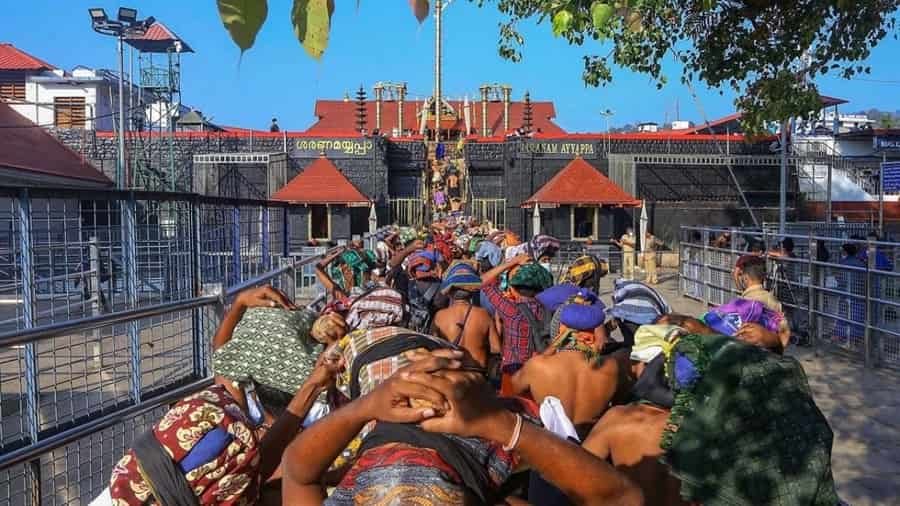
Sabarimala is a hill shrine about 914 m above sea level, 4 km uphill from Pamba. It is not open all year. The main Mandalam and Makaravilakku season runs from mid-November to around 20 January, and the temple also opens briefly each Malayalam month. Pilgrims climb the 18 holy steps, and many observe a 41-day vratham first. Virtual queue booking is required during the season. For more southern routes, see popular pilgrimage destinations in South India.
Best Time to Visit Temples in India
Most of these temples can be visited all year, but weather and season rules change the experience.
| Temples | Usually comfortable | Watch out for |
|---|---|---|
| Kedarnath, Badrinath | May to June and September to October, when open | Snow, winter closure, monsoon landslides |
| Amarnath | Only during the summer yatra | Altitude, mandatory registration and health certificate |
| Vaishno Devi | Open all year | Winter cold and heavy rain; check Shrine Board advisories |
| Sabarimala | Mandalam and Makaravilakku season, mid-November to January | Heavy crowds, virtual queue booking |
| Most temples in the plains and the south | October to March | Summer heat, festival and school holiday crowds |
Practical Tips for Temple Visits
- Book darshan, aarti and helicopter slots only on the temple’s official website. Avoid unknown agents who promise VIP darshan.
- Dress modestly. Some temples, such as Padmanabhaswamy, enforce a strict dress code.
- Phones, cameras and large bags are restricted at many temples. Carry little and use the cloakroom.
- Keep a government photo ID with you, since several temples ask for it when issuing passes.
- Queues are usually shortest in the early morning.
- Keep a spare day for weather on Himalayan routes.
Plan Your Temple Trip
There are hundreds of temples in India, but only a few are places that people across the country want to visit at least once. If you are planning a spiritual tour of India, pick temples from one region at a time. Our North India, South India, East India and West India tour packages follow the same grouping, and the Devi Darshan and Char Dham packages cover the shrines of those circuits. The must visit temples of India are best planned a few months ahead, especially for Tirupati and the Kashi Vishwanath aarti slots.
Frequently Asked Questions
Which are the most famous temples in India?
Common picks are Vaishno Devi, Kedarnath, Kashi Vishwanath, Ram Mandir in Ayodhya, Jagannath in Puri, Somnath, Tirupati Balaji and Meenakshi Amman in Madurai.
Which temple is the first Jyotirlinga?
Somnath in Gujarat is regarded as the first of the 12 Jyotirlingas.
How long is the Vaishno Devi trek?
The Shrine Board gives about 12 km from Katra to the Bhawan. The Banganga route is about 14 km.
How high are Kedarnath and Badrinath?
Kedarnath is at 3,583 m and Badrinath is at about 3,133 m. The Kedarnath trek from Gaurikund is about 16 km.
How often does Nabakalebara happen at Puri?
Every 12 to 19 years, when the wooden idols are replaced. The Rath Yatra is held every year in Ashadha, usually June or July.
Is the Tirupati temple made of gold?
No. Only the Ananda Nilayam, the tower above the sanctum, is gold plated.
Do I need to book darshan in advance?
Often yes. Kashi Vishwanath Mangala Aarti, Ram Mandir aarti passes, Mahakaleshwar Bhasma Aarti, Sabarimala and Amarnath need advance booking or registration. Check each temple’s official website.
Which of these temples are UNESCO World Heritage Sites?
Mahabodhi (2002), Konark (1984), Khajuraho (1986) and Brihadisvara at Thanjavur (1987, as part of the Great Living Chola Temples).
Can non-Hindus visit these temples?
Jagannath Temple in Puri and Padmanabhaswamy Temple admit only Hindus inside, while the Golden Temple and Mahabodhi welcome visitors of all faiths. Check the rules of each temple.
What is the difference between Char Dham and Chota Char Dham?
Char Dham means Badrinath, Dwarka, Puri and Rameswaram. Chota Char Dham means Yamunotri, Gangotri, Kedarnath and Badrinath in Uttarakhand.


 Call
 WhatsApp
 Enquiry