
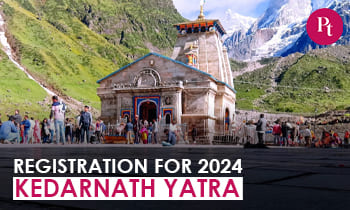
Kedarnath Temple is located in the Garhwal Himalayas of Uttarakhand and is one of the 12 Jyotirlinga temple in India, dedicated to Lord Shiva. Visitors from different parts of India and abroad come here with faith and devotion throughout the Yatra season. The temple follows a precise daily schedule of rituals that begins early in the morning with the Maha Abhishek at 4:00 AM and continues until the Shayan Aarti at 7:00 PM.
Priests carefully perform special pujas like Abhishekam, Rudra Homa, and Panchamrit Puja with full devotion. Each ritual has its own importance and helps devotees feel closer to Lord Shiva. If you are planning to join any puja, the details of different rituals and their rates are provided below. All pujas can be booked online in advance through the official BKTC portal at badrinath-kedarnath.gov.in.
Entry Fee: No entry fee for general darshan. General darshan is completely free of charge — no ticket, no token, no queue fee.
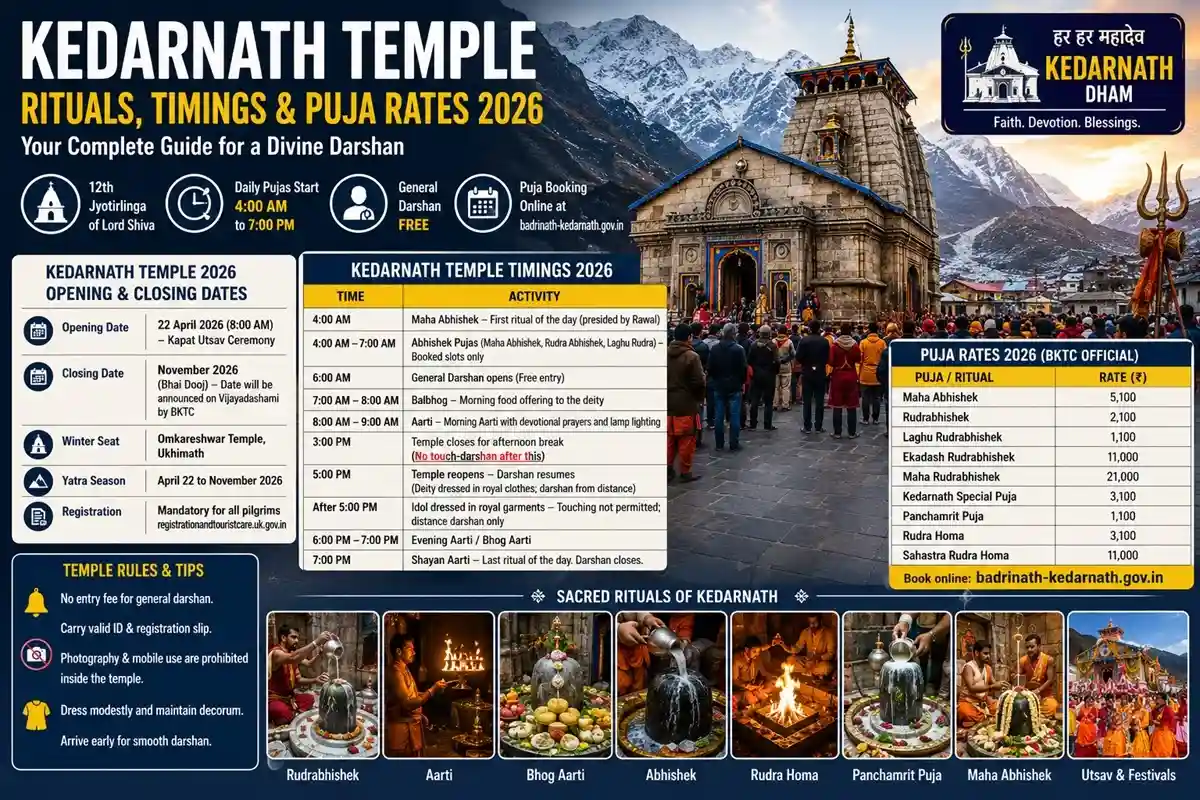
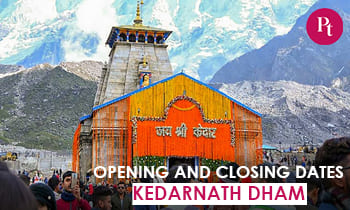
Kedarnath Temple 2026 Opening & Closing Dates
| Detail | Date 2026 |
| Opening Date | 22 April 2026 (8:00 AM) — Kapat Utsav ceremony at Kedarnath |
| Closing Date | November 2026 (Bhai Dooj) — date announced on Vijayadashami by BKTC |
| Winter Seat | Omkareshwar Temple, Ukhimath — deity resides here from closing to next season opening |
| Yatra Season | April 22 to November 2026 |
| Registration | Mandatory for all pilgrims — registrationandtouristcare.uk.gov.in |
In 2026, the Kedarnath kapat opened on 22 April at 8:00 AM. The closing date for November will be officially announced by BKTC on Vijayadashami. All pilgrims — including those booking special pujas — must complete Yatra registration before visiting.
The Sacred Pujas of Kedarnath
The Rawal, who is the head priest of Kedarnath Temple, plays an important role in its spiritual traditions. He belongs to the Veerashaiva community of Karnataka and oversees all the rituals and prayers performed by the priests under him. The same tradition has continued for centuries without interruption.
All pujas at Kedarnath Temple are conducted by BKTC-appointed priests following established Vedic rituals. Pujas can be booked online at badrinath-kedarnath.gov.in or at the BKTC counter inside the temple premises. Prior Yatra registration is required for all online puja bookings.
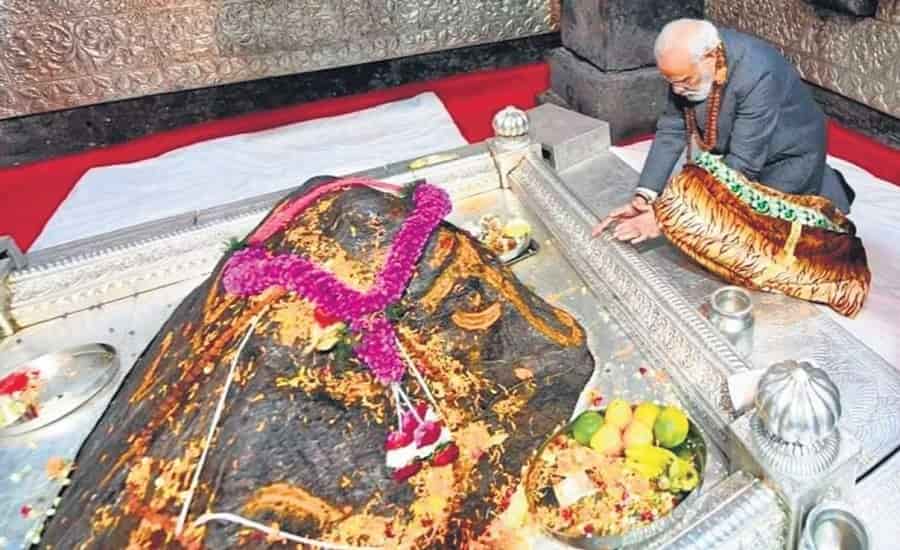
Kedarnath Temple Timings 2026
The daily pujas at Kedarnath Temple follow a peaceful rhythm of prayer, starting early in the morning and continuing through the day. Every day, puja begins at 4:00 AM with Maha Abhishek and ends at 7:00 PM with the Shayan Aarti.
| Time | Activity |
| 4:00 AM | Maha Abhishek — first ritual of the day (presided by Rawal) |
| 4:00 AM – 7:00 AM | Abhishek Pujas (Maha Abhishek, Rudra Abhishek, Laghu Rudra) — booked slots only |
| 6:00 AM | General Darshan opens (free entry) |
| 7:00 AM – 8:00 AM | Balbhog — morning food offering to the deity |
| 8:00 AM – 9:00 AM | Aarti — morning aarti with devotional prayers and lamp lighting |
| 3:00 PM | Temple closes for afternoon break (no touch-darshan after this) |
| 5:00 PM | Temple reopens — Darshan resumes (deity dressed in royal clothes; darshan from distance) |
| After 5:00 PM | Idol dressed in royal garments — touching not permitted; distance darshan only |
| 6:00 PM – 7:00 PM | Evening Aarti / Bhog Aarti |
| 7:00 PM | Shayan Aarti — last ritual of the day. Darshan closes. |
Darshan at the temple starts at 6:00 AM. There is a short afternoon break from 3:00 PM to 5:00 PM when the temple remains closed. Pilgrims can have darshan until 7:00 PM. After 5:00 PM, touching the idol is not permitted — darshan from a distance only. During this time, the deity is dressed in royal garments (Shringar).
From practical experience on the ground: the 6:00 AM to 9:00 AM window on weekdays is the best time for calm darshan. After 10:00 AM during peak season (May–June), queues can stretch to 2–3 hours. If your plan is to touch the Shivalinga (Sparsh Darshan), arrive before 1:30 PM — the inner sanctum closes for this at 3:00 PM sharp.
- Suggested Tour: Kedarnath Tour Packages
Rituals at Kedarnath Temple
- Rudrabhishek — A holy ritual where Lord Kedarnath’s idol is bathed with water, milk, curd, honey, and ghee. Pilgrims believe it brings Lord Shiva’s blessings and protection. Performed in the inner sanctum.
- Aarti — Takes place every morning and evening at the temple. Includes lighting lamps before the deity while singing prayers and devotional songs.
- Bhog Aarti — Special food (Bhog) is offered to the Lord according to ritual. Devotees see this as a way to express love and gratitude.
- Abhishek — The Shivalinga is bathed with holy Ganga water. Pilgrims believe it helps wash away negativity and brings peace to the soul.
- Rudra Homa — Fire ritual (Homa/Yajna) performed to receive blessings from Lord Shiva. During the ritual, priests chant Vedic mantras.
- Panchamrit Puja — The Lord is bathed with Panchamrit — a mixture of five sacred items: milk, curd, honey, ghee, and sugar. Performed to please the deity and seek blessings.
- Maha Aarti — A grander ceremony with detailed rituals, performed on festival days and spiritually significant occasions. Many devotees participate.
- Utsav (Festivals) — Special festivals like Mahashivratri and Diwali are celebrated with unique rituals. The Kapat opening ceremony (Kapat Utsav) at the start of Yatra season is the most significant annual event.
Important note for 2026: During peak season (May and June), Maha Abhishek, Rudrabhishek, and Laghu Rudrabhishek pujas are NOT performed at the Kedarnath temple due to the very high volume of pilgrims. These pujas are available before May and after June. If Rudrabhishek is specifically your plan, consider visiting in April, July–October.
Kedarnath Puja Rates 2026
All pujas below are set by BKTC (Shri Badrinath-Kedarnath Temple Committee) and can be booked online at badrinath-kedarnath.gov.in or at the puja counter inside the temple. Rates are subject to revision by BKTC — always confirm the final rate at the official counter before payment.
Morning Pujas (4:00 AM – 7:00 AM)
| Puja Name | Capacity | Duration | Rate (₹) |
| Maha Abhishek Puja | 5 persons | 1 hour | ₹9,500 |
| Rudra Abhishek Puja | 1 person | — | Confirm at BKTC counter |
| Laghu Rudra Abhishek Puja | 5 persons | 30 min | ₹6,100 |
| Shodasopachar Puja | 5 persons | — | ₹5,500 |
| Morning Puja (Balbhog) | — | — | ₹950 |
| Balbhog (4:00 AM) | — | — | ₹1,000 |
| Entire Pujas of a Day | — | Full day | ₹28,600 |
Evening Pujas & Path (6:00 PM – 7:30 PM)
| Puja / Path Name | Capacity | Duration | Rate (₹) |
| Shiv Sahasranamam Path | 5 persons | 10 min | ₹2,000 |
| Shiv Mahima Stotra Path | 5 persons | 12 min | ₹1,900 |
| Shiv Tandava Stotra Path | 1 person | — | Confirm at BKTC counter |
| Sampurna Aarti | 5 persons | 1 hour | ₹6,500 |
Daily & Other Services
| Service | Details | Rate (₹) |
| Dainik Yagya Havan | Daily | ₹2,000 |
| Akhand Jyoti (Daily) | Per day | ₹3,900 |
| Akhand Jyoti (Yearly) | Full season | ₹28,000 |
Special Occasion Pujas
| Occasion | Rate (₹) |
| Shrawani Purnima Annakut | ₹7,500 |
| Akhand Jyoti (Yearly) | ₹28,000 |
How to book: Online at badrinath-kedarnath.gov.in (prior Yatra registration with Indian mobile number required). Or at the BKTC puja counter inside the temple premises. For early morning Abhishek pujas, collect your slot timing at the counter one day before.
Important: The amounts paid towards any puja booking are non-refundable and non-transferable. BKTC reserves the right to reschedule or cancel any puja. Carry a valid government photo ID (Aadhaar, Voter ID, Driving License, or Passport) with your puja receipt at the counter.
VIP Darshan — Kedarnath 2026
VIP darshan at Kedarnath provides access through a priority queue, significantly reducing the general queue wait time (which can be 2–5 hours during peak season). VIP darshan is sanctioned by BKTC and must be booked through official channels.
| VIP Darshan Type | Persons | Rate (₹) |
| VIP Darshan Pass | 1 person | ₹300 approx. (verify at BKTC — may vary for 2026) |
| Whole Day Puja + VIP Pass | Up to 5 | ₹51,000 (includes Rudra Abhishek + Sparsh Darshan + full day) |
| Sampurna Aarti (Evening) | 5 persons | ₹6,500 (includes full evening aarti participation) |
General darshan is always free. VIP darshan is optional. The same shivlinga, the same darshan — only the queue length differs.
Temple Rules & Guidelines
- Yatra registration mandatory: All pilgrims must register at registrationandtouristcare.uk.gov.in before visiting. No registration = no entry at the Sonprayag checkpoint.
- Dress code: Traditional and modest attire is expected. No shorts or sleeveless clothing at the temple. Dhoti, kurta, or full-length clothing is recommended.
- Photography: Photography is NOT allowed inside the temple (main hall and garbha griha). Photography is permitted in the outer courtyard and outside the temple complex.
- Prohibited items: Leather items (belts, bags, shoes) are not permitted inside the temple. Mobile phones and cameras are not allowed inside. Deposit at the token counter before entering.
- No footwear: Footwear must be removed before entering the temple complex.
- Touching the Shivalinga: Sparsh darshan (touching the Shivalinga) is only available until 3:00 PM. After 5:00 PM, darshan from a distance only.
- Puja booking: All pujas must be booked through BKTC — official portal (badrinath-kedarnath.gov.in) or the counter inside the temple. Do not pay any individual who approaches you outside the temple claiming to offer puja booking services.
Frequently Asked Questions
Q1. Are there any rules to follow at Kedarnath Temple?
Yes. All pilgrims must complete Yatra registration before visiting (registrationandtouristcare.uk.gov.in). Inside the temple, photography is not allowed. Leather items and footwear must be removed before entering. Dress modestly — traditional attire is expected. After 5:00 PM, only distance darshan is permitted.
Q2. What is the best time to attend rituals at Kedarnath Temple?
The best time to attend pujas is early morning, between 6:00 AM and 8:00 AM. Queues are shortest and the temple atmosphere is most peaceful at this hour. For Abhishek pujas specifically (which begin at 4:00 AM), book slots the previous evening at the BKTC counter or in advance online.
Q3. Is there a limit on how many people can take part in a puja?
Yes, each puja has a defined capacity. Most group pujas are designed for 5 persons (same family/gotra). Some like Rudra Abhishek are for 1 person. VIP Darshan with whole-day puja accommodates up to 5 persons with 2 additional on the same pass. Confirm the group size limit at booking.
Q4. Is it possible to donate online to Kedarnath Temple?
Yes. Online donations can be made through the official BKTC website at badrinath-kedarnath.gov.in. You can donate as a registered user or as a guest. Donations are non-refundable and non-transferable. You will also be notified of temple events if you register as a user.
Q5. Is there an entry fee for Kedarnath Temple?
No. General darshan at Kedarnath Temple is completely free. There is no ticket, no queue token, no entry fee. You walk in and join the general queue. What costs money is VIP darshan (approx. ₹300 per person at BKTC counter) and special pujas. Do not pay any amount to individuals outside the temple claiming it is a mandatory entry fee.
Q6. When does Kedarnath Temple open and close in 2026?
The Kedarnath kapat (doors) opened on 22 April 2026 at 8:00 AM. The closing date in November 2026 (Bhai Dooj) will be officially announced by BKTC on Vijayadashami. After closing, the Utsav Murti (deity’s processional idol) is shifted to Omkareshwar Temple, Ukhimath, where worship continues through winter.
Q7. Can pujas be performed on behalf of a pilgrim who cannot visit in person?
Yes. BKTC offers non-attending puja booking — the chief priest performs the ritual with your name and gotra without you being physically present, and you can receive prasad by post. This service is available through the official BKTC portal. BKTC also streams daily aartis and the Maha Abhishek live on their official YouTube channel and badrinath-kedarnath.gov.in.
Q8. Are Rudrabhishek and Maha Abhishek available during May and June?
No. During peak season — May and June — Maha Abhishek, Rudrabhishek, and Laghu Rudrabhishek are NOT performed at Kedarnath due to the extremely high number of pilgrims. If these specific pujas are part of your Yatra plan, visit in April (after opening on 22 April), or from July to October. Confirm availability at the BKTC counter before booking.
Q9. Who is the Rawal (head priest) of Kedarnath Temple?
The Rawal of Kedarnath Temple is the chief priest who presides over all major rituals including the Maha Abhishek. The Rawal belongs to the Veerashaiva (Lingayat) community of Karnataka — a tradition that has continued for centuries, believed to have been established by Adi Shankaracharya. The Rawal’s role is both administrative and spiritual; he oversees all the priests and the temple’s daily schedule.
Q10. How do I book a puja at Kedarnath Temple?
Option 1: Online — visit badrinath-kedarnath.gov.in, register with your Indian mobile number, and book from the available slots. Yatra registration is required before puja booking. Option 2: At the temple — visit the BKTC puja counter inside the temple premises. For early morning Abhishek pujas, collect your slot timing at the counter one day in advance. Carry valid photo ID with your puja receipt.
Conclusion
Kedarnath Temple is located in the Himalayas and is one of India’s 12 Jyotirlingas dedicated to Lord Shiva. Pilgrims from all over the world visit to experience the temple’s peace and spiritual atmosphere. In 2026, the Yatra season opened on 22 April. Each day, rituals begin at 4:00 AM with Maha Abhishek and end at 7:00 PM with the Shayan Aarti.
Special rituals like Abhishekam, Rudra Homa, and Panchamrit Puja are performed with deep devotion — each offering a unique spiritual experience. The Rawal, head priest of Kedarnath Temple from Karnataka’s Veerashaiva community, oversees all rituals. Pujas can be booked online at badrinath-kedarnath.gov.in or at the temple counter.
Complete your Yatra registration before your visit, follow the temple dress code and rules, and if Rudrabhishek is on your plan — avoid the May–June peak period when these pujas are not performed.






 Call
Call WhatsApp
 Enquiry
Aarti