
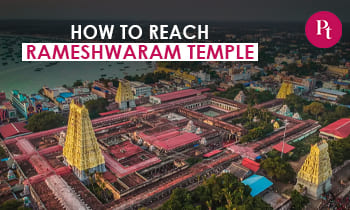
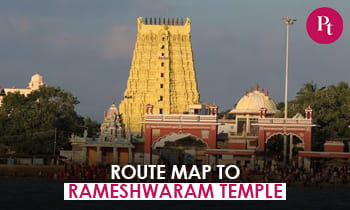
Rameshwaram Temple is a famous Hindu temple situated at India’s southernmost edge. It is one of the best examples of Dravidian architecture. The temple is home to one of the Lord Shiva’s twelve auspicious Jyotirlingas which are believed to be self-manifested. It is also believed to be one of the sites of the Char Dham Yatra. It is believed that without visiting this sacred abode of Lord Shiva no pilgrimage bears full fruit. The temple has 22 sacred ponds with holy water which can rinse off from the body all earthly evils. Many devotees also visit this sacred site to perform their loved ones after-death rituals to provide them salvation. In this article we will explore the origin, history and prominence of this temple.
Origin of the Temple
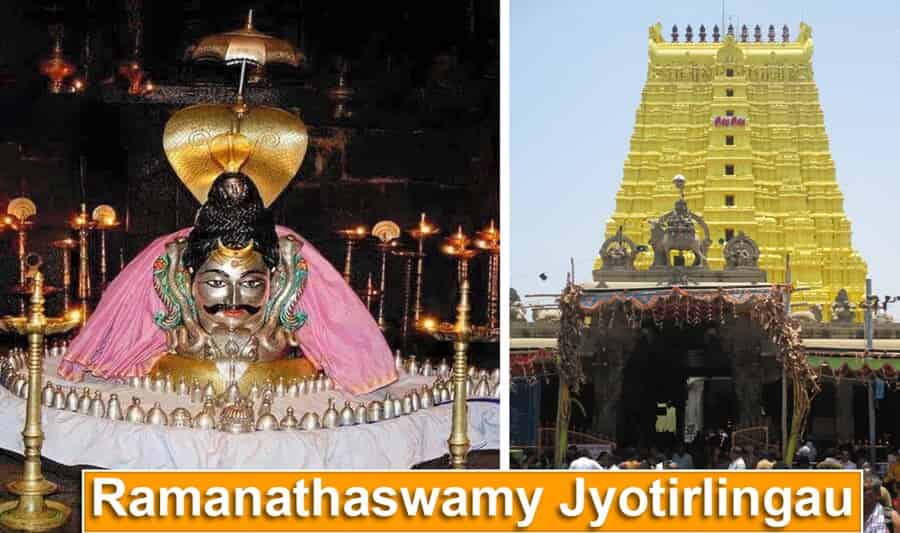
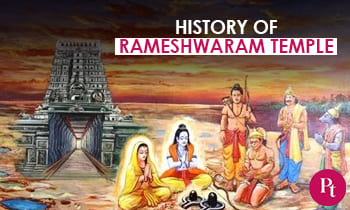
There are many legends about Ramanathaswamy Temple’s origin. It is believed that this temple was built on the site where Lord Rama, Ramayana’s hero built a lingam of sand. As Rama was on his way to attack demon king Ravana on Lanka, the island fortress he stopped to have a drink by the seashore. As he was doing so, he heard a voice came from the heavens wherein he was told that he should drink water only after worshipping the relevant deity. Rama recognized that the heavenly voice belonged to Lord Shiva. After this a lingam of sand was made by Rama, and he worshipped it. Rama also asked for the blessing of Shiva, so that he could easily vanquish Ravana. Finally, Rama made a request to Shiva to reside at that spot eternally, so that mankind could get the benefit of it. Shiva agreed to this and got transformed into the lingam which you can see inside the temple.

Historical Significance
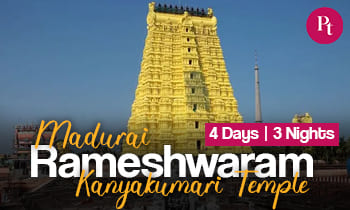
The Ramanathaswamy temple’s construction has been contributed over the centuries by several rulers. In the twelfth century, the Pandya dynasty made the temple’s expansion. The temple’s construction is said to be sanctioned by Raghunatha Kilavan King Kizhavan Sethupathi. The Pandya Dynasty’s Jaffna kings, King Jeyaveera Cinkaiariyan, and Gunaveera Cinkaiariyan, his successor have contributed to the construction of this sacred temple. The temple’s present structure was built in the seventeenth century.
While Fergusson believes in the west corridor the small vimana belongs to the eleventh or twelfth century. It is believed that King Raghunatha Kilavan or Kizhavan Sethupathi sanctioned the temple for construction. The Jaffna kings of Pandya Dynasty’s contribution to building the temple was considerable. Stone blocks were shipped by King Jeyaveera Cinkaiariyan (1380–1410 CE) from Koneswaram temple that is situated in Trincomalee to renovate the sanctum sanctorum of the temple. The successor of Jeyaveera Cinkaiariyan Gunaveera Cinkaiariyan (Pararacacekaran V) also oversaw this temple’s structural development.
During the tenure of Pradani Muthirulappa Pillai a huge amount of money was spent towards the Pagodas restoration which were falling into ruins and the cloistered precincts of the temple or the splendid Chokkattan Mandapam at Rameswaram that he completed. Sri Lanka rulers also contributed to this temple’s construction. Parakrama Bahu (1153–1186 CE) was involved in the temple’s sanctum sanctorum’s construction. Also, king Nissanka Malla of Sri Lanka contributed to the development of the temple by sending workers and making donations.
Jyotirlinga’s Origin
According to Shiva Purana, once, Brahma and Vishnu had a heated argument regarding their supremacy in creation. Shiva tried to settle their dispute by piercing the three worlds as an endless and huge pillar of light known as the jyotirlinga. Brahma and Vishnu split their ways upwards and downwards respectively to find in either directions the end of the light. Brahma lied that in his direction he discovered the pillar’s end, while Lord Vishnu acknowledged his defeat. Shiva cursed Brahma that in ceremonies he would have no place while Vishnu would be worshipped by the humankind till the end of eternity.
The jyotirlinga is believed to be partless reality’s supreme part, out of which Shiva appears partly. The jyotirlinga shrines are considered to be the sites where Lord Shiva appeared as a fiery column of light. Originally, 64 jyotirlingas were believed to be there, out of which the twelve are sacred to Shiva. Each of the 12 jyotirlinga sites are in the name of the presiding deity and each of them are believed to be Shiva’s different manifestation. At all these sacred sites, the lingam is the primary image that represents the Stambha pillar, symbolising Shiva’s infinite nature.





 Call
Call WhatsApp
 Enquiry
what is the message carved in the culvert at Sri Ramanathasamy temple, Rameswaram tocommemorate the visit of Swami Vivekananda. if possible please post photograph of the culvert