
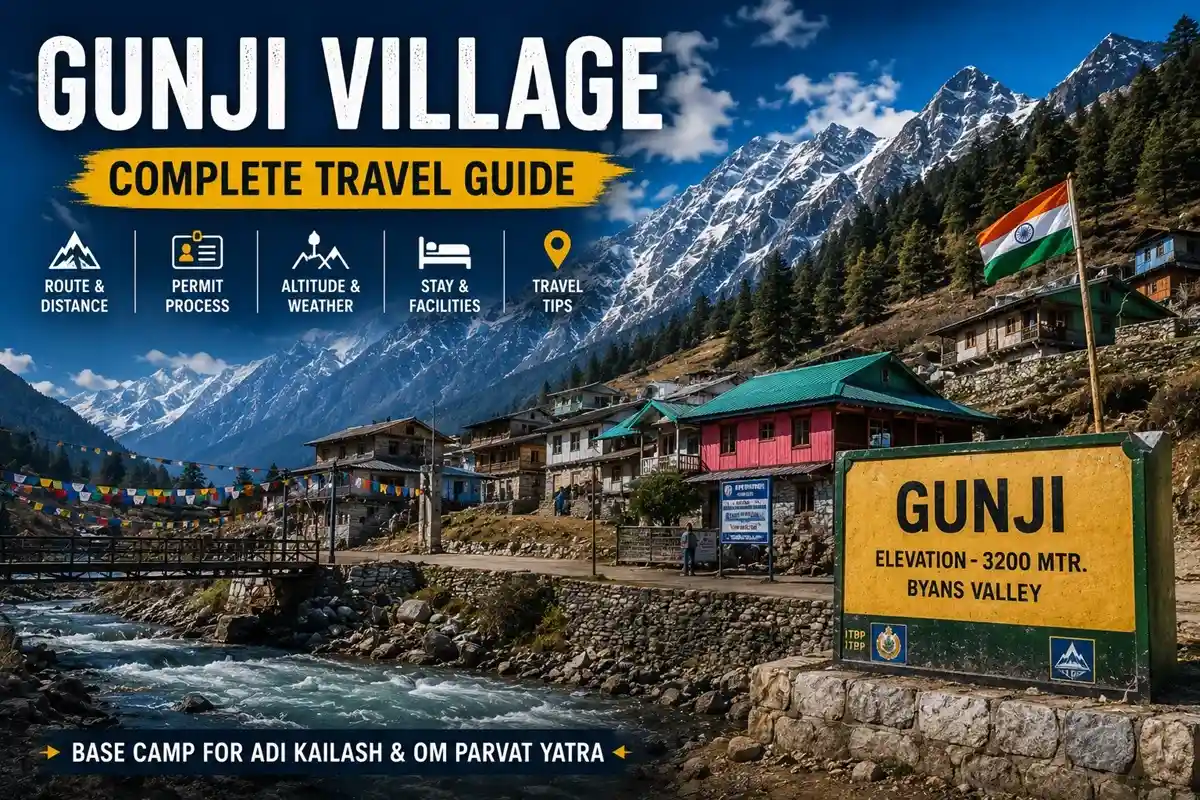
Gunji Village is the small Himalayan settlement in Pithoragarh district, Uttarakhand, where pilgrims heading toward Adi Kailash, Om Parvat, or the Kailash Mansarovar route stop to acclimatize before going higher. It isn’t a tourist town — it’s a working border outpost with an ITBP camp, a handful of homes, and a role most itineraries barely explain. This guide covers what Gunji Village actually is, how to reach it, and what to expect once you’re there.
Quick Facts
| Detail | Information |
|---|---|
| District | Pithoragarh, Uttarakhand |
| Altitude | ~3,200 m (some sources cite up to 3,500 m) |
| Best season | May–June, September–October |
| Permit | Inner Line Permit (Indian citizens only) |
| Nearest railhead | Kathgodam |
| Nearest airport | Pantnagar (limited flights) |
| Stay options | KMVN guesthouse, homestays |
| Mobile network | Unreliable beyond Dharchula |
Key Takeaways
- Gunji Village is a seasonal settlement — most residents relocate to Dharchula every winter and return each May.
- It functions as the operational junction where the road forks toward Adi Kailash on one side and Nabhidhang/Om Parvat on the other.
- ITBP, SSB, and GREF personnel are stationed here year-round, since the routes onward lead toward the India-Nepal-China trijunction area.
- Gunji won the Ministry of Tourism’s Best Tourism Villages 2024 Gold Award for its cultural heritage and responsible tourism efforts.
- Spending at least one night here for acclimatization is standard practice, not an optional add-on.

Where Is Gunji Village?
Gunji is a small border village in the Dharchula tehsil of Pithoragarh district, at the eastern end of the Kuthi (Kuti) Valley — roughly three times higher in elevation than Dharchula town itself. Most sources place it at around 3,200 m, though a few list it closer to 3,500 m depending on the exact point measured.
The 2011 census recorded 335 residents across 194 households. That figure comes from official census records, but since the village is only actively inhabited during the travel season, the number of people physically present on any given day varies through the year rather than reflecting constant, year-round habitation.
Winters here are largely unlivable for civilians. Traditionally, many families migrated on foot to Dharchula each November and walked back in May, a journey covering roughly 60–70 km — though vehicle transport is increasingly used for this move wherever road access allows.
Why Gunji Village Matters on the Yatra Circuit
Gunji isn’t a scenic stopover — it’s the operational hub of the region. This is where the route physically splits: one branch heads through Kuti village toward Jolingkong for the Adi Kailash darshan (roughly 14 km onward), the other toward Nabhidhang for the Om Parvat viewpoint (roughly 15–20 km) and further on toward Lipulekh Pass on the Kailash Mansarovar route.
Gunji sits along the approach to the India-Nepal-China trijunction area rather than at the exact trijunction point itself. Because the altitude gain is significant here, most organized yatras mandate a rest night before continuing. Permit verification, porter and mule arrangements, and emergency coordination for the wider region all run through this village.
Who Should Visit — and Who Should Be Cautious
Gunji suits pilgrims, trekkers, and travelers heading toward Adi Kailash or Om Parvat who need a genuine, unhurried acclimatization stop. It’s less suited to those with severe heart or lung conditions, recent major surgery, or pregnancy, given the altitude and limited medical backup — anyone with such conditions should consult a doctor well before booking.
History and People of Gunji
The India-China border closure after the 1962 war disrupted the trans-Himalayan trade that had long sustained the Bhotiya (Rung) community here. Trade only partially resumed in 1992, when India and China reopened Lipulekh Pass under bilateral protocols and established a regulated trade mart at Gunji.
Villagers rely on limited agriculture and herding during the short summer window, alongside seasonal income from portering, guiding, and homestays tied to the yatra season. The Rung community’s traditional dress, dialect, and wood-built houses are still visible in the Byans Valley villages along this route, including nearby Garbyang.
Today Gunji reflects a dual identity — part civilian settlement, part strategic outpost, with ITBP, SSB, and GREF camps alongside a Customs Office, an Intelligence Bureau presence, and a temporary State Bank of India branch and post office that, when operational, run only during the travel season.
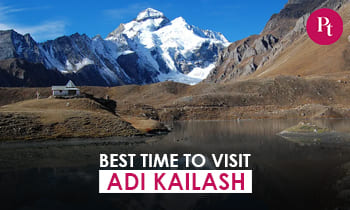
Best Time to Visit Gunji Village
Most pilgrims travel through Gunji between May and October, aligned with the broader Adi Kailash and Om Parvat yatra season.
- May–June: Village reopens after winter migration; roads are freshly cleared.
- July–August (monsoon): Landslide risk is high on approach roads; build in buffer days.
- September–October: Generally the most stable window, with clear skies and settled roads.
- November–April: Village is largely empty; civilian access isn’t practical.
Route, Road Quality, and Distance Chart
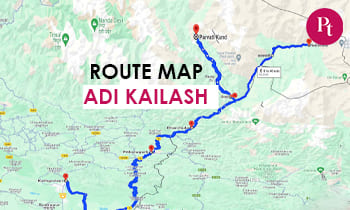
The typical route runs: Kathgodam or Delhi → Almora → Pithoragarh → Dharchula → Tawaghat → Narayan Ashram → Sosa → Gala → Budhi → Chialekh → Malpa → Garbyang → Gunji. The stretch beyond Dharchula follows the Kali River gorge on a mostly blacktop, BRO-maintained road, though sections narrow into gravel and hairpin bends near river crossings.
| From | To | Approx. Distance |
|---|---|---|
| Delhi | Kathgodam | ~280 km |
| Kathgodam | Pithoragarh | ~210 km |
| Pithoragarh | Dharchula | ~90 km |
| Dharchula | Gunji | ~70–90 km |
These figures are approximate and vary by exact route and road conditions. The full Delhi-to-Gunji journey typically takes 3–4 travel days with rest halts, and the final Dharchula–Gunji stretch alone usually takes 5–6 hours, longer if landslide clearing is underway.
Weather in Gunji Village
At 3,200 m, Gunji has a cold mountain climate even in summer. Daytime temperatures in the May–October window generally range between 10°C and 18°C, dropping well below freezing after sunset in shoulder months. Wind picks up by afternoon, cloud cover can build quickly, and light snowfall is possible even outside winter, so pack for sudden shifts rather than the forecast alone.
Connectivity, Food, and Basic Facilities
- Mobile network: BSNL and Jio coverage is patchy even in Dharchula and largely unreliable beyond it; carry offline maps.
- Banking: A seasonal SBI branch and post office operate in Gunji during the travel months, when staffing allows; the last dependable ATM is in Dharchula.
- Electricity: Limited and inconsistent; carry a power bank.
- Food: Simple vegetarian meals at homestays and KMVN guesthouses; carry packaged snacks and a water bottle, since shopping options are minimal.
- Medical help: Coordinated through the ITBP station, which is not a civilian hospital — carry your own essential medicines.
Permit and Registration Process
An Inner Line Permit (ILP) is mandatory for every Indian traveler heading beyond Dharchula into the Byans Valley, available from the District Magistrate’s office in Pithoragarh, the Dharchula SDM office, or an authorized yatra operator.
- Carry a valid photo ID, passport-size photographs, and (for organized yatras) a medical fitness certificate from a government hospital.
- Carry your ILP and ID at every checkpost between Tawaghat and Gunji.
- On arrival, register at the Gunji ITBP check post — mandatory, and useful for emergency coordination.
- Permit fees, validity, and documentation requirements are revised periodically, so confirm current details with the district administration before travel.
- Foreign nationals currently face significant restrictions in this border zone, subject to Ministry of Home Affairs regulations, so check the latest guidelines before planning.
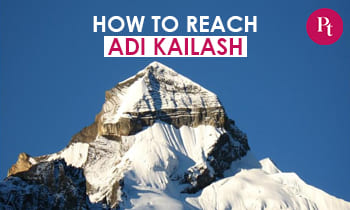
How to Reach Gunji Village
There’s no direct rail or air connection to Gunji itself. The nearest airport with limited flights is Pantnagar; most travelers fly into Delhi and continue by road or rail via Kathgodam, the nearest major railhead.
From Kathgodam, taxis and buses run to Pithoragarh and Dharchula, but public transport thins out beyond that. A helicopter service from Dharchula to Gunji has operated since 2014, though seat availability depends on weather, season, and maintenance schedules — it isn’t a guaranteed daily service. A small local airstrip has also been proposed by the state government but remains at the planning stage.
Where to Stay: Accommodation in Gunji
- KMVN guesthouses: Basic shared rooms with blankets provided; hot water and electricity availability can be inconsistent, so ask ahead.
- Local homestays: Run by village families, offering simple meals and closer contact with Byans Valley life, usually on a shared-room basis.
- Campsites: Used mainly during peak-season overflow, with minimal facilities and dry-pit toilets.
Booking is usually arranged through your yatra operator or KMVN directly, since independent lodging options are limited this far into the border zone.
Budget Breakdown (Approximate, per person)
| Expense | Estimated Cost (INR) |
|---|---|
| Permit and paperwork | Varies, revised periodically |
| Transport (Kathgodam to Dharchula, round trip) | 4,000–7,000 |
| Local vehicle (Dharchula to Gunji) | 2,500–5,000 |
| Stay and meals in Gunji (per night) | 1,000–2,000 |
| Porter/guide charges (if hired) | 800–1,500/day |
| Helicopter (Dharchula–Gunji, if opted) | Separate, weather-dependent booking |
Costs vary by season, group size, and whether you’re on an independent trip or a bundled package.
Packing List
- Must carry: Layered woollens, thermal wear, sturdy shoes, ILP and ID copies, personal medication.
- Recommended: Power bank, ORS, basic first-aid kit, offline maps, cash in small denominations.
- Avoid carrying: Drones without prior clearance, and anything that could be mistaken for signalling equipment near border checkposts.
Altitude Sickness: Symptoms and Prevention
Acute Mountain Sickness (AMS) is common above 3,000 m and can affect even fit travelers. Watch for headache, nausea, dizziness, or loss of appetite. Prevention means ascending gradually, staying hydrated, avoiding alcohol, and resting fully on your first night in Gunji rather than pushing onward the same day.
Senior Citizen and Accessibility Notes
Do not attempt the onward routes to Jolingkong or Nabhidhang on the same day you arrive in Gunji — rest here is effectively mandatory. Senior citizens should prefer organized batches that build in this halt deliberately. The terrain and basic facilities make this route difficult for wheelchair users or those with limited mobility, so plan realistically around fitness levels.
Safety, Local Customs, and Warnings
- Register at the ITBP checkpost immediately on arrival; it’s how emergency response gets coordinated in this remote zone.
- Avoid photographing ITBP installations, checkposts, bridges, or personnel — this is an active border area.
- Medical facilities are basic and coordinated through the ITBP station, so carry essential medicines and consider travel insurance with high-altitude coverage.
- Respect local customs and dress modestly near temples and homes; the Byans Valley ecosystem is fragile, so pack out all litter and avoid single-use plastic where possible.
Latest Updates
Gunji won the Ministry of Tourism’s Best Tourism Villages 2024 Gold Award, recognizing its cultural heritage and role in responsible tourism. Discussions around a local airstrip continue, though the Dharchula helicopter service remains the primary air-linked option for now. Road maintenance along the Dharchula–Gunji stretch continues seasonally, with monsoon damage still causing temporary disruptions in most years — always confirm current road and permit status closer to your travel dates rather than relying on older reports.
Gunji vs Dharchula vs Nabhidhang
| Feature | Gunji | Dharchula | Nabhidhang |
|---|---|---|---|
| Role | Acclimatization + route junction | Gateway town, last full-facility base | Om Parvat viewpoint |
| Altitude | ~3,200 m | ~950 m | ~4,300–4,700 m |
| Facilities | KMVN guesthouses, ITBP camp | Hotels, ATM, hospital, market | Basic seasonal camps only |
| Network | Unreliable | Patchy but usable | Largely unavailable |
| Population | Seasonal, ~335 (2011 census) | Permanent town | Not a settlement |
Frequently Asked Questions
Q-1: What is the altitude of Gunji Village?
Most sources place it around 3,200 m, though a few cite up to 3,500 m.
Q-2: Is Gunji a permanent village?
No, it’s seasonally inhabited; most residents relocate to Dharchula in winter.
Q-3: Do I need a permit to visit Gunji Village?
Yes, an Inner Line Permit is mandatory for all Indian travelers beyond Dharchula.
Q-4: Is Gunji the last village before Adi Kailash?
It’s the last settlement with organized facilities; the route continues via Kuti village.
Q-5: Why do pilgrims stop overnight in Gunji?
The altitude gain requires acclimatization before continuing higher, so rest here matters.
Q-6: How far is Gunji from Dharchula?
Roughly 70–90 km by road, usually taking 5–6 hours depending on conditions.
Q-7: Can I fly to Gunji Village?
A weather-dependent helicopter service runs from Dharchula; a local airstrip is only proposed.
Q-8: What is the best time to visit Gunji?
May–June and September–October offer the most stable weather and roads.
Q-9: Is mobile network available in Gunji?
Coverage is unreliable beyond Dharchula, so carry offline maps as backup.
Q-10: Can I stay in Gunji independently, without a package?
Yes, though options are limited; booking through KMVN or a local operator is easier.
Q-11: Is camping allowed near Gunji?
Basic seasonal campsites exist, mainly used during peak-season overflow.
Q-12: What community lives in Gunji Village?
The Bhotiya (Rung) community, traditionally linked to trans-Himalayan trade before 1962.
Q-13: Can foreign tourists visit Gunji?
Access is significantly restricted for foreign nationals; check current Ministry of Home Affairs rules.
Q-14: Is there an ATM in Gunji?
No reliable ATM; the last dependable one is in Dharchula.
Q-15: What recent recognition has Gunji received?
It won the Ministry of Tourism’s Best Tourism Villages 2024 Gold Award.
Conclusion
Gunji Village isn’t a destination in itself, but skipping its role in your planning is a mistake many first-time pilgrims make. Understanding its altitude, its function as a route junction, and the genuine need for a rest night here turns a confusing transit stop into a well-planned part of your Adi Kailash or Om Parvat journey. Families, senior citizens, and anyone new to high-altitude travel should build in that Gunji halt deliberately — it’s what makes the rest of this Himalayan route manageable and safe.
Must Reads on:


 Call
Call WhatsApp
 Enquiry