
For centuries, sages, seekers and saints have walked into the Himalayas in search of spirituality. Pilgrimage routes now crisscross the subcontinent, from well-known temples to remote tracks in the hills. Not every Yatra is easy. The difficult pilgrimages in India need planning, preparation and accurate information about routes, permits and seasons.
This guide covers twelve of them, with height, walking distance and season for each, plus 2026 updates where they apply. Figures were checked against official portals and press reports in October 2026. Dates and rules change every year, so confirm with the managing authority before you book.
| Quick answer By height and distance, Kailash Mansarovar, Shrikhand Mahadev and the 280 km Nanda Devi Raj Jat are the toughest. Amarnath, Kinner Kailash, Hemkund Sahib, Manimahesh and Rudranath are shorter but steep. Kedarnath is a 16 km climb with pony, palki and helicopter options. Adi Kailash is mostly by road. |
Difficult Pilgrimages in India at a Glance

| Pilgrimage | Where | Highest point | Walking distance | Season |
| Kailash Mansarovar | Western Tibet, China | Dolma La, about 5,630 m | 52 km Parikrama | 2026: MEA batches, June to August |
| Hemkund Sahib | Chamoli, Uttarakhand | 4,632 m | 19 km from Govindghat | 2026: opened 23 May; usually runs to early October |
| Amarnath | Jammu and Kashmir | 3,888 m (cave) | About 14 km (Baltal) or 46 to 48 km (Pahalgam) | 2026: 3 July to 28 August |
| Shrikhand Mahadev | Kullu, Himachal Pradesh | About 5,660 m (18,570 ft) | About 32 km one way | 2026: planned 10 to 23 July; suspended |
| Manimahesh | Chamba, Himachal Pradesh | 4,080 m (lake) | 13 to 14 km one way | Janmashtami to Radhashtami; 2026 ended 19 September |
| Kedarnath | Rudraprayag, Uttarakhand | 3,583 m | 16 km one way | 2026: opened 22 April; closes around Bhai Dooj (tentatively 11 November) |
| Kinner Kailash | Kinnaur, Himachal Pradesh | Peak 6,050 m; Shivling about 4,800 m | About 14 km one way (some guides say up to 19 km) | Dates set yearly, usually July to August |
| Adi Kailash | Pithoragarh, Uttarakhand | Peak 5,945 m | Mostly by road | About late May to October, with permit |
| Rudranath (Panch Kedar) | Chamoli, Uttarakhand | About 3,600 m | About 20 km one way from Sagar | Seasonal; confirm locally |
| Nanda Devi Raj Jat | Chamoli, Uttarakhand | Ends at Homkund | 280 km in about three weeks | Every 12 years; committee says 2027 |
| Sabarimala | Kerala | Hill shrine, steep climb | About 5 km from Pamba | 2026-27: Mandalam season from 17 November |
| Girnar | Junagadh, Gujarat | Gorakhnath peak, 1,117 m | 9,999 steps to the top | Parikrama held in November |
Distances are one way unless stated. Sources differ by a kilometre or two on several routes, so treat the figures as approximate.
What Makes a Pilgrimage Difficult
Four things decide how hard a high altitude pilgrimage in India is: altitude, walking distance, how short the season is, and how much paperwork stands between you and the trailhead. Kailash Mansarovar rates high on altitude, distance and paperwork. Shrikhand Mahadev rates high on altitude and distance, and its season can shrink to two weeks or disappear.
A few Yatras are hard for other reasons. Sabarimala asks for 41 days of discipline before the climb, and Girnar is a stamina test of 9,999 steps.
Kailash Mansarovar Yatra

Hindus regard Mount Kailash as the permanent abode of Lord Shiva. Snow surrounds the mountain through the year, and the Yatra is one of the toughest pilgrimages Hindus undertake. It is also among the remotest places of Shiva worship in the world.
Kailash stands at 6,638 m in western Tibet, with the sacred Lake Mansarovar (about 4,590 m) nearby. The mountain matters to Buddhists, Jains and followers of Bon as well. The journey begins in India and crosses into Tibet.
The hardest part is the Parikrama. The 52 km circuit around Kailash starts at Darchen and takes about three days. It crosses Dolma La at around 5,630 m, where the air holds roughly half the oxygen found at sea level.
- Check out: Kailash Mansarovar Yatra Package
How the Yatra Works in 2026
- The Ministry of External Affairs runs it through Lipulekh Pass (Uttarakhand) and Nathu La (Sikkim). Apply at kmy.gov.in; pilgrims are chosen by computerised draw.
- 2026 had 20 batches of 50 pilgrims, 10 per route, from June to August. Applications closed on 19 May.
- Lipulekh takes about 22 days and Nathu La about 21. The portal estimates about ₹2.09 lakh and ₹3.31 lakh per person. Confirm what the estimates include, since several sources list medical, visa and Tibet-side costs separately.
- Applicants must hold an Indian passport, be 18 to 70 on 1 January of the Yatra year, and have a BMI of 25 or below. Selected pilgrims go through MEA medical tests.
- Private operators run the Yatra from Nepal without a draw. These trips are usually shorter.
Hemkund Sahib

Hemkund Sahib is one of the most sacred pilgrimage sites for Sikhs. The gurdwara stands beside a naturally formed high-altitude lake in Chamoli district, Uttarakhand, at 4,632 m, facing the mountain ranges. Imposing hills and jagged peaks surround it. They look intimidating, but the setting is scenic. Sikhs from India and abroad make the testing climb every season.
The walk is 19 km from Govindghat. The first 13 km lead to Ghangaria village, which is also the starting point of the Valley of Flowers trek. The last 6 km to the shrine is a steep climb.
- Registration is mandatory on the Uttarakhand pilgrimage portal, registrationandtouristcare.uk.gov.in.
- Helicopters fly between Govindghat and Ghangaria. The final 6 km is on foot, by pony or by Palki.
- Medical camps and health screening operate along the route.
- The shrine opened on 23 May in 2026 and normally stays open until early October, depending on snow and weather.
Amarnath Yatra

The Amarnath cave sits at 3,888 m in Jammu and Kashmir and holds great religious importance for Hindu devotees. The main attraction inside is an ice formation worshipped as a Shivling. It forms naturally over time, and devotees believe Shiva himself gives Darshan there. The cave is hard to reach, and the Yatra needs a good level of physical fitness.
The Shri Amarnathji Shrine Board fixes the dates, and the Yatra stays open for a limited period. In 2026 it ran for 57 days, from 3 July to 28 August. Pilgrims crowd the route throughout.
- Baltal route: about 14 km, steep, usually 1 to 2 days.
- Pahalgam route: about 46 to 48 km, more gradual, usually 3 to 5 days.
Every pilgrim needs a Yatra permit and a Compulsory Health Certificate. For 2026 the certificate had to be issued on or after 8 April. The age limit is 13 to 70, and women more than six weeks pregnant are not registered. A helicopter service to Panjtarni also exists, so check the Shrine Board for the current booking process.
- Check out: Amarnath Yatra Package
Shrikhand Mahadev Yatra

Shrikhand Mahadev is counted among the most difficult Yatras in North India. The trek stays open only for a few weeks and passes through snow-clad hills and peaks. At the end, a natural rock formation is worshipped as a Shivling, standing on the edge of a cliff in Kullu district, Himachal Pradesh.
Himachal press reports put the peak at about 18,570 ft (roughly 5,660 m). Some trekking guides give a lower figure, so treat the height as approximate.
- Distance: about 32 km one way from Jaon village, usually three to five days for the round trip.
- Route: Jaon to Singhgad is a gentle 3 km. Base camps run at Singhgad, Thachru, Kunsha, Bhim Dwar and Parvati Bagh.
- Season: in a normal year the official window is about two weeks in July. Registration and a medical check are mandatory.
In 2026 the Yatra was due to run from 10 to 23 July. The Kullu district administration suspended it in late June after an expert team found the stretch between Bhim Dwar and Parvati Bagh unsafe, and it banned entry to the route. Check the latest order before planning. Casualties are reported in most seasons, and some of those hurt in past years had set out before the official opening.
Manimahesh Yatra
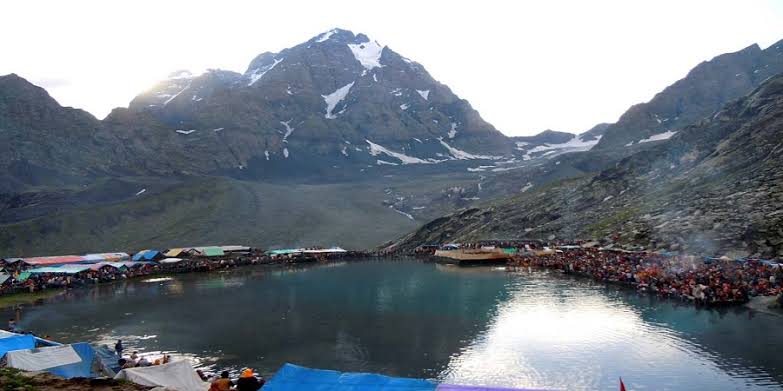
Manimahesh Yatra leads to Manimahesh Lake, a remote spot in Chamba district, Himachal Pradesh. The lake lies at 4,080 m beneath the Manimahesh Kailash peak, and both carry deep religious significance. The Yatra runs in August and September, from Janmashtami to Radhashtami, and is a major state-level pilgrimage organised by the Himachal Pradesh government.
The trek starts at Hadsar, 13 km by road from Bharmour, and covers 13 to 14 km one way via Dhancho and Gaurikund. Hadsar sits at roughly 6,000 ft, so the climb is steep, with rocky ground and glaciers on the way. Most pilgrims take about three days and halt at Dhancho. The administration arranges facilities on the route, but the terrain is hard for anyone who is not an avid trekker.
In 2026, online registration was compulsory, with a cap of 5,000 pilgrims a day and an e-pass. The traditional parikrama through Kugti village was restricted. The Yatra ended on 19 September, Radhashtami.
Kedarnath Dham Yatra

Kedarnath, in Rudraprayag district, Uttarakhand, is one of the holiest Shiva temples and one of the twelve Jyotirlingas. The temple stands at 3,583 m on the bank of the Mandakini River, amid the raw mountain scenery of the Garhwal Himalaya. It is also the best known of the Panch Kedar shrines. Our Kedarnath Dham guide covers the temple itself.
It is the busiest Yatra on this list, and it is still a hard one. The challenge is the 16 km climb from Gaurikund, which usually takes six to eight hours on foot, and the altitude. Private vehicles stop at Sonprayag, and shared jeeps cover the last 5 km to Gaurikund.
- Options from Gaurikund: walk, hire a pony or palki, or fly.
- Helicopters operate from Phata, Sersi and Guptkashi. Booking goes through the IRCTC helicopter portal, heliYatra.irctc.co.in, and needs a Char Dham registration. Our helicopter operators guide compares them.
- Registration is mandatory at registrationandtouristcare.uk.gov.in.
- The temple opened on 22 April in 2026 and closes around Bhai Dooj, tentatively 11 November. See Char Dham opening and closing dates for updates.
Kinner Kailash Yatra
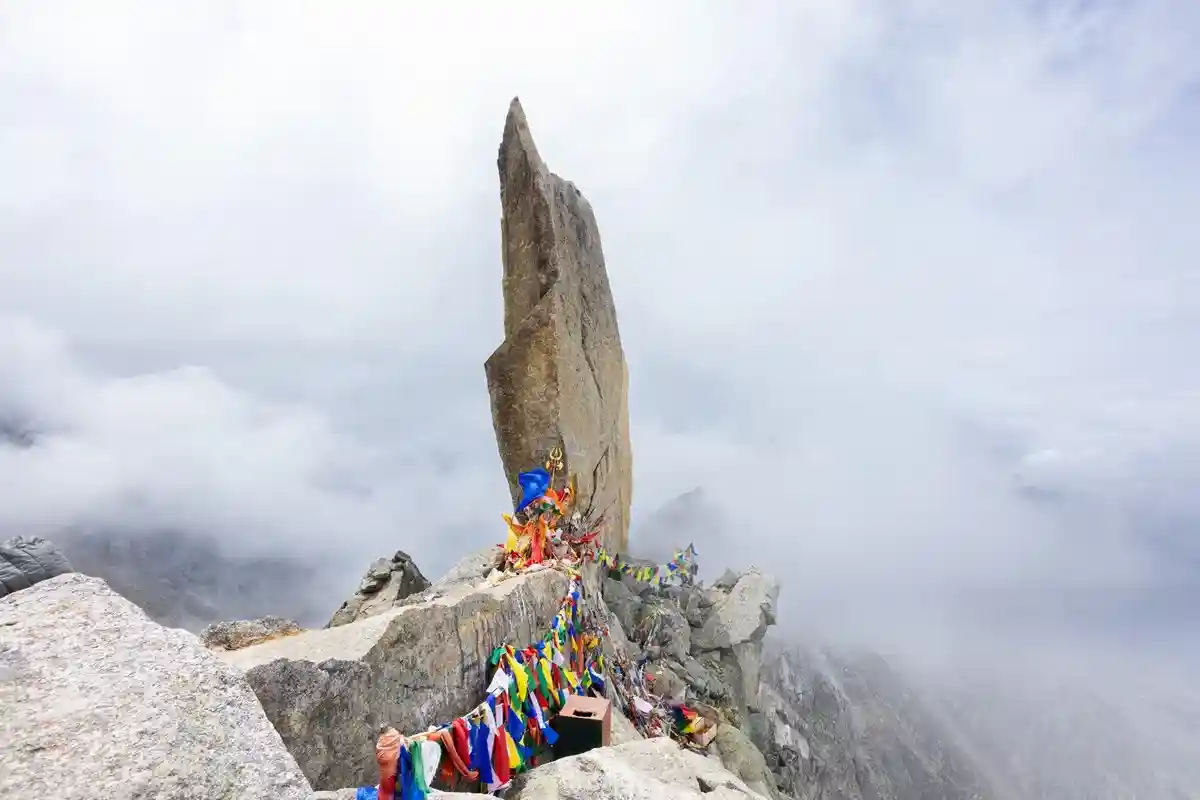
Kinner Kailash is a 6,050 m mountain in Kinnaur district, Himachal Pradesh, sacred to Hindus and Buddhists. Pilgrims climb to a 79 ft natural rock formation worshipped as a Shivling, at roughly 4,800 m. The trek starts at Tangling village near Reckong Peo and is about 14 km one way by most accounts. Some guides give up to 19 km, and the climb is steep over rough ground.
A Yatra committee announces the official dates each year, usually in July and August. In 2026 the Kinnaur administration postponed the Yatra in late June after finding active glaciers and rockfall risk on the route. Press reports later said it would run from 30 July to 10 August. Confirm the current order before you plan.
Adi Kailash Yatra

Adi Kailash, also called Chhota Kailash, is a 5,945 m peak in Pithoragarh district, Uttarakhand, near the Tibet border. It is traditionally counted among the Panch Kailash, with Kailash, Kinner Kailash, Shrikhand Mahadev and Manimahesh. Pilgrims see it from Jolingkong, where Parvati Sarovar and Gauri Kund lie in front of the peak.
Most of the route is now motorable. Dharchula to Gunji is about 70 km by road, so the difficulty is altitude rather than walking. Pilgrims usually spend a night at Gunji to acclimatise.
Every pilgrim needs an Inner Line Permit from the SDM office in Dharchula or the online portal, plus a medical fitness certificate. The season runs from about late May to October. If you missed the Kailash Mansarovar draw, this is an option inside India. We compare the two in Adi Kailash vs Kailash Mansarovar, and the budget is in our Adi Kailash Yatra cost guide.
- Suggested Tour: Adi Kailash Yatra Package
Rudranath and the Panch Kedar Treks
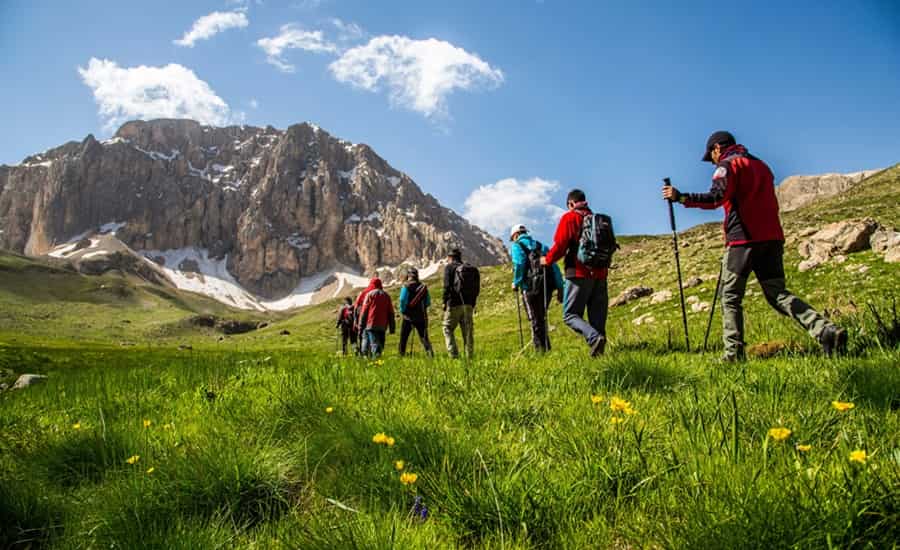
The Panch Kedar are five Shiva shrines in Garhwal: Kedarnath, Tungnath, Rudranath, Madhyamaheshwar and Kalpeshwar. Kedarnath is covered above. Tungnath (3,680 m) is the highest Shiva temple in the world and is about 4 km from Chopta. Kalpeshwar (2,200 m) is the easiest, a short walk from the road, and is open all year.
Rudranath, at about 3,600 m in Chamoli district, is usually called the toughest. The trek is about 20 km one way from Sagar village near Gopeshwar, though sources give anything from 19 to 24 km depending on the route. Madhyamaheshwar, at about 3,490 m, is also a long, remote high-altitude trek. Heights for both vary by source, so confirm locally.
Nanda Devi Raj Jat Yatra
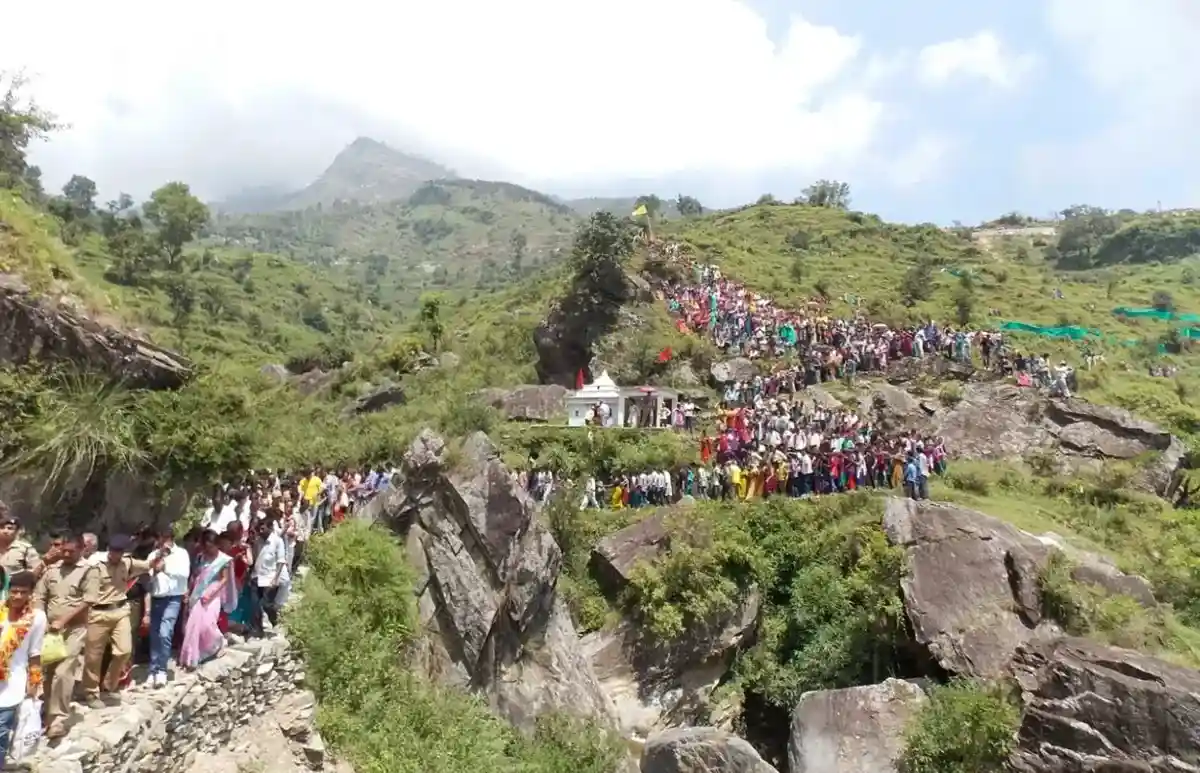
The Nanda Devi Raj Jat is a 280 km trek through the Himalayas of Chamoli district, held once every 12 years and often called the Himalayan Mahakumbh. It runs for about three weeks, from Nauti village to Homkund. The last Raj Jat was in 2014.
In 2026 the dates were disputed. The Nanda Devi Raj Jat Committee in Nauti announced the main Yatra for 2027, while a separate Badi Jat began from Siddhapeeth Kurud on 5 September 2026, according to ETV Bharat. Confirm the 2027 schedule with the Raj Jat Committee before planning.
Difficult Pilgrimages Beyond the Himalayas
Outside the mountains, the test is stamina and discipline rather than altitude.
Sabarimala
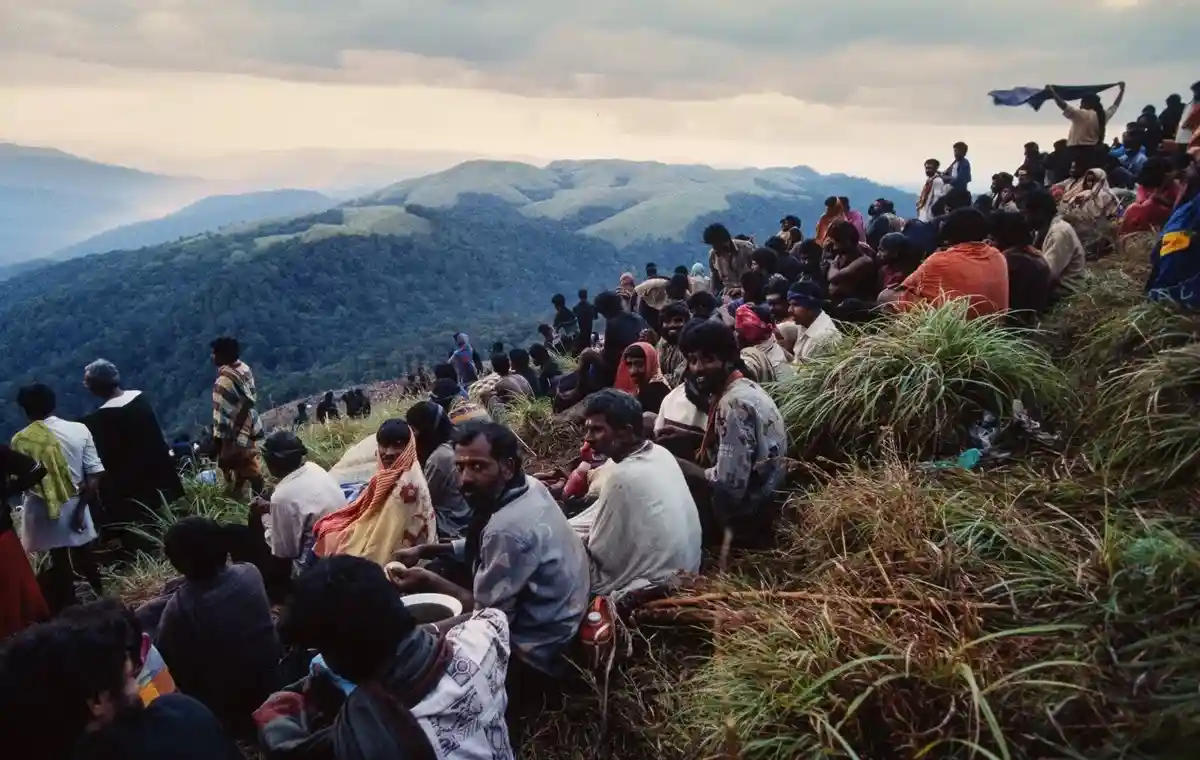
Pilgrims to the Ayyappa temple in Kerala observe a 41-day vratham of strict diet and discipline before the visit. From Pamba, everyone walks about 5 km up a steep path to the Sannidhanam. The Mandalam season for 2026-27 runs from 17 November to 27 December, and peak days need virtual queue booking, so check the Travancore Devaswom Board.
Girnar
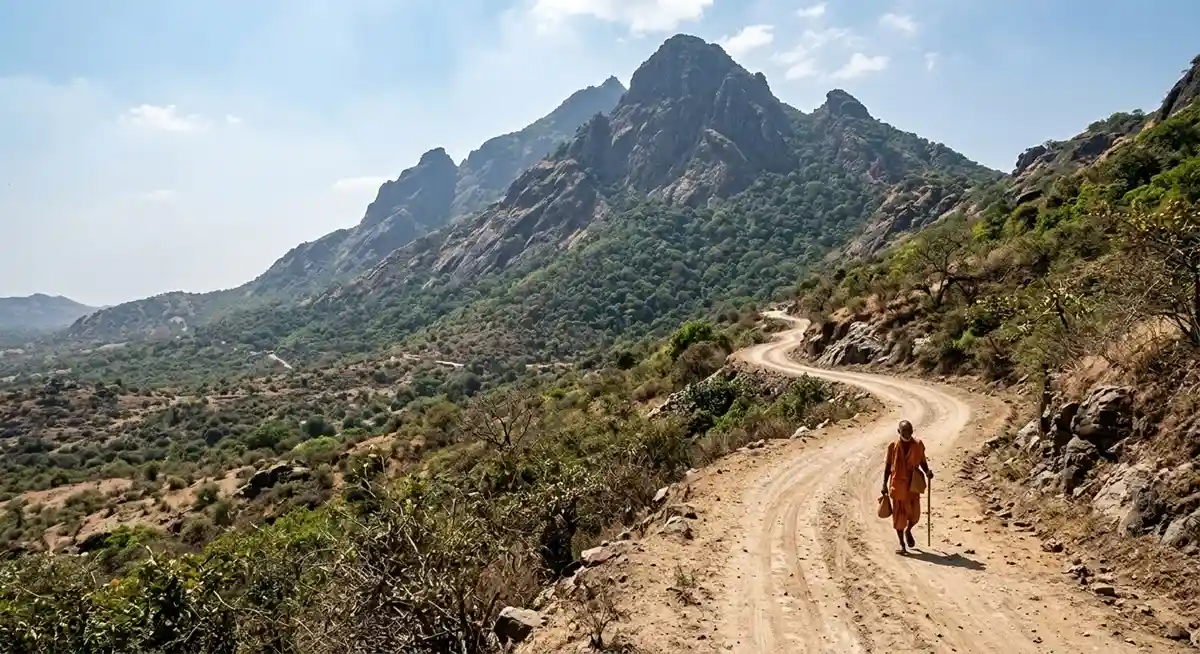
Mount Girnar near Junagadh, Gujarat, is sacred to Hindus and Jains. It has 9,999 steps to the final peak, and Gorakhnath is the highest point in Gujarat at 1,117 m. A ropeway now covers the first 5,000 steps to the Ambaji temple. Most pilgrims who climb to the top start at dawn and need a full day. The Girnar Parikrama is held in November.
How to Choose and Prepare
Which of the difficult pilgrimages in India suits first-time trekkers?
Kedarnath and Adi Kailash are the more forgiving choices. Kedarnath has pony, palki and helicopter options, and Adi Kailash is mostly by road. Hemkund Sahib allows a pony or palki for the last 6 km, but 4,632 m still affects many first-timers. A helicopter shortens the walk without removing the effect of altitude. Age limits apply on some routes: 18 to 70 for the MEA Kailash Yatra and 13 to 70 for Amarnath.
Before You Go
- See a doctor early. Amarnath, Kailash, Shrikhand Mahadev and Adi Kailash all require a medical certificate or check.
- Register before you travel: the Uttarakhand portal for Hemkund Sahib and Kedarnath, the Shrine Board for Amarnath, kmy.gov.in for Kailash, and the official registration for Manimahesh.
- Plan acclimatisation days. A night at Guptkashi before Kedarnath or at Gunji before Adi Kailash helps.
- Treat dates as provisional. Temple committees, shrine boards and district administrations set them each year, and weather can close a route.
- Do not start before the official opening or without registration. Past casualties on Shrikhand Mahadev show why.
- Learn the signs of altitude sickness, such as a persistent headache, nausea and breathlessness at rest, and go down if they worsen.
FAQs
Which is the most difficult pilgrimage in India?
By height and distance, Kailash Mansarovar and Shrikhand Mahadev are usually named the toughest. Kailash has a 52 km parikrama that crosses Dolma La at about 5,630 m. Shrikhand Mahadev is about 32 km one way to roughly 18,570 ft.
Is the Kailash Mansarovar Yatra held every year?
The MEA Yatra resumed in 2025 and ran again from June to August 2026 via Lipulekh and Nathu La. Dates and applications are announced each spring at kmy.gov.in.
How long is the Kedarnath trek?
It is 16 km one way from Gaurikund and usually takes six to eight hours. You can also use a pony, a palki or a helicopter.
How far is Hemkund Sahib from Govindghat?
It is 19 km on foot: 13 km to Ghangaria and 6 km to the shrine.
What is the difference between the Baltal and Pahalgam routes to Amarnath?
Baltal is about 14 km and steep, usually 1 to 2 days. Pahalgam is about 46 to 48 km and more gradual, usually 3 to 5 days.
Do these Yatras need registration or a medical certificate?
Mostly yes. Amarnath needs registration and a Compulsory Health Certificate. Hemkund Sahib and Kedarnath need Uttarakhand registration. Manimahesh needed online registration in 2026, and Kailash needs MEA selection and medical tests.
Is the Shrikhand Mahadev Yatra open now?
The Kullu administration suspended the 2026 Yatra in June and barred entry to the route. Check its latest order before planning.
Can senior citizens do these pilgrimages?
Age limits apply on two of them: 18 to 70 for the MEA Kailash Yatra and 13 to 70 for Amarnath. Kedarnath and Adi Kailash offer more road, pony or helicopter support. See a doctor first.
Which Panch Kedar trek is the toughest?
Rudranath is usually called the toughest, at about 20 km one way from Sagar village. Kalpeshwar is the easiest and is open all year.
When is the Nanda Devi Raj Jat Yatra?
It is held once every 12 years. The last Raj Jat was in 2014, and the Nauti Raj Jat Committee has announced 2027. Confirm dates with the committee.
Plan your Yatra
Whichever of the difficult pilgrimages in India you choose, registration rules, opening dates and helicopter bookings change often. If you want help with Kedarnath or the wider Char Dham circuit, see our Char Dham Yatra packages or message us on WhatsApp at +91 8826094899.
Related reading: Holiest pilgrimages in India, Pilgrimages in India that combine spirituality and beauty and Adi Kailash vs Kedarnath.


 Call
 WhatsApp
 Enquiry