
Practical, realistic, step-by-step advice for elders planning this sacred pilgrimage
Char Dham Yatra (Yamunotri → Gangotri → Kedarnath → Badrinath) is one of India’s most revered Hindu pilgrimages, reaching deep into the Himalayas of Uttarakhand. Many seniors undertake this journey every year, but it’s not like a city trip — the altitude, road conditions, weather shifts, and physical demand matter a lot. Done right, it’s spiritually uplifting. Done unprepared, it can become physically stressful.
This guide focuses on what matters most for senior citizens — health safety, comfort, realistic costs, route logic, common pitfalls, and ground-tested tips.
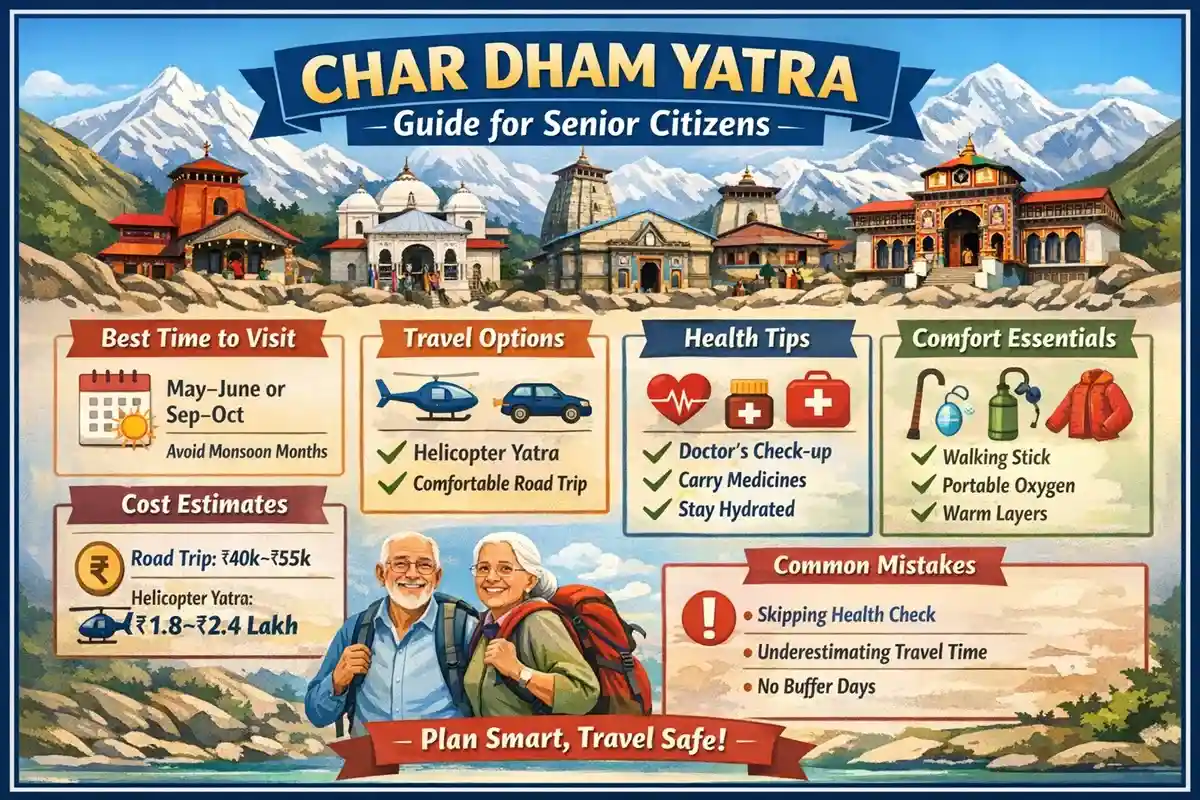
Why This Guide Matters (Real-Life Context)
In real world conditions, the Char Dham routes involve long drives on mountain roads, occasional trekking (especially to Kedarnath), and fluctuating weather conditions. Tiny changes — like a landslide or a traffic jam — can stretch a day’s travel by hours. For seniors, every bit of comfort, planning, and medical preparedness counts.
So let’s begin with the basics every elderly traveler should understand first.
What’s Unique About Char Dham for Seniors
| Feature | What It Means for Senior Citizens |
|---|---|
| Altitude | Some dhams like Kedarnath are above 3000 m — oxygen drops, breathing issues are real without acclimatization. |
| Road + Trek | Roads are winding; treks are steep at places. For those with mobility challenges, alternatives like helicopters or pony/doli can matter. |
| Weather Variations | Sunny one minute, rain or cold wind the next. Carry layering gear. |
| Seasons Matter | April–October is open season, but May–June and September–October are the most senior-friendly periods with stable weather. |
Best Time to Plan (So You’re Comfortable)
Senior travelers have better experience when roads are dry and open, and crowds are moderate.
Ideal periods:
May – June: Warm days, reliable roads.
September – Early October: Clear views, less traffic, fewer heat/monsoon problems.
Avoid July–August: Heavy rains cause slips, landslides, and road blocks.
💡 What most people don’t realize: Even during summer, mornings and nights are cold near high altitudes — bring warm layers.
Registration & Entry
✔ Mandatory: All pilgrims, including seniors, must register before hitting the Char Dham routes.
✔ Government portals and counters open a few weeks before yatra season — typically from March–April.
✔ ID, medical info, and emergency contacts are shared at registration — important for health support.
Route & Travel Logic (Simplified)
Here’s a common travel pattern that has worked well on the ground for most travelers:
| Stage | Route Segment | Notes |
|---|---|---|
| Start | Haridwar / Rishikesh / Dehradun | Base for arrival and acclimatization. |
| 1 | → Yamunotri (via Barkot) | Short walk to temple; options for pony/doli. |
| 2 | → Gangotri (via Uttarkashi) | Good roads, scenic but long drive. |
| 3 | → Kedarnath (via Guptkashi & Sonprayag) | Trek is steep — helicopter recommended for elders. |
| 4 | → Badrinath (via Joshimath) | Road access to front gates; easy local movement. |
| Return | → Rishikesh/Haridwar/Dehradun | End of yatra route. |
This sequence matches most 10–12 day itineraries by road, but many seniors prefer splitting or adjusting days for rest.
Comfort Options for Senior Citizens
1) Road Journey (Standard)
☑ Ideal if you walk short distances, use frequent breaks, and are okay with longer timelines.
Pros: Cheapest option.
Cons: Challenging for those with stamina or cardio issues.
2) Helicopter Support
📍 Recommended for seniors with mobility or health concerns.
It shaves long drives and steep treks — especially vital for Kedarnath.
Helicopter Yatra Details:
Flights operate from Dehradun helipads to all four dhams.
VIP darshan support is common.
Minimal walking — huge plus for elders.
| Option | Typical Duration | Key Perks |
|---|---|---|
| Road Only | ~10–12 days | Economical but physically demanding |
| Mixed (Road + Heli) | ~7–10 days | Lower fatigue, partial trek avoidance |
| Helicopter Only | ~4–6 days | Highest comfort, fastest, best for seniors |
💡 From practical experience: Helicopter options reduce physical stress immensely and are worth considering for those with even mild health conditions.
Cost Breakdown (Real-World Estimates)
Costs vary widely based on travel mode, accommodation, and time of booking.
Basic Road Travel
| Expense | Typical Charge |
|---|---|
| Transport & Taxi | ₹18,000 – ₹30,000 |
| Stay (mid-range) | ₹15,000 – ₹30,000 |
| Food | ₹5,000 – ₹8,000 |
| Misc (entry, pony/doli) | ₹3,000 – ₹7,000 |
| Total | ₹38,000 – ₹55,000 approx. |
Senior-Friendly Tour Packages
Most operators offer family or senior packages with slower pacing and attentive guides.
| Package Type | Approx Cost | Key Features |
|---|---|---|
| Budget | ₹28,000 – ₹35,000 | Basic comfort, shared transport |
| Standard | ₹38,000 – ₹48,000 | Private vehicle, better hotels |
| Deluxe | ₹55,000 – ₹70,000 | Comfortable hotels, VIP darshan |
| Helicopter Yatra | ₹1.8 – ₹2.4 lakh | Fast, minimal walking, VIP services |
💡 Add a 15–20% buffer for medical emergencies, mule/doli charges near temples, and unforeseen delays.
Medical & Safety Tips (Critical for Seniors)
These aren’t “nice to have” — they’re essential:
- Doctor’s Clearance: Get a comprehensive review including heart, BP, respiratory check, and altitude tolerance.
- Carry Essentials: BP monitor, sugar tester, basic meds, portable oxygen or ORS.
- Hydration & Food: Dehydration worsens altitude effects. Sip water, eat light and frequent snacks.
- Gradual Ascend: Spend a day at base (like Rishikesh/Haridwar) before climbing up.
- Warm Layers: Nights and mornings near high altitudes stay cold, even in summer.
- Avoid Night Travel: Roads are tougher and visibility low.
Packing Checklist for Seniors
Vital:
- Walking stick or cane
- Good anti-slip shoes
- Warm layers + rain gear
- Portable oxygen can
- First-aid kit with prescriptions
- Copies of medical reports
Not a luxury — these help manage small issues before they become big problems.
Common Mistakes to Avoid
✔ Ignoring health check-ups before booking.
✔ Underestimating travel time between dhams.
✔ Skipping buffer days — weather delays happen.
✔ Signing up for the cheapest package without medical support.
FAQs (Grounded in Real Concerns)
Q: Is Char Dham Yatra safe for seniors?
Yes — with proper planning, medical clearance, and pacing of travel. Helicopter or pony/doli services make it much safer.
Q: Do I need a special medical certificate?
Not legally, but most tour providers require fitness certification for high-altitude travel.
Q: What’s the best age for Char Dham Yatra?
There’s no age limit — the key is health, mobility, and sensible planning. Many over 60–70 complete it beautifully with the right support.
Q: Should I go during Ram Navami / peak festivals?
Crowds can surge during festival weeks, increasing wait times and stress. Avoid if possible.
Key Takeaways (Senior Travel First)
Plan early → Travel smart → Take help where needed
- Choose May–June or Sep–Oct for smoother travel.
- Helicopter options radically reduce strain and are especially recommended for elders.
- Build buffer days — weather and traffic can slow you down.
- Medical prep and packing right can transform your experience from tiring to peaceful.


 Call
Call WhatsApp
 Enquiry