Planning to explore the most famous Buddhist temples in India? From the UNESCO-listed Mahabodhi Temple in Bodh Gaya to the peaceful monasteries of Ladakh, Arunachal Pradesh, Sikkim, and Karnataka, India offers an unforgettable journey through the birthplace of Buddhism.
This guide brings together the 15 most important Buddhist temples, monasteries, stupas, and pilgrimage sites in India in one place. Along with their history and spiritual significance, you’ll learn the best time to visit, travel routes, entry details, nearby railway stations, permits, temple etiquette, and a ready-to-follow Buddhist Circuit itinerary.
Whether you’re planning a pilgrimage, a cultural holiday, or a Buddhist heritage tour, this guide will help you choose the right destinations and plan your trip more efficiently.
1. Mahabodhi Temple, Bodh Gaya, Bihar [UNESCO 2002]
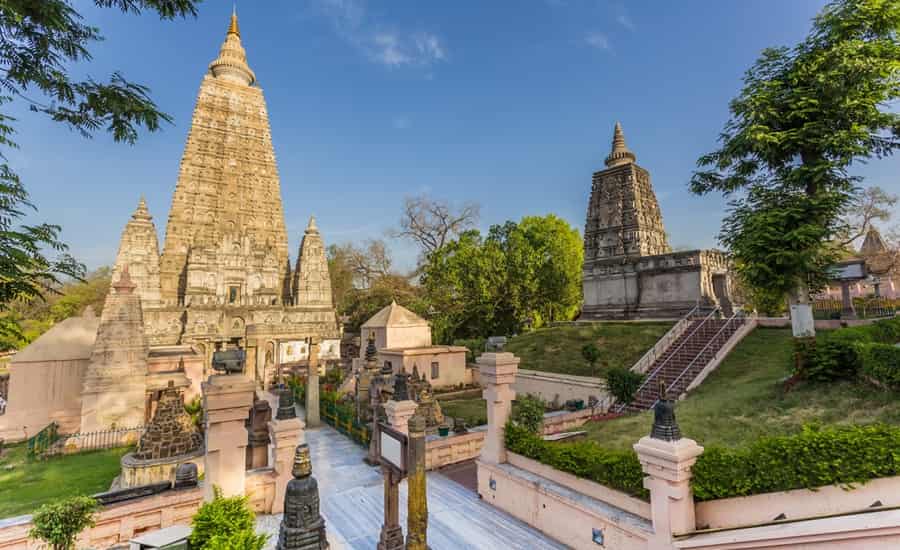
The Mahabodhi Temple is the holiest Buddhist temple in India — it marks the exact spot where Gautam Buddha attained enlightenment. The 55-metre pyramid-like tower is adorned with intricate carvings and houses a golden Buddha statue in the bhumisparsha mudra (earth-touching pose).
| ★ Key Fact: The Bodhi Tree here is widely believed to be a descendant of the original tree under which Buddha meditated around 528 BCE. It remains one of the most venerated living symbols in the Buddhist world. | |
| Built | 3rd century BCE (Ashoka); reconstructed 5th–6th century CE |
| UNESCO Status | World Heritage Site since 2002 |
| Location | Bodh Gaya, Gaya district, Bihar |
| Best Time | October – March |
| Entry Fee | Fees apply — verify current rates at ASI website before visiting |
| Nearest Railway | Gaya Junction (~13 km) |
2. Mahaparinirvana Temple, Kushinagar, Uttar Pradesh
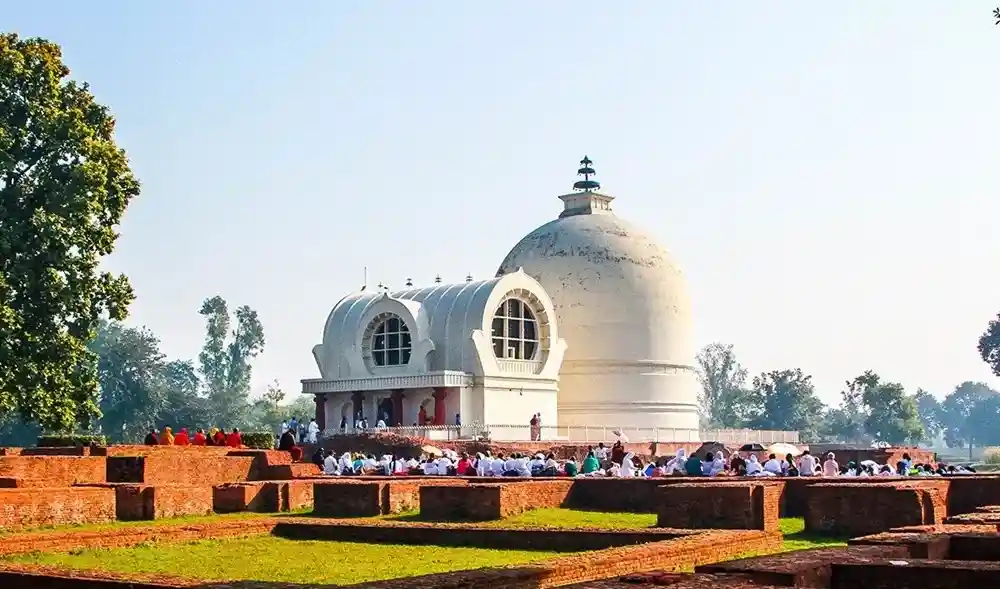
Kushinagar is one of the four holiest Buddhist sites — where Buddha passed into Mahaparinirvana (final liberation) around 483 BCE. The temple draws pilgrims worldwide for its serenity and deep historical significance.
| ★ Key Fact: The temple houses a 6-metre reclining Buddha statue carved from red sandstone (5th century CE), depicting Buddha’s final resting posture — the moment of highest liberation. | |
| ✔ Corrected: The current temple was reconstructed in 1956 by the Archaeological Survey of India. The 5th-century statue was rediscovered by archaeologist Alexander Cunningham in the 19th century. | |
| Statue Date | 5th century CE |
| Location | Kushinagar, Uttar Pradesh |
| Best Time | October – February |
| Entry Fee | Free |
| Nearest Railway | Gorakhpur (~55 km) |
See Also:- Buddhist Places to See in Bihar
3. Wat Thai Temple, Kushinagar, Uttar Pradesh
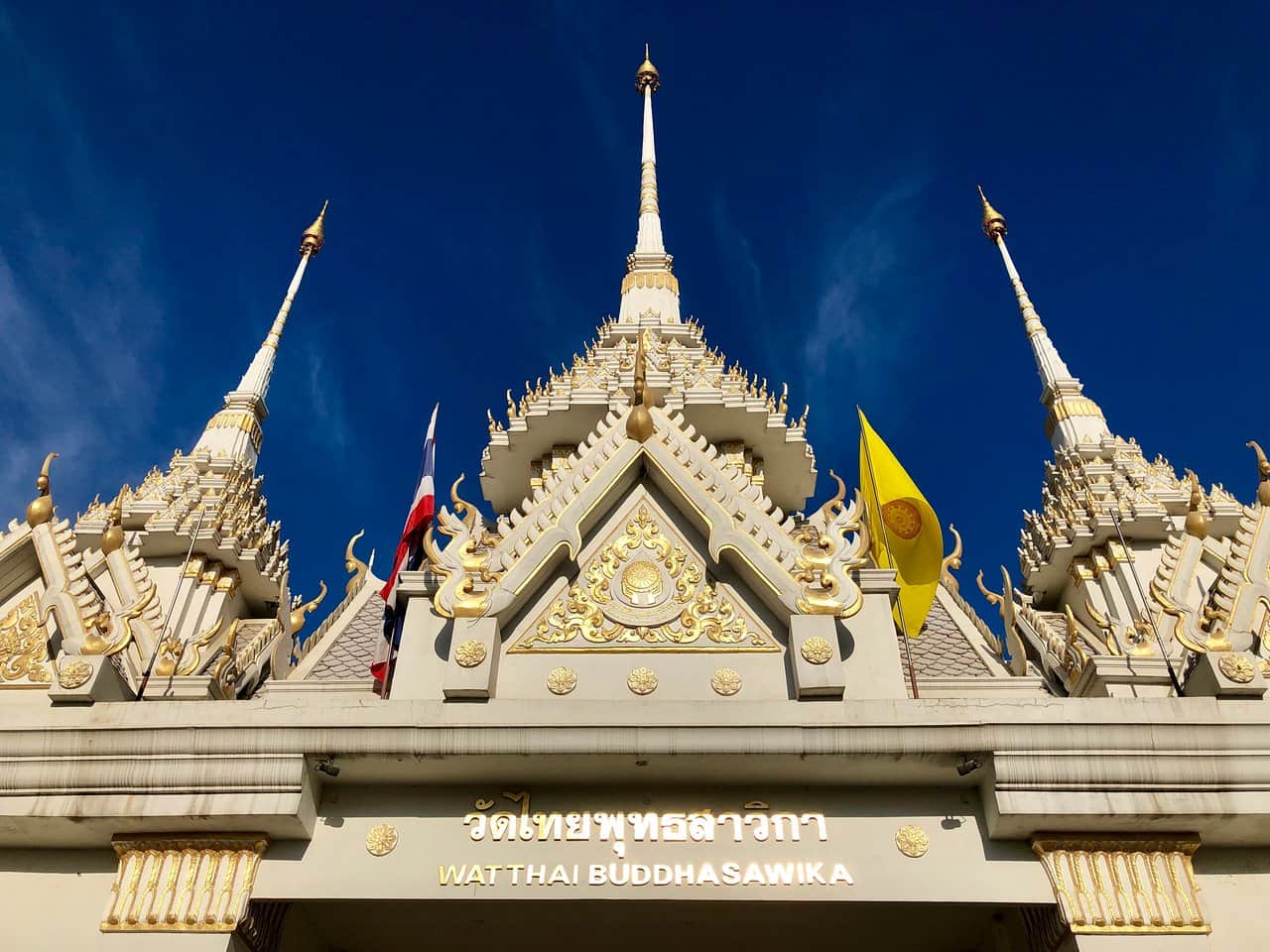
Built and maintained by the Thai Buddhist community, the Wat Thai Temple is a striking blend of Thai and Indian Buddhist architecture. Its gleaming white exterior, golden spires, and lush garden setting make it one of the most photographed temples in the Buddhist circuit.
| ★ Key Fact: The ornate prayer halls are open to visitors of all faiths. The fusion of Thai craftsmanship and Indian sacred space makes this a unique example of international Buddhist heritage on Indian soil. | |
| Style | Indo-Thai Buddhist architecture |
| Location | Kushinagar, Uttar Pradesh |
| Best Time | October – March |
| Entry Fee | Free |
| Nearest Railway | Gorakhpur (~55 km) |
4. Sarnath – Dhamek Stupa Complex, Varanasi, Uttar Pradesh
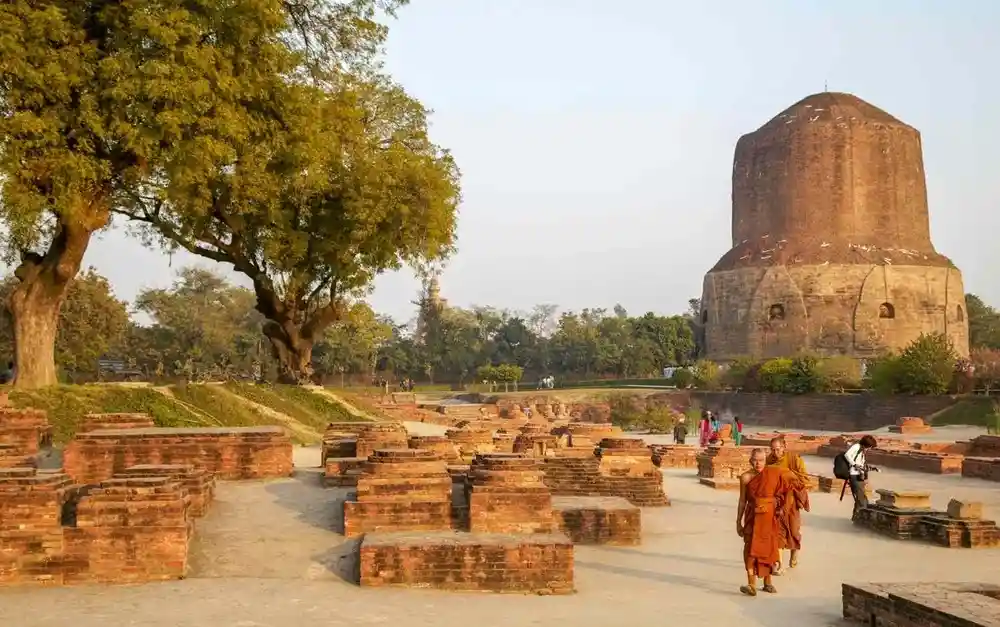
Sarnath is where Buddha delivered his very first sermon — setting the Wheel of Dharma in motion. Located 13 km from Varanasi, it is a must-visit on every Buddhist pilgrimage itinerary in India. The site includes the Dhamek Stupa, Chaukhandi Stupa, Mulagandha Kuti Vihar, and an important museum.
| ★ Key Fact: The Sarnath Museum houses the original Lion Capital of Ashoka — India’s national emblem. The Dhamek Stupa (originally 3rd century BCE; current form ~500 CE) marks the site of Buddha’s first teaching. | |
| Key Structures | Dhamek Stupa, Chaukhandi Stupa, Mulagandha Kuti Vihar |
| Location | Sarnath, Varanasi district, Uttar Pradesh |
| Best Time | October – March |
| Entry Fee | Fees apply — verify current rates at ASI website |
| Nearest Railway | Varanasi Junction (~10 km) |
See Also:- Buddhist Places to See in Uttar Pradesh
5. Sanchi Stupa, Madhya Pradesh [UNESCO 1989]
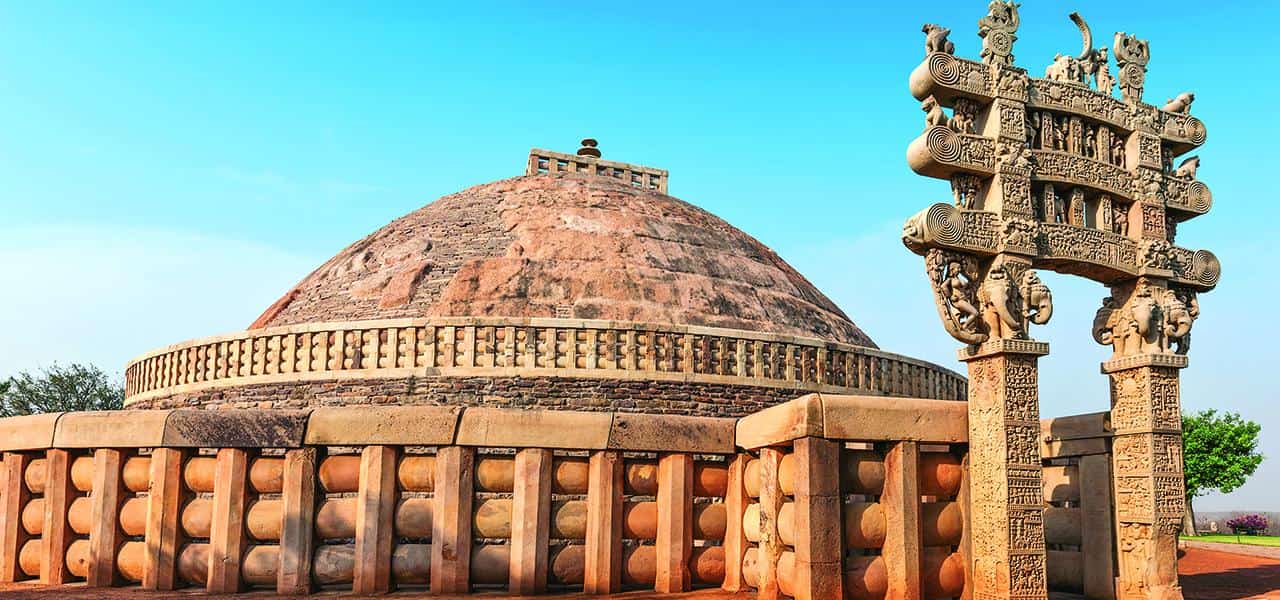
The Sanchi Stupa is one of India’s oldest stone structures — a masterpiece of early Buddhist architecture on a hilltop in Madhya Pradesh. It draws visitors for its historical, religious, and artistic value.
| ★ Key Fact: Four elaborately carved stone gateways (toranas) face the cardinal directions, covered with scenes from Jataka tales and Buddha’s life. The hemispherical dome encloses sacred relics. | |
| Built | 3rd century BCE (Ashoka); expanded 2nd–1st century BCE |
| UNESCO Status | World Heritage Site since 1989 |
| Location | Sanchi, Raisen district, Madhya Pradesh |
| Best Time | October – March |
| Entry Fee | Fees apply — verify current rates at ASI website |
| Nearest Railway | Vidisha (~10 km), Bhopal (~46 km) |
6. Red Maitreya Temple, Thiksey Monastery, Leh, Ladakh
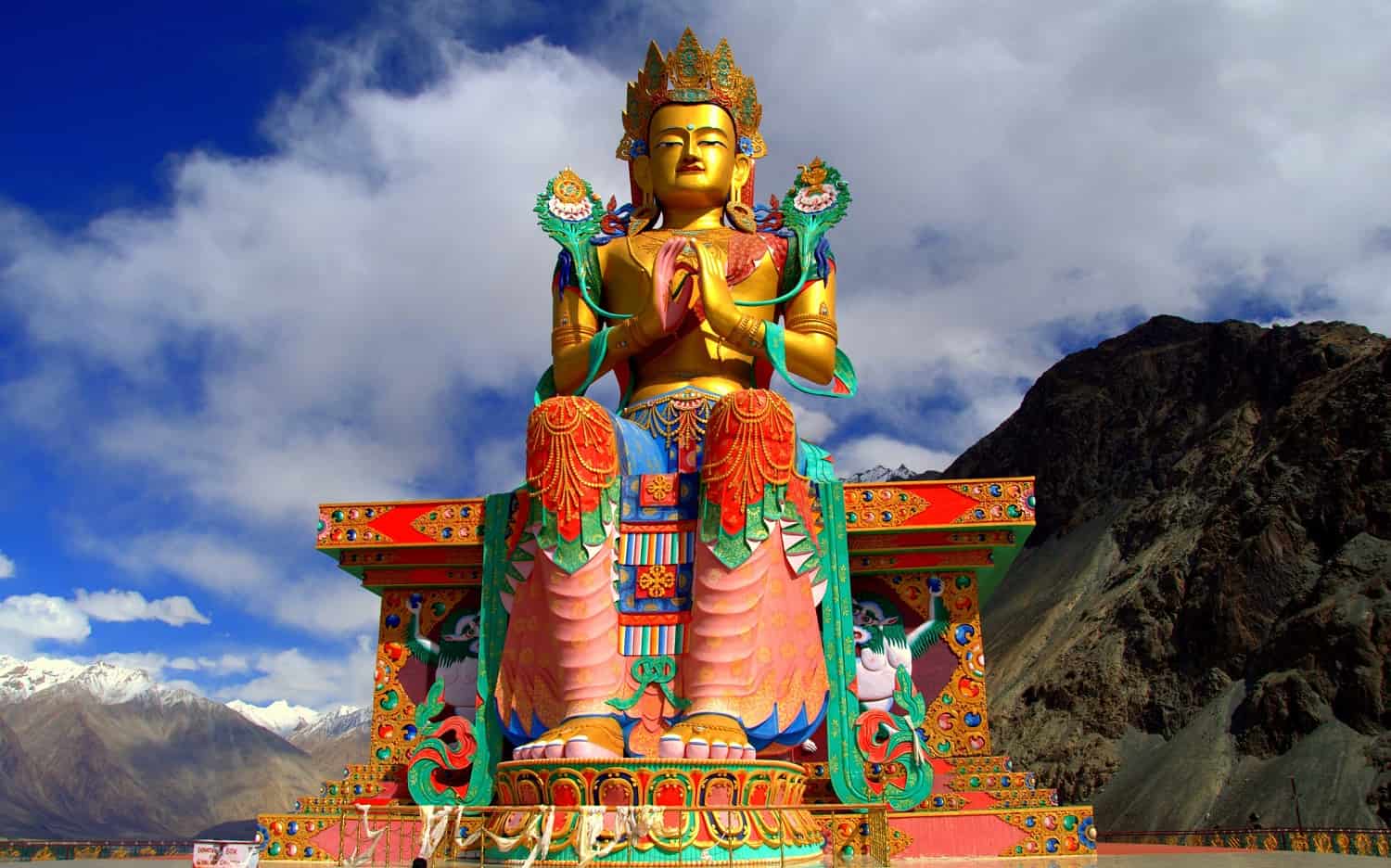
Perched dramatically above the Indus Valley, Thiksey Monastery is one of Ladakh’s most iconic landmarks. Within it stands the Red Maitreya Temple — home to a towering 15-metre statue of the Maitreya (Future) Buddha.
| ★ Key Fact: The Maitreya statue spans two floors, made of clay, papier-mache, and gold paint. Interior walls carry Tibetan murals depicting the Maitreya’s life. One of the largest Maitreya statues in India. | |
| Monastery Founded | 15th century CE (Gelug school of Tibetan Buddhism) |
| Location | Thiksey, Leh district, Ladakh UT |
| Best Time | June – September |
| Entry Fee | Nominal fee applies |
| Nearest Airport | Leh Airport (~20 km) |
7. Golden Pagoda (Kong Mu Kham), Namsai, Arunachal Pradesh
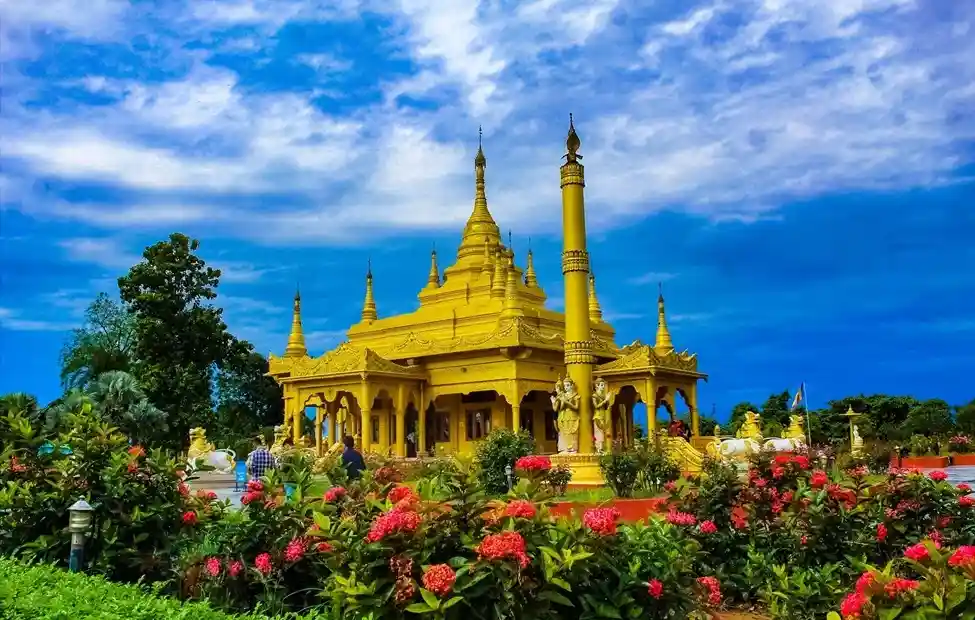
Rising from the plains of eastern Arunachal Pradesh, the Golden Pagoda is one of the largest Buddhist temples in Northeast India. Its gleaming golden dome sits within a 20-hectare landscaped campus.
| ★ Key Fact: Every November, the Kathina Festival culminates in the Loi Krathong ceremony — thousands of illuminated lamps float across temple ponds in a spectacular celebration. | |
| Completed | 2010, Burmese architectural style |
| Location | Namsai district, Arunachal Pradesh |
| Best Time | October – February; November for Kathina Festival |
| Entry Fee | Free |
| Nearest Airport | Dibrugarh, Assam (~67 km) |
8. Theravada Buddhist Temple, Itanagar, Arunachal Pradesh
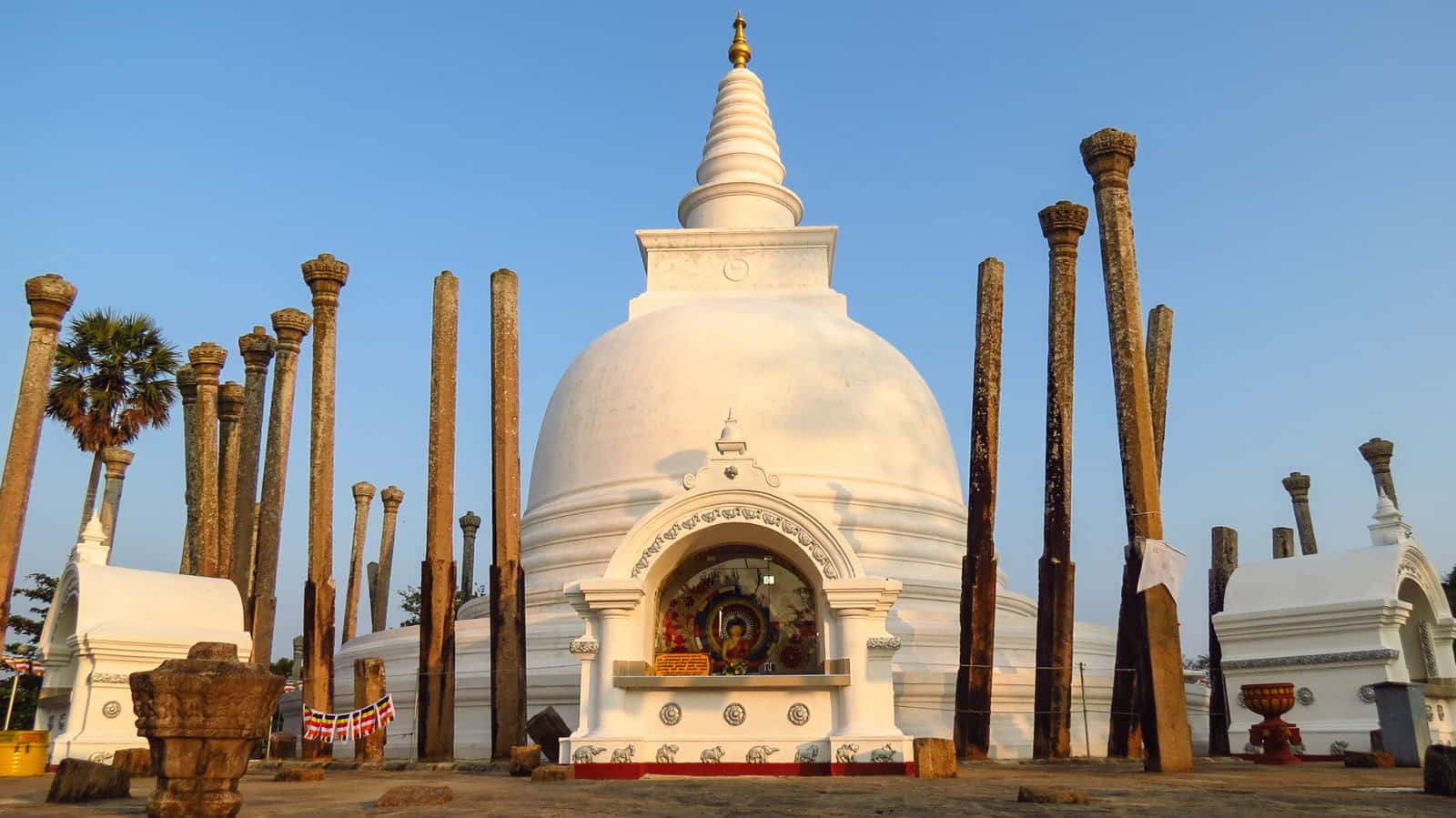
Situated in Itanagar, this temple follows Theravada — the oldest surviving school of Buddhism. Even non-Buddhists visit for its deeply peaceful environment, ideal for meditation and quiet reflection.
| ★ Key Fact: Surrounded by dense forest, the temple’s design harmonises completely with nature — one of the finest spots for mindfulness practice in Northeast India. | |
| School | Theravada Buddhism (oldest surviving tradition) |
| Location | Itanagar, Arunachal Pradesh |
| Best Time | October – April |
| Entry Fee | Free |
| Nearest Airport | Lilabari Airport (~67 km) |
9. Namdroling Monastery and Golden Temple, Bylakuppe, Karnataka
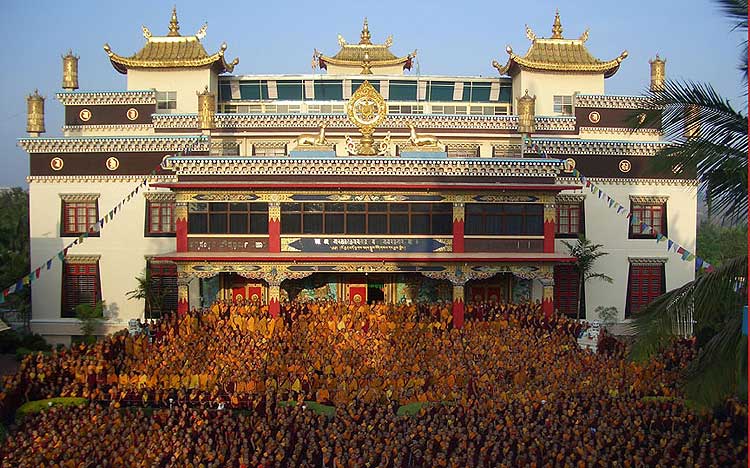
Known as the Palyul Namdroling Nyingmapa Monastery, this is the largest teaching centre of the Nyingma tradition of Tibetan Buddhism outside Tibet. The Golden Temple campus shimmers with gold-leaf murals and ornate thangkas.
| ★ Key Fact: The temple houses three gold-adorned statues — Guru Padmasambhava (~40 feet tall), Buddha Shakyamuni, and Amitayus Buddha — all magnificently gilded. | |
| Founded | 1963 by Drubwang Padma Norbu Rinpoche |
| Location | Bylakuppe, near Mysuru, Karnataka |
| Best Time | October – March |
| Entry Fee | Free |
| Nearest Railway | Mysuru (~80 km) |
10. Vishwa Shanti Stupa (World Peace Pagoda), Rajgir, Bihar
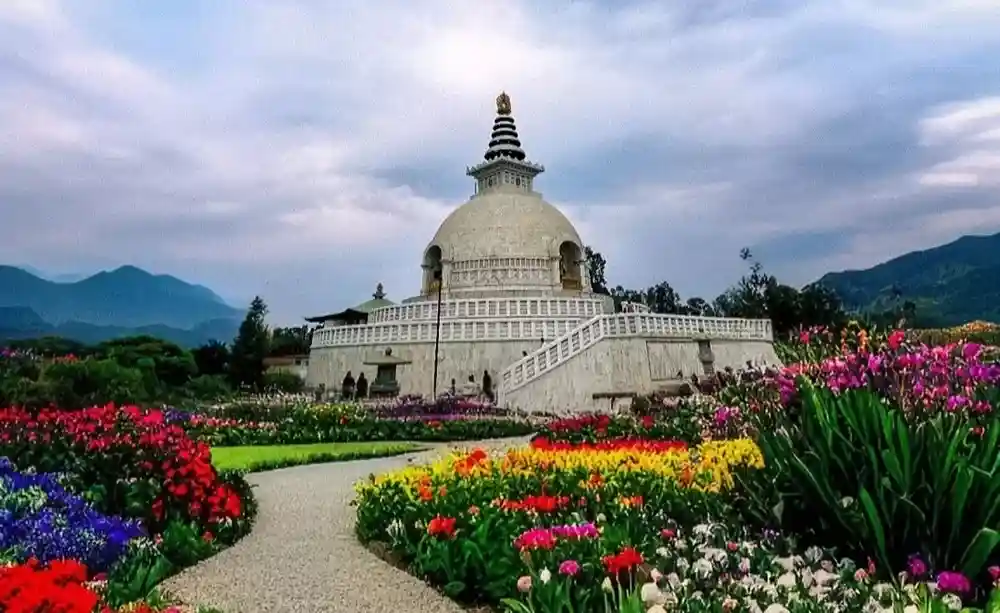
This luminous white stupa sits atop Ratnagiri Hill in Rajgir — a town where Buddha spent many rainy seasons teaching. A ropeway connects visitors to the hilltop with panoramic valley views.
| ★ Key Fact: Four golden Buddha statues at the cardinal points represent the four key stages of his life: birth, enlightenment, first sermon, and Parinirvana. | |
| Built By | Nipponzan-Myohoji Buddhist Organisation, Japan |
| Location | Rajgir, Nalanda district, Bihar |
| Best Time | October – March |
| Entry Fee | Free; ropeway charges apply |
| Nearest Railway | Rajgir Station (within town) |
11. Tawang Monastery, Arunachal Pradesh
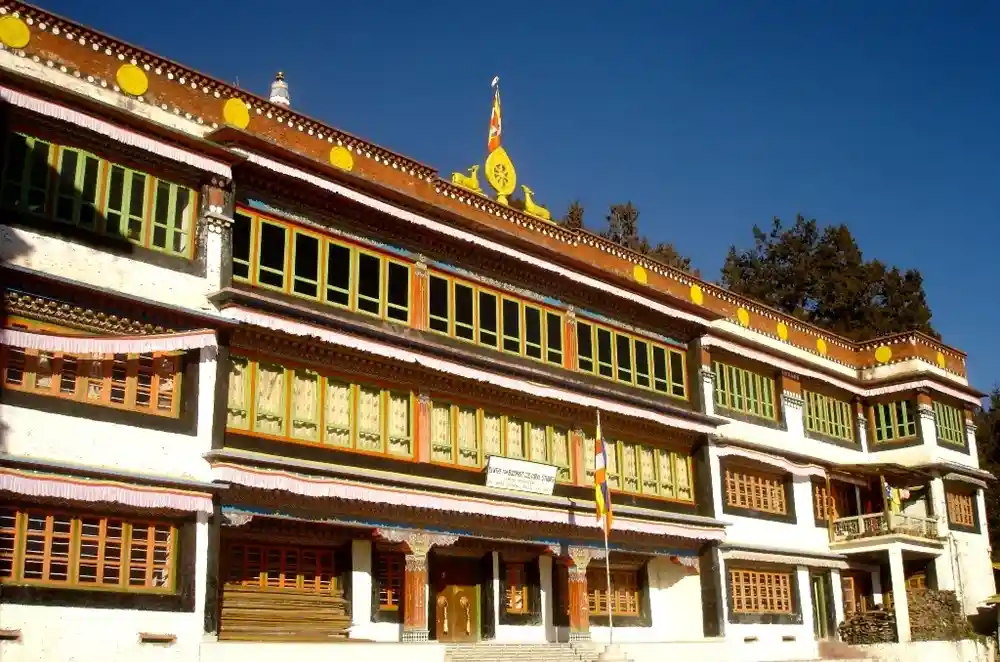
Tawang is the largest Buddhist monastery in India and second-largest in the world. Perched at around 10,000 feet in the Himalayas, it has over 450 resident monks and is a major centre of the Gelug school of Tibetan Buddhism.
| ★ Key Fact: The monastery library holds rare Buddhist manuscripts and thangkas. The Torgya and Losar festivals here are among India’s most vibrant Buddhist celebrations. | |
| ⚠ Permit Required: Indian citizens need an Inner Line Permit (ILP); foreign nationals need a Restricted Area Permit (RAP). Apply online via the Arunachal Pradesh government portal. | |
| Founded | 1680–81 CE by Merag Lama Lodre Gyatso |
| Altitude | ~3,048 metres (10,000 feet) |
| Location | Tawang, Arunachal Pradesh |
| Best Time | March – October |
| Entry Fee | Free |
12. Hemis Monastery, Ladakh
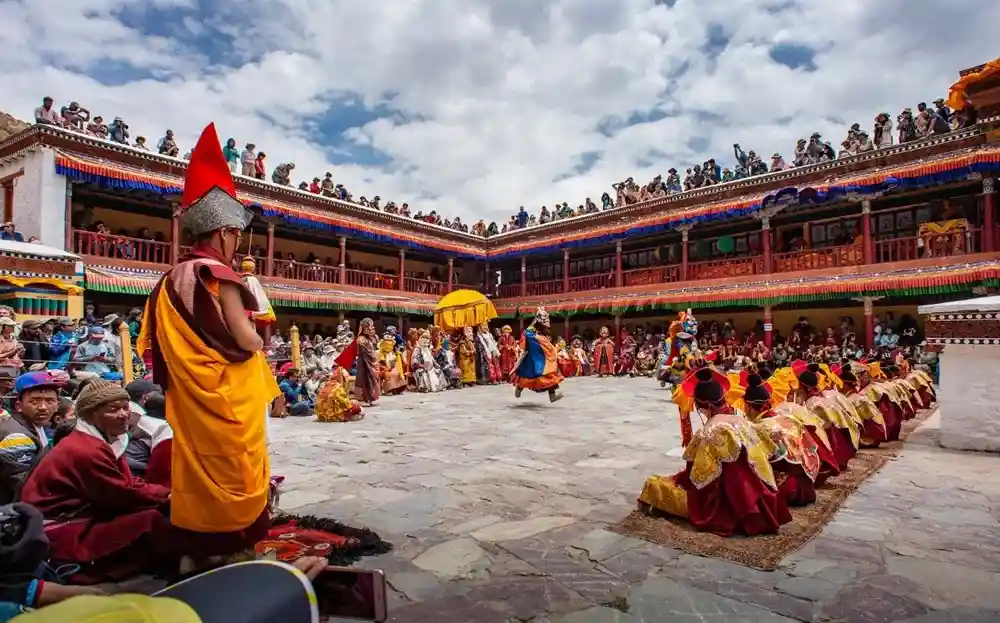
The largest and wealthiest monastery in Ladakh, Hemis belongs to the Drukpa Kagyu lineage. It is famous for its annual Hemis Festival — a spectacular masked Cham dance celebration held every June or July.
| ★ Key Fact: Hemis houses Ladakh’s largest thangka — a massive silk embroidery of Guru Padmasambhava displayed only once every 12 years. The museum holds gold statues, thangkas, and historic artefacts. | |
| Founded | 1672 CE, patronised by King Sengge Namgyal |
| Location | Hemis village, Leh district, Ladakh |
| Best Time | June – September; Hemis Festival in June/July |
| Entry Fee | Nominal fee applies |
| Nearest Airport | Leh Airport (~45 km) |
- Suggested Tour: Ladakh Hemis Festival Buddhist Tour Package
13. Rumtek Monastery, Sikkim
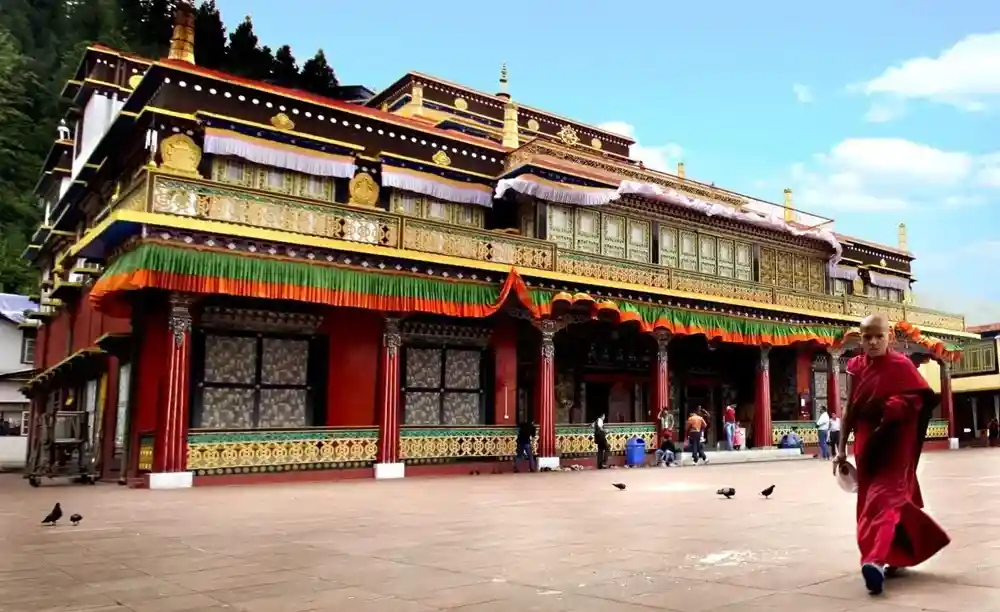
Known as the Dharmachakra Centre, Rumtek is the most important Buddhist monastery in Sikkim and a foremost seat of the Karma Kagyu lineage. Located 24 km from Gangtok, it holds rare Tibetan Buddhist art and the relics of the 16th Karmapa.
| ★ Key Fact: A golden stupa (chorten) houses the relics of the 16th Karmapa. The monastery also runs the Nalanda Institute for Higher Buddhist Studies. | |
| Founded | Rebuilt 1966 by the 16th Karmapa |
| Location | Rumtek, East Sikkim |
| Best Time | October – May |
| Entry Fee | Free |
| Nearest Airport | Pakyong Airport (~25 km) |
14. Ajanta Caves, Maharashtra [UNESCO 1983]
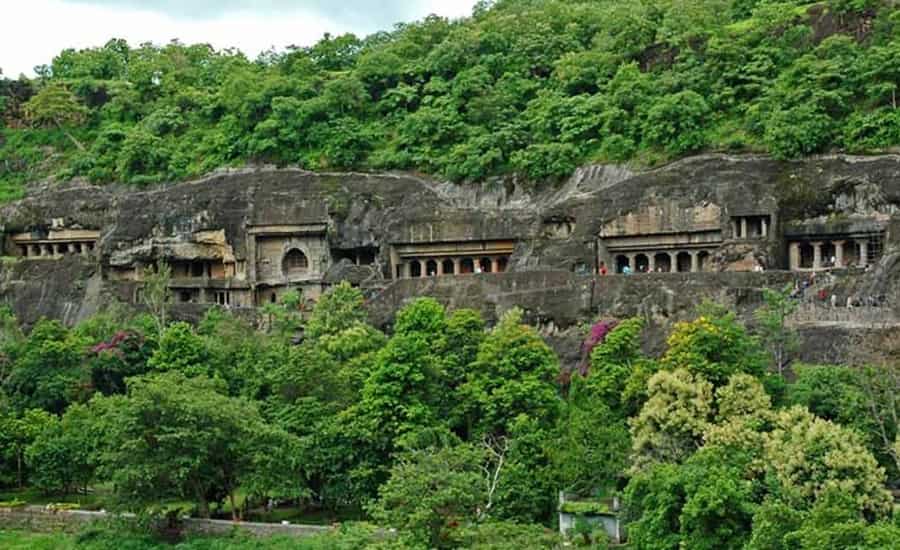
The Ajanta Caves are 30 rock-cut cave temples carved into a Maharashtrian cliff, dating from the 2nd century BCE to the 6th century CE. Created by Buddhist monks, they represent the pinnacle of ancient Indian Buddhist art.
| ★ Key Fact: The caves contain extraordinary frescoes depicting Jataka tales and scenes from Buddha’s life — painted with remarkable precision over 1,500 years ago. UNESCO inscribed them in 1983. | |
| Period | 2nd century BCE – 6th century CE |
| Caves | 30 (chaityas and viharas) |
| UNESCO Status | World Heritage Site since 1983 |
| Location | Chhatrapati Sambhajinagar district, Maharashtra |
| Best Time | November – February |
| Entry Fee | Fees apply — verify current rates at ASI website |
15. Sravasti (Shravasti), Uttar Pradesh
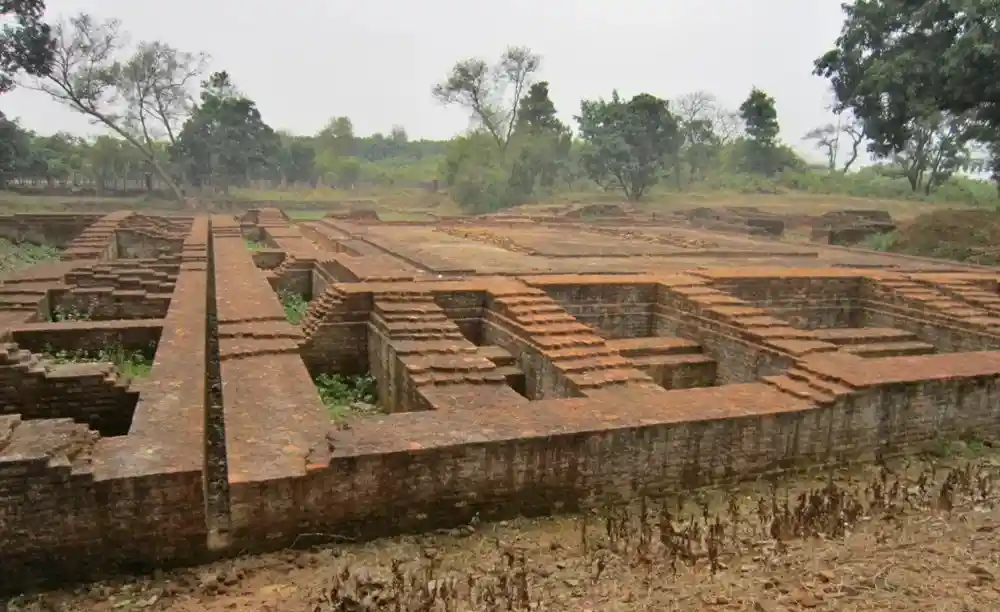
Sravasti is where Buddha spent the longest period of his teaching life — 24 rainy seasons at the Jetavana Monastery. Today it is a thriving international Buddhist circuit with temples from Japanese, Myanmar, Tibetan, Sri Lankan, and Korean communities.
| ★ Key Fact: The Jetavana Monastery ruins and the Ananda Bodhi Tree — believed to have grown from a seed of the original Bodhi Tree at Bodh Gaya — are the site’s most venerated attractions. | |
| Historical Period | 6th–5th century BCE |
| Location | Sravasti district, Uttar Pradesh |
| Best Time | October – March |
| Entry Fee | Nominal fee for archaeological zone — verify before visiting |
| Nearest Railway | Balrampur (~18 km) |
State-wise Quick Reference – Buddhist Sites in India
| State / UT | Key Buddhist Sites | Best Time |
| Bihar | Mahabodhi Temple (Bodh Gaya), Vishwa Shanti Stupa (Rajgir), Nalanda | Oct–Mar |
| Uttar Pradesh | Sarnath (Varanasi), Kushinagar, Sravasti | Oct–Mar |
| Madhya Pradesh | Sanchi Stupa | Oct–Mar |
| Ladakh (UT) | Hemis Monastery, Thiksey (Red Maitreya), Diskit, Alchi | Jun–Sep |
| Arunachal Pradesh | Tawang Monastery, Golden Pagoda (Namsai), Theravada Temple (Itanagar) | Mar–Oct |
| Sikkim | Rumtek Monastery, Pemayangtse, Tashiding | Oct–May |
| Karnataka | Namdroling Monastery and Golden Temple (Bylakuppe) | Oct–Mar |
| Maharashtra | Ajanta Caves, Ellora Caves (Buddhist section) | Nov–Feb |
Buddhist Circuit Itinerary – 7 to 10 Days
The Government of India’s Buddhist Circuit (Swadesh Darshan 2.0) connects the four main pilgrimage towns. Here is a practical route for the plains circuit:
- Day 1–2 – Bodh Gaya (Bihar): Mahabodhi Temple, Bodhi Tree, Thai Monastery, Japanese Temple.
- Day 3 – Rajgir and Nalanda (Bihar): Vishwa Shanti Stupa, Nalanda ruins (UNESCO). Day trip from Bodh Gaya.
- Day 4–5 – Varanasi and Sarnath (UP): Dhamek Stupa, Sarnath Museum, Mulagandha Kuti Vihar.
- Day 6 – Kushinagar (UP): Mahaparinirvana Temple, Wat Thai Temple, Ramabhar Stupa.
- Day 7–8 – Sravasti (UP): Jetavana Monastery ruins, Ananda Bodhi Tree, international temples.
- Day 9–10 (Optional) – Sanchi (MP): Half-day trip from Bhopal. Return via Nagpur or Bhopal.
Tip: IRCTC Buddhist Circuit Special Tourist Train covers Bodh Gaya, Sarnath, Kushinagar, and Lumbini (Nepal) — an affordable all-inclusive option.
Visitor Tips and Temple Etiquette
- Dress code: Cover shoulders and knees. Most temples provide wraps at the entrance.
- Footwear: Remove shoes before entering all sanctuaries.
- Photography: Always ask before photographing monks or ceremonies. Inner sanctuaries often prohibit cameras.
- Silence: Maintain quiet in prayer halls and meditation areas.
- Circumambulation: Walk clockwise around stupas and shrines — standard Buddhist practice.
- Permits (Northeast): Inner Line Permit (ILP) needed for Arunachal Pradesh. Apply online in advance.
- Meditation retreats: Available at Tawang, Hemis, and Namdroling — book 2–4 weeks ahead.
- Accessibility: Bodh Gaya, Sarnath, and Sanchi have partially accessible paths. Himalayan monasteries involve steep terrain.
| ⚠ Entry Fee Note: ASI-managed site fees change periodically. Always verify current entry fees at asi.nic.in or state tourism portals before your visit. |
Frequently Asked Questions
Which is the most sacred Buddhist temple in India?
The Mahabodhi Temple, Bodh Gaya is the holiest — it marks where Buddha attained enlightenment. It is a UNESCO World Heritage Site (2002) and the most visited Buddhist sacred place in India.
Which is the largest Buddhist monastery in India?
Tawang Monastery in Arunachal Pradesh is the largest in India and second-largest in the world, housing over 450 resident monks at approximately 10,000 feet altitude.
What are the 4 main Buddhist pilgrimage sites in India?
Bodh Gaya (enlightenment), Sarnath (first sermon), Kushinagar (Parinirvana), and Lumbini (birthplace, in Nepal). These four form the primary Buddhist pilgrimage circuit.
Which Buddhist temples in India are UNESCO World Heritage Sites?
Mahabodhi Temple (2002), Sanchi Stupa (1989), and Ajanta Caves (1983) are India’s three UNESCO-listed Buddhist heritage sites.
Is Sarnath a UNESCO World Heritage Site?
No. Sarnath is an ASI-protected archaeological site and a major Buddhist pilgrimage destination, but it is not currently a UNESCO World Heritage Site.
When is the best time to visit Buddhist temples in India?
October to March for plains and South India. June to September for Himalayan sites like Ladakh, Sikkim, and Arunachal Pradesh.
Do I need a permit to visit Tawang Monastery?
Yes. Indian citizens need an Inner Line Permit (ILP); foreign nationals need a Restricted Area Permit (RAP). Both are available online via the Arunachal Pradesh government portal.
Can non-Buddhists visit Buddhist temples in India?
Yes — almost all temples welcome visitors of all faiths. Dress modestly, remove shoes, maintain silence in prayer areas, and walk clockwise around stupas.
What is the Buddhist Circuit Tour in India?
The Government of India’s Buddhist Circuit (Swadesh Darshan 2.0) links Bodh Gaya, Sarnath, Kushinagar, and Sravasti. IRCTC also runs a dedicated Buddhist Circuit Special Tourist Train covering these sites.
Where did Buddha give his first sermon?
At Sarnath, near Varanasi, Uttar Pradesh. This event — the Dhammacakkappavattana — set the Wheel of Dharma in motion and founded the Buddhist Sangha (community).
What is the best Buddhist monastery to visit in Ladakh?
Hemis Monastery (largest, most famous) and Thiksey Monastery (Red Maitreya Temple, stunning views) are both excellent. Both are easy day trips from Leh.
What is the Hemis Festival?
An annual two-day festival at Hemis Monastery (June/July) celebrating Guru Padmasambhava’s birth anniversary with spectacular Cham masked dances, music, and vibrant costumes.
What is the difference between a temple, monastery, and stupa?
A temple houses statues/relics for worship. A monastery (vihara) is a residential complex for monks. A stupa is a dome-shaped monument containing sacred relics — an object of veneration.
Which state in India has the most Buddhist monasteries?
Ladakh has the highest density of active Tibetan Buddhist monasteries. Bihar holds the greatest historical significance. Arunachal Pradesh and Sikkim also have many active monasteries.
How many days are needed for a complete Buddhist Circuit tour?
A standard plains circuit (Bodh Gaya to Sravasti) takes 7–10 days. Adding Sanchi, Ajanta, or Himalayan monasteries requires 2–3 additional days per region.
Is Nalanda a Buddhist temple?
No. Nalanda is the ruins of the ancient Nalanda Mahavihara — a world-famous Buddhist university (5th–12th century CE). It is a UNESCO World Heritage Site (2016), not a temple.
What is the oldest Buddhist temple in India?
The Mahabodhi Temple complex (original structures 3rd century BCE) and the Sanchi Stupa (3rd century BCE) are among the oldest. The Ajanta Caves also date from the 2nd century BCE.
What should I wear to a Buddhist temple?
Wear modest clothing covering shoulders and knees. Avoid sleeveless tops and short shorts. Most temples provide sarongs or shawls at the entrance.
Is photography allowed inside Buddhist temples in India?
Outer areas and stupas generally allow photography. Inner prayer halls and active ceremonies often prohibit it. Always ask permission before photographing monks or sacred rituals.
Which Buddhist temples are best for foreign tourists?
Mahabodhi Temple (Bodh Gaya), Sarnath, Sanchi Stupa, Ajanta Caves, and Namdroling Monastery (Karnataka) are most popular with international visitors.
Are meditation retreats available at Buddhist monasteries in India?
Yes. Tawang Monastery, Hemis, and Namdroling (Bylakuppe) offer short and extended meditation retreats. Book at least 2–4 weeks in advance.
What is the Bodhi Tree at Mahabodhi Temple?
A sacred Peepal tree widely believed to be a descendant of the original tree under which Gautam Buddha attained enlightenment ~2,500 years ago. Among the most revered living symbols in Buddhism.
Conclusion
India’s Buddhist temples and sacred sites are living monuments to a 2,500-year-old tradition of wisdom, compassion, and peace. Whether you begin at the enlightenment grounds of Bodh Gaya, marvel at the prehistoric art of Ajanta, or meditate in the Himalayan air of Tawang — a Buddhist pilgrimage tour in India is among the most transformative journeys you can take.
Use this guide to plan your itinerary, verify permits early, and approach every site with the respect it deserves. These Buddhist spiritual destinations reward every visitor — pilgrim, historian, or traveler — with something truly profound.
Plan your personalised Buddhist Circuit with Pilgrimage Tour India: +91-8826094899


 Call
Call WhatsApp
 Enquiry