
The best time to visit Adi Kailash is either May to June or September to early October. This sacred Himalayan pilgrimage in the Kumaon region of Uttarakhand follows a narrow seasonal window — the route opens only after snow melts on the Dharchula–Gunji road and closes before winter snowfall returns. Within this window, each month offers a different experience in terms of Adi Kailash weather, road conditions, and the visibility of the Om symbol on Om Parvat.
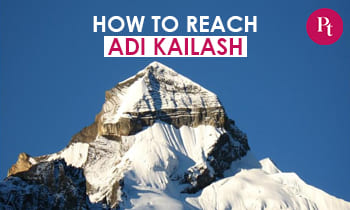
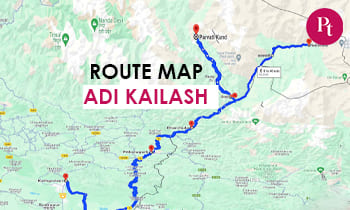
Adi Kailash, also called Chota Kailash or Baba Kailash, sits near the Indo-Tibetan border in Pithoragarh district. The pilgrimage covers sacred sites including Jolingkong (base camp, 4,420 m), Parvati Sarovar, and Nabhidhang (Om Parvat viewpoint). The right month makes a significant difference to your experience.
Overview
|
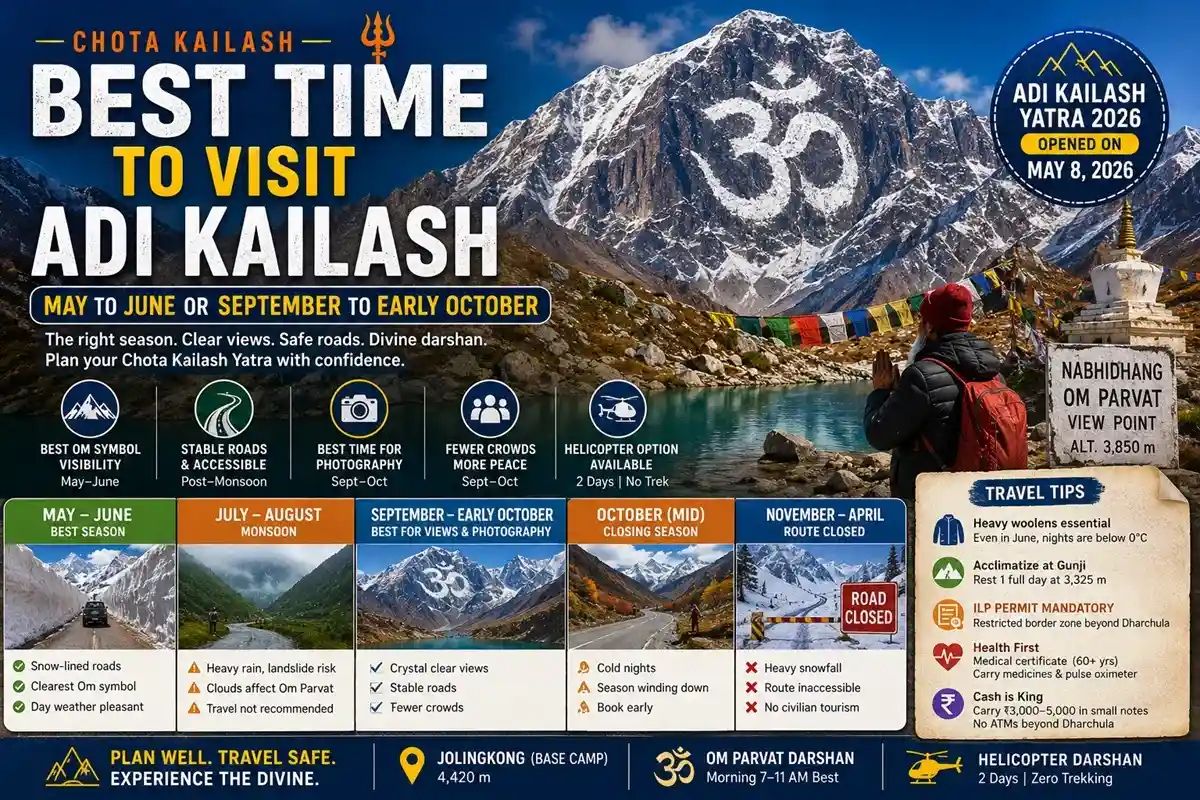
Adi Kailash Yatra 2026 Opening Date — Official Update
The Adi Kailash Yatra 2026 officially began on May 8, 2026. KMVN (Kumaon Mandal Vikas Nigam) General Manager Vijay Nath Shukla confirmed this in a media statement (PTI, March 11, 2026): 15 batches of pilgrims will undertake the journey from three starting points — Haldwani (8-day trip), Tanakpur (6-day trip), and Dharchula (5-day trip). The first phase of the 2026 Yatra runs from May 8 to June 10, after which individual batches continue through October.
| Phase | Period | Notes |
| Opening Season | May 8 – June 10, 2026 | First 15 KMVN batches | Snow walls on road near Gunji | Route clearing in progress |
| Peak Season | Mid-June – Late June | Most popular window | Om symbol clearest | Book 4–6 weeks ahead |
| Monsoon | July – August | Yatra operates but not recommended | Landslide risk | Om Parvat visibility affected |
| Post-Monsoon | Mid-Sep – Oct 10 | Best visibility | Stable roads | Fewer crowds | Recommended for first-timers |
| Closing Season | Oct 10 – ~Oct 20 | Last KMVN batches | Cold nights | Final window — book early |
| Closed | November – April | Civilian tourism suspended | Heavy snowfall | Route inaccessible |

Adi Kailash Weather Month by Month — Complete Season Guide
May to June: Best Time to Visit Adi Kailash
May to June is the best time to visit Adi Kailash for most pilgrims and trekkers. The route opens after winter closure and the weather is manageable during the day at all altitudes. The Om symbol on Om Parvat is at its most clearly defined in May–June — snow fills the rock crevices in the sacred OM shape when coverage is highest early in the season.
The approach road from Dharchula to Gunji in early May often has dramatic walls of snow lining both sides — one of the most striking visual experiences of the entire Chota Kailash Yatra. Morning skies are generally clear, giving pilgrims the best windows for darshan at Jolingkong and the Om Parvat view from Nabhidhang.
- Adi Kailash temperature in May — Dharchula: 22–32°C | Gunji (3,325 m): 8–14°C | Jolingkong (4,420 m): 2–8°C
- Night temps at Gunji: -2 to 2°C | Jolingkong nights: -8 to -4°C — heavy woolens essential
- Om Parvat visibility: Excellent — Om symbol most defined in May–June
- Road condition: May — some sections still clearing | Good by June
- Crowd level: Moderate in early May, high in June | Book KMVN packages 4–6 weeks in advance
July to August: Adi Kailash During Monsoon
The monsoon arrives in the Kumaon Himalayas in July and brings heavy rainfall through August. The Adi Kailash Yatra does not formally close during monsoon, but travel becomes significantly more difficult. The Dharchula to Gunji road passes through narrow gorges prone to landslides and debris flow when rains are heavy.
Visibility at Jolingkong and Nabhidhang is often affected by cloud cover during July and August. The Om Parvat darshan may be blocked on many days during this period. The Himalayan pilgrimage itself holds the same spiritual value in all seasons — but practically, the monsoon window is the hardest to manage.
- Gunji temperature July–Aug: 10–18°C (day), 2–6°C (night)
- Jolingkong: Cooler and unpredictable | Snowfall possible any time in July
- Road condition: Active BRO work needed | Landslides can block route for 1–2 days
- Om Parvat visibility: Often affected by cloud cover | Morning window (7–11 AM) best, not guaranteed
- Recommendation: September is a much more reliable alternative with better visibility and stable roads
September to October: Best Time for Adi Kailash Photography
Late September and early October offer the clearest visibility of the entire Adi Kailash Yatra season. Post-monsoon air is washed, dust-free, and crisp, making mountain views at Jolingkong and Nabhidhang sharper than any other time. This is widely considered the best time for photography and for first-time visitors who want guaranteed clear views.
The Om symbol on Om Parvat remains clearly visible in September–October, though with slightly less snow definition than May–June as the season has worn the snow coverage down. Golden autumn light in late September makes this the most photogenic window of the Adi Kailash trip.
- Adi Kailash weather in September — Gunji: 5–10°C (day), -4 to 0°C (night)
- Jolingkong in September: -1 to 5°C (day), -10 to -5°C (night) — carry heavy down jacket
- Road condition: Post-monsoon repairs complete | Most reliable road conditions of the season
- Om Parvat visibility: Excellent — crisp and clear, less snow but sharp definition
- Crowd level: Lower than May–June | More peaceful darshan | Better accommodation availability
November to April: Route Closed for Civilian Tourism
The Adi Kailash Yatra route is inaccessible during winter. By November, temperatures at Gunji drop well below freezing at night and the high-altitude sections see heavy snowfall. The Dharchula to Gunji road is formally closed for civilian tourism. Jolingkong at 4,420 m is buried under several feet of snow for months.
No KMVN batches operate during winter, and independent travel into the restricted border zone is not permitted. The local border villages (Gunji, Nabi, Kuti) see their residents migrate to lower areas. The route stays closed until BRO clears it each May.
- December–February: Extreme cold at Jolingkong (around -20°C at night), complete closure
- March–April: Snow begins melting at lower altitudes | High routes still closed
- May: Route clearing begins | Yatra typically opens second or third week of May
Adi Kailash Temperature by Month — 2026 (Location-wise)
Temperature varies significantly between the three key locations on the Adi Kailash route. Plan your packing based on your Jolingkong and Gunji stay — not on Dharchula or Pithoragarh temperatures.
| Month | Dharchula | Gunji (3,325 m) | Jolingkong (4,420 m) | Om Parvat | Visit Rating |
| May | 22–32°C / 14–18°C | 8–14°C / -2 to 2°C | 2–8°C / -8 to -4°C | Excellent | ★★★★★ Best |
| June | 25–35°C / 16–20°C | 10–15°C / -1 to 3°C | 3–9°C / -7 to -3°C | Very Good | ★★★★★ Peak |
| July | 28–36°C / 20–24°C | 12–18°C / 2–6°C | Variable, snow likely | Poor — clouds | ★★ Avoid |
| August | 26–34°C / 18–22°C | 11–17°C / 1–5°C | Cloudy, wet | Poor | ★★ Avoid |
| September | 20–30°C / 14–18°C | 5–10°C / -4 to 0°C | -1 to 5°C / -10 to -5°C | Excellent | ★★★★★ Best |
| October | 15–25°C / 8–14°C | 2–8°C / -6 to -2°C | Below 0 nights | Good (early Oct) | ★★★★ Good |
| Nov–Apr | Mild | Closed | Inaccessible | Not visible | CLOSED |
Om Parvat Om Symbol — When Is It Most Visible?
The Om symbol on Om Parvat is one of the most spiritually significant natural formations in the Himalayas. Snow settles in the rock crevices forming a clear ‘OM’ (ॐ) shape on the mountain face. Visibility depends on the season, the time of day, and weather conditions on the specific day of your visit.
- May–June (Best): Snow coverage maximum | Om symbol most sharply defined | Morning darshan at Nabhidhang 7–11 AM recommended
- September–October: Symbol visible with slightly less snow definition | Morning window same: 7–11 AM before clouds build
- July–August: Symbol exists but cloud cover often affects visibility at Nabhidhang during monsoon
- November–April: Route inaccessible
| Viewing Tip: The Om symbol is visible only from the Nabhidhang viewpoint, 20 km from Gunji by road. Morning hours (7–11 AM) are the most reliable — cloud cover typically increases in the afternoon. If the view is obscured on your first morning, most standard KMVN itineraries include a return visit the following day. |
Is Adi Kailash Suitable for Senior Citizens?
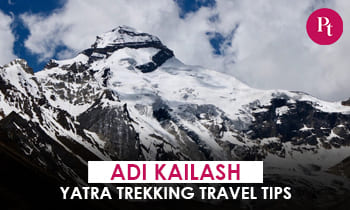
Yes — with proper planning. The Adi Kailash Yatra is one of the more accessible Himalayan pilgrimages for senior citizens because most of the route is now motorable by 4×4 vehicle. The Jolingkong viewpoint area involves a short walk on relatively flat terrain, and ATV services are available for the rocky sections.
- Helicopter option: The Adi Kailash and Om Parvat Aerial Darshan by helicopter (KMVN–UTDB partnership) covers the same circuit in 2 days with zero trekking — ideal for seniors or those with health conditions.
- Best season for seniors: May–June (day temperatures manageable) or early September (stable roads, clear skies).
- Medical certificate: Required for pilgrims above 60 years. Carry along with recent ECG report if you have cardiac history.
- Acclimatize fully at Gunji (3,325 m) for at least one full day before proceeding to Jolingkong (4,420 m).
- Oxygen support: Portable oxygen cans available at Gunji. Your KMVN guide will advise on usage based on your condition.
Travel Tips for Adi Kailash Yatra 2026
What to Pack
- Heavy down jacket and thermal inner wear regardless of month — Gunji drops below 0°C at night even in June
- Trekking boots with ankle support for Jolingkong and Nabhidhang terrain
- Waterproof rain gear — afternoon showers can occur at any point in the season
- Sunscreen SPF 50+ and UV sunglasses — high-altitude UV is intense
- Cash ₹3,000–5,000 in small notes — no ATMs or UPI connectivity beyond Dharchula
Route and Weather Updates
- Monitor BRO road clearance and Uttarakhand government communications before departing, especially in early May
- Join your KMVN batch WhatsApp group for real-time route updates from the tour coordinator
- Keep 1 buffer day at Dharchula — the Dharchula–Gunji road can be blocked for 1–2 days after heavy rain even in September
Acclimatization
- Rest completely on Day 1 at Gunji (3,325 m). Do not attempt Jolingkong (4,420 m) on the day you arrive at Gunji
- AMS (Altitude Mountain Sickness) symptoms: headache, nausea, dizziness, breathlessness — descend and consult your KMVN guide if symptoms appear
- Carry a personal pulse oximeter to monitor oxygen saturation. Consult your guide or the KMVN camp medical staff if you feel unwell at altitude
Permits
- Inner Line Permit (ILP) mandatory for all Indian nationals — the entire stretch beyond Dharchula is a restricted border zone
- ILP arranged by KMVN or your registered tour operator — processed at the SDM office in Dharchula
- Independent travel beyond Dharchula without operator documentation is not permitted at checkpoints
Conclusion
The best time to visit Adi Kailash is May to June or September to early October. Both windows offer manageable weather, accessible roads, and good Om Parvat visibility. May and June bring snow-lined roads, fresh energy of the new season, and the sharpest Om symbol. September gives you the clearest mountain views of the year and a quieter, more contemplative Himalayan pilgrimage experience.
July and August should be avoided if possible due to rain, landslide risk, and cloud cover at Om Parvat. The route closes from November to April for civilian tourism. Whatever month you choose, travel with a registered KMVN batch or operator, acclimatize fully at Gunji, carry the right gear, and build a buffer day into your Dharchula stay. This Chota Kailash Yatra rewards those who plan well.
Frequently Asked Questions
Q1. What is the best time to visit Adi Kailash?
May to June and September to early October are the two best windows. May–June gives you the clearest Om symbol and fresh-season energy; September gives the sharpest mountain views and fewest crowds.
Q2. What is the Adi Kailash opening date in 2026?
The Adi Kailash Yatra 2026 officially opened on May 8, 2026, as confirmed by KMVN General Manager Vijay Nath Shukla (PTI, March 2026). The first phase runs from May 8 to June 10.
Q3. When does the Adi Kailash Yatra close?
The Adi Kailash Yatra typically closes in mid to late October, around October 15–20, depending on snowfall. The route remains closed from November to April for civilian tourism.
Q4. What is the best month to visit Adi Kailash for Om Parvat Darshan?
May and June are best — snow coverage is maximum and the Om symbol is most clearly defined. September is the second-best option with excellent visibility and stable roads.
Q5. Can I visit Adi Kailash during monsoon?
The Yatra operates during monsoon but is not recommended. July–August brings heavy rains, landslide risk on the Dharchula–Gunji road, and cloud cover that often blocks Om Parvat views. September is a much better alternative.
Q6. What is the Adi Kailash temperature in May?
In May, Dharchula is 22–32°C by day. Gunji at 3,325 m is 8–14°C by day and -2 to 2°C at night. Jolingkong at 4,420 m is 2–8°C by day and -8 to -4°C at night. Pack heavy woolens regardless.
Q7. What is the Adi Kailash weather in September?
September is post-monsoon — cool, clear, and stable. Gunji is 5–10°C by day and -4 to 0°C at night. Jolingkong is -1 to 5°C by day. Crystal-clear skies make this the best month for photography.
Q8. Is Adi Kailash accessible in October?
Yes — early to mid-October is within the season. It is cold (Gunji nights below -6°C, Jolingkong below -10°C), so carry very warm gear. By mid-October, snow may begin at higher altitudes and the season winds down.
Q9. When is Om Parvat Om symbol most clearly visible?
May and June are best — snow coverage is highest and the OM symbol is most sharply defined. Visit Nabhidhang viewpoint between 7 AM and 11 AM, before cloud cover typically increases in the afternoon.
Q10. Can senior citizens visit Adi Kailash?
Yes. Most of the route is motorable by 4×4. ATV services are available at Jolingkong. A helicopter package (Adi Kailash Aerial Darshan) covers the circuit in 2 days with no trekking, ideal for seniors. Medical certificate required above 60 years.
Q11. Does Adi Kailash require trekking?
The main route is motorable to near Jolingkong. A short walk on relatively flat terrain at the viewpoint is required. Helicopter Darshan is available for those who cannot walk. The Kedarnath-style 16 km trek is not involved here.
Q12. What is the Adi Kailash Yatra season?
The Adi Kailash Yatra season runs from May to October. The route is closed from November to April due to heavy snowfall at high altitude. The best windows within the season are May–June and September–early October.
Q13. Is the Inner Line Permit required for Adi Kailash?
Yes. An ILP (Inner Line Permit) is mandatory for all Indian nationals. The area beyond Dharchula is a restricted border zone near the India-Tibet boundary. KMVN or your tour operator arranges it at the SDM office in Dharchula.
Q14. What is the Adi Kailash October weather like?
October is cold and crisp. Gunji temperatures: 2–8°C by day, -6 to -2°C at night. Jolingkong nights drop below zero. Early October has good Om Parvat visibility; mid-October sees increasing cold and the season winding down. Pack very warm gear.
Q15. How many days does the Adi Kailash Yatra take?
KMVN packages range from 5 days (Dharchula-based) to 8 days (Haldwani-based). Private operators offer 8–10 day packages. The Adi Kailash Aerial Darshan helicopter tour covers the circuit in 2 days from Pithoragarh.



 Call
Call WhatsApp
 Enquiry