
Planning the Adi Kailash Yatra raises the same doubts for almost everyone — Do I need a permit? What does it cost? Is it safe for my parents? This page answers the questions travellers actually ask on Google, Reddit, YouTube, and travel forums, updated for the 2026 season. The route runs through the restricted Vyas Valley of Pithoragarh, Uttarakhand, near the India–Tibet border, so an Inner Line Permit and stricter rules apply. Read these before you book anything.
Basics & Significance
Where is Adi Kailash located?
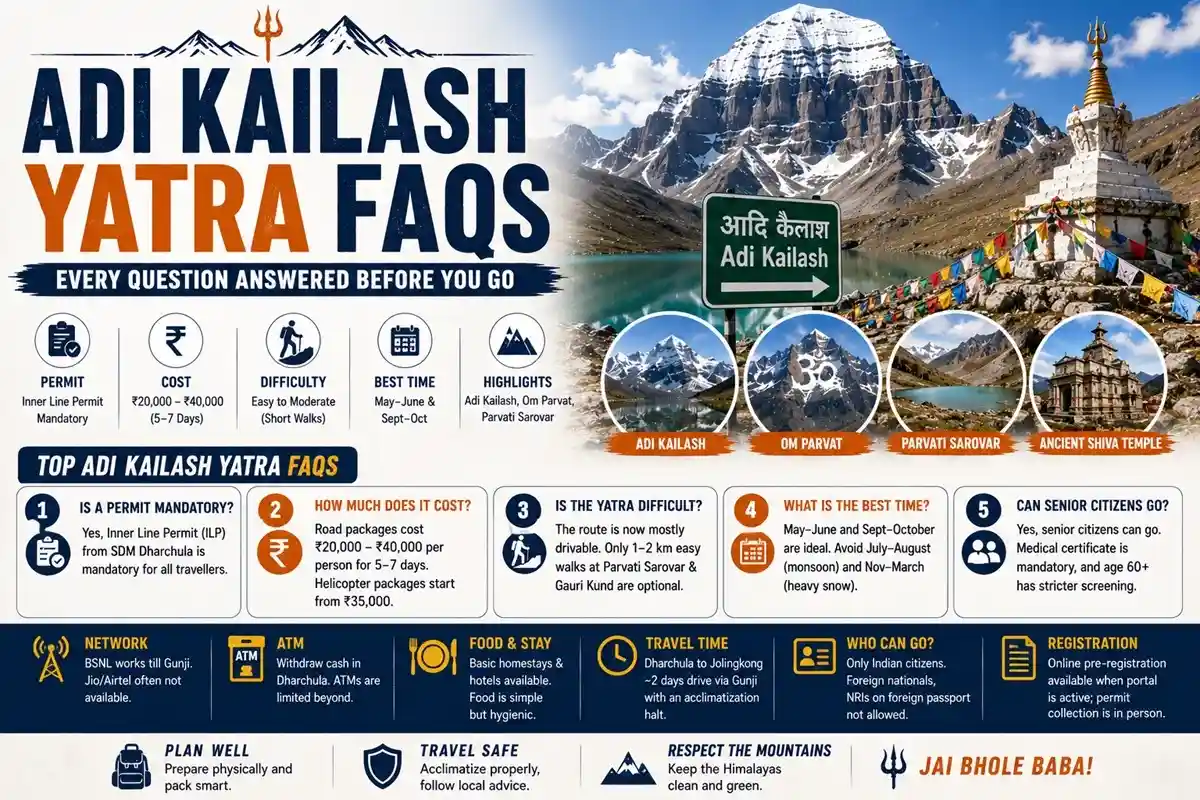
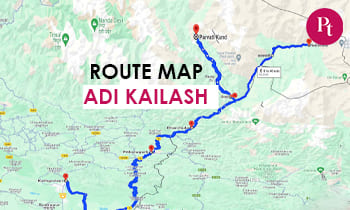
In the Vyas Valley of Pithoragarh district, Uttarakhand, near the India–Tibet border. The approach runs Kathgodam → Pithoragarh → Dharchula → Gunji → Jolingkong, entirely within India.
Which state is Adi Kailash in?
Uttarakhand — in the Kumaon Himalayas of Pithoragarh district, not in Tibet or Nepal.
Why is Adi Kailash famous?
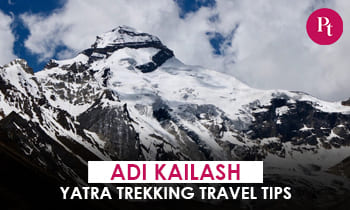
Revered as one of the Panch Kailash and called Chhota Kailash, it is believed to be an abode of Lord Shiva where ancient sages meditated. Pilgrims pair its darshan with Om Parvat, whose snow naturally forms a “ॐ” symbol.
Is Adi Kailash the same as Mount Kailash?
No. Mount Kailash is in Tibet; Adi Kailash is a separate sacred peak within India, revered as its spiritual counterpart.
What are Parvati Sarovar and Gauri Kund?
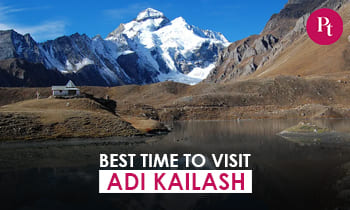
Parvati Sarovar is the lake at Jolingkong that mirrors the peak on still mornings — the yatra’s defining image. Gauri Kund lies a short walk beyond. Both are easy optional walks of 1–2 km, next to an ancient Shiva temple.
What else is worth seeing on the route?
Kuti village in the Kuthi Yankti valley (linked in local belief to the Pandavas), Bheem ki Kheti, and the Kalapani temple near the Kali River’s source. Panchachuli views accompany much of the drive from Dharchula.
Which communities live in the Vyas Valley?
The valley is home to the Byansi (Rung) community, historically traders on the India–Tibet salt route. Their villages — Gunji, Kuti, Nabhi — host most yatra homestays today.
Permits & Documents
Is a permit mandatory?
Yes, without exception. The Inner Line Permit (ILP) is legally required beyond Tawaghat, for groups and solo travellers alike, and is checked at multiple ITBP and police posts. No route bypasses the checkpoints.
What is the Inner Line Permit for Adi Kailash?
An official document from the Sub-Divisional Magistrate (SDM), Dharchula, allowing Indian citizens into the restricted Vyas Valley. It records your name, age, and travel dates. Carry photocopies and digital copies — a lost permit cannot be replaced mid-route.
What documents are required for the permit?
A valid government ID (Aadhaar, Voter ID, or Passport), 2–4 passport-size photos, exact travel dates, and a medical fitness certificate from a registered doctor. Carry photocopies of everything.
How do I register for Adi Kailash Yatra online?
Online pre-registration works when the government portal is active, but the physical permit is still collected in person at Dharchula. Approval usually takes 1–3 working days; registered operators handle the paperwork for their guests.
Do I need a passport for Adi Kailash?
No — any valid government ID works, since the route stays within India. A passport is needed only for the Kailash Mansarovar Yatra into Tibet.
Can foreigners visit Adi Kailash?
No. Under current regulations, only Indian citizens receive the ILP. Foreign nationals, NRIs on foreign passports, and OCI holders cannot travel beyond Dharchula through this sensitive border zone.
Can NRIs with an Indian passport do the yatra?
Yes. Citizenship is what matters — NRIs holding valid Indian passports qualify for the permit like any other Indian citizen.
Is a medical certificate compulsory?
Yes, it is mandatory with the application, since you sleep above 3,000 m. Pilgrims aged 60–70 face stricter screening. Be honest — altitude trouble at Jolingkong is far worse than a cancelled booking.
Adi Kailash Yatra Cost & Booking
What is the cost of Adi Kailash Yatra 2026?
Indicatively, road-based packages run ₹20,000–40,000 per person for 5–7 days including transport, homestays, meals, and permit help — about ₹2,500–4,000 per day. Confirm current rates with KMVN or registered operators, as prices shift each season.
How much does the helicopter yatra cost?
Indicative pricing: helicopter packages from Pithoragarh start around ₹35,000 for short darshan circuits and reach ₹1.2–1.45 lakh for full itineraries covering Gunji, Jolingkong, and Nabhidhang. Rates vary by operator and season — confirm before booking. They remove trekking but stay weather-dependent.
Which is the best tour operator or travel agency for Adi Kailash?
No single “best” exists — distrust anyone promising guaranteed permits. Start with KMVN, the government body running official packages. Among private agencies, pick a registered one that handles the ILP transparently, includes a Gunji acclimatisation night, and carries oxygen backup.
How far in advance should I book?
For May–June, book 30–45 days ahead — permits, vehicles, and up-valley stays run out in the rush. September–October is easier, but keep a month’s buffer.
Do I need travel insurance?
Not mandatory, but sensible. Choose a policy covering high-altitude travel and emergency evacuation, since medical care above Dharchula is basic.
Best Time for Adi Kailash Yatra
What is the best time to go?
May–June and September–October. May–June has peak-season energy and clear Om Parvat views; September–October offers the crispest post-monsoon skies. Avoid July–August — monsoon landslides routinely block the road.
When is the Om Parvat “ॐ” most clearly visible?
In May–June, when partial snowmelt makes the symbol stand out sharply, and again on clear post-monsoon mornings in September–October.
How cold does it get?
Around 10–15°C by day and near or below freezing at night in season. At Jolingkong, wind chill makes it feel colder than the thermometer shows, even in June.
Is Adi Kailash open in winter?
No. Routes beyond Gunji close under snow roughly November to March, and permits are not issued. The season runs late April/May to October, weather permitting.
When does the 2026 season start and end?
As reported by the Pithoragarh district administration, the 2026 season was flagged off from Dharchula on 1 May and runs until around October, weather permitting — confirm dates before travel.
Difficulty, Fitness & Safety
Is Adi Kailash difficult?
Less than its reputation. Since the BRO road reached Jolingkong, it is rated easy-to-moderate: vehicles cover the route and walking totals only 2–7 km of optional trails. Altitude, not distance, is the real challenge.
How fit do I need to be?
Moderate fitness suffices — if you can walk briskly for 30–40 minutes, the walking is manageable. Start light cardio a month ahead, hydrate, skip alcohol, and never miss the acclimatisation night at Gunji (3,200 m).
Is Adi Kailash safe for senior citizens?
Yes, with preparation. There is no official government age limit — participation is subject to medical fitness, and operators screen elderly pilgrims more strictly. Seniors should pick organised packages with vehicle support and oxygen backup; helicopter darshan is the gentlest option.
What about altitude sickness (AMS)?
Acute Mountain Sickness is the main medical risk — Jolingkong and Nabhidhang sit above 4,300 m. Ascend gradually, sleep at Gunji first, drink plenty of water, and descend immediately if headache or breathlessness worsens. Prevention beats treatment here.
Should I take Diamox for altitude?
Only on a doctor’s advice. Many pilgrims use it preventively, but it is prescription medication — discuss dosage and suitability before the trip, not at Gunji.
Can diabetics go to Adi Kailash?
Only with a doctor’s clearance. Well-controlled diabetes with proper medication planning is generally manageable, but altitude affects blood sugar — disclose the condition honestly in your medical certificate.
Can heart or asthma patients visit?
High altitude puts real strain on the heart and lungs, so anyone with cardiac issues or asthma needs a thorough medical evaluation first. Many doctors advise against it for uncontrolled conditions.
Is there a BMI or health screening requirement?
There is no universal government BMI rule. Some tour operators conduct their own health screening, which may include BMI and blood-pressure checks — confirm your operator’s criteria when booking.
Is oxygen available on the route?
Good operators carry portable cylinders, and Gunji has basic medical facilities. There is no hospital-grade care above Dharchula — anyone with heart or lung conditions needs honest medical advice first.
Can I carry my own oxygen cylinder or can?
Yes — small portable oxygen cans are allowed and sensible for seniors. Declare medical equipment at check posts if asked, and remember cylinders don’t replace proper acclimatisation.
Can women do the yatra solo?
Yes — women travel this route every season, and the valley is heavily monitored by ITBP and police. Joining a registered group still makes practical sense for vehicle logistics and shared costs.
Can children do the yatra?
Rules vary. Trek-style registrations generally need 18+, but many operators accept families with children around 7+ on the vehicle-based route, subject to fitness. Confirm current administration guidelines first.
Whom do I contact in an emergency?
Alert the nearest ITBP or police post — they line the entire route and coordinate rescues. Your operator and the SDM office, Dharchula, are the next contacts; serious cases are moved to Pithoragarh.
Route, Duration & Experience
How many days are needed for Adi Kailash Yatra?
Plan 4–6 days from Dharchula, or 7–10 from Delhi/Kathgodam: permit day at Dharchula → Gunji (acclimatisation) → Jolingkong → Nabhidhang → descent. Keep one buffer day for weather.
What is the total road distance from Dharchula?
Roughly 110–115 km one way to Jolingkong via Gunji, spread over two days with an acclimatisation halt.
Can I do Om Parvat darshan in the same trip?
Yes — nearly every itinerary combines both. Om Parvat is viewed from Nabhidhang (~4,300 m), a 2–3 hour drive from Gunji, and the same permit covers it.
What is the difference between Adi Kailash and Kailash Mansarovar?
Adi Kailash (~5,945 m) is in India and needs only an ILP and government ID. Kailash Mansarovar is in Tibet — passport, Chinese permits, MEA lottery or costly Nepal routes, and upwards of ₹2 lakh. Adi Kailash is the accessible, affordable counterpart.
What is the altitude of Adi Kailash?
The peak rises to about 5,945 m, but pilgrims don’t climb it. Darshan happens from Jolingkong (~4,420 m) beside Parvati Sarovar; Om Parvat is viewed from Nabhidhang (~4,300 m); Gunji sits at 3,200 m.
Can I see Mount Kailash (Tibet) from this route?
In recent seasons the administration has allowed guided visits to a viewpoint near the Old Lipulekh Pass, from where Mount Kailash is visible on clear days. Access depends on current permissions and army clearance — confirm with KMVN or the SDM office.
Can I take my own car?
Generally no. Beyond Dharchula, registered local taxis typically ply the restricted route; outside private vehicles are usually stopped at the posts. Park in town and switch to a local vehicle.
Is a bike trip allowed?
Rules on private bikes change with administration orders, and most seasons restrict outside vehicles. Confirm current policy with the SDM office before riding up — don’t rely on old vlogs.
Can I do the yatra solo, without a tour operator?
Yes — get the ILP yourself at Dharchula and hire a registered local taxi. It suits experienced travellers; first-timers usually find packages easier for a similar overall cost.
Are drones and photography allowed?
Drones are prohibited in this border zone under current rules. Landscape and temple photography is fine, but never photograph check posts, bridges, or military installations.
What if weather blocks the road mid-yatra?
It happens regularly — batches get held at Dharchula or Gunji after landslides at points like Mangti Nala. Carry a spare day, extra cash, and patience; the mountain sets the schedule.
Can I stay overnight at Jolingkong?
Yes — basic KMVN huts and seasonal camps operate at Jolingkong for yatris, though most itineraries prefer sleeping lower at Gunji or Kuti and visiting Jolingkong as a day trip.
Can I camp independently on the route?
Independent camping in this restricted border zone is generally not permitted — stays are expected at recognised villages, homestays, or KMVN facilities. Check current rules with the SDM office.
Can I bathe in Parvati Sarovar?
No — the lake is treated as sacred, and bathing or polluting it is prohibited. Pilgrims offer prayers at the shore and the adjacent Shiva temple instead.
Is alcohol allowed on the yatra?
Carrying alcohol into the restricted valley is discouraged, and drinking at altitude is genuinely dangerous — it accelerates dehydration and worsens AMS. Skip it entirely on this trip.
Is Adi Kailash Yatra worth it?
For the right traveller, absolutely. The Vyas Valley offers genuine remoteness — raw roads beyond Gunji and Adi Kailash mirrored in Parvati Sarovar with almost nobody around. If you want a pilgrimage that still feels earned, few journeys in India compare.
Facilities on the Route
How is the network connectivity?
Limited. BSNL and Jio work in Dharchula and patchily up to Gunji; beyond that, expect no signal, with connectivity fluctuating in bad weather. Tell family you may be unreachable for two–three days.
Is there ATM availability on the route?
The last dependable ATMs are in Dharchula’s main market. Beyond Tawaghat there are effectively none, and UPI fades fast — withdraw your entire trip’s cash in town.
What are food and accommodation like?
Basic but warm: homestays and KMVN huts with thick blankets, shared toilets, and simple vegetarian food — dal-bhat, Kumaoni mandua roti, endless chai. Comfort drops as altitude rises.
Can I charge my phone on the route?
Dharchula hotels and most Gunji homestays have charging points, but power up-valley is erratic. Carry a 10,000+ mAh power bank and download offline maps beforehand.
What should I pack?
Warm layers, windproof jacket (even in June), rain cover, sturdy shoes, sunglasses, sunscreen, torch, power bank, medicines, water bottle, ID photocopies, 2–4 photos, and cash. Layers beat one heavy jacket.
Key Takeaways
- The Inner Line Permit via SDM Dharchula is mandatory; Indian citizens only.
- Best windows: May–June and September–October; the route closes in winter.
- Road packages ₹20,000–40,000; helicopter options ₹35,000–1.45 lakh.
- Vehicle-based and easy-to-moderate — altitude, not walking, is the real test.
- Seniors can go subject to medical fitness — organised packages are the safer route.
Official references: SDM Office Dharchula (Pithoragarh district administration), KMVN (Kumaon Mandal Vikas Nigam), Uttarakhand Tourism.
Final Word
Most Adi Kailash Yatra doubts reduce to three things: permits, altitude, and timing. Sort the ILP early, respect the acclimatisation night at Gunji, and travel in the May–June or September–October windows. Do that, and this Chhota Kailash pilgrimage becomes one of the most rewarding journeys in the Indian Himalaya — remote, sacred, and still uncrowded. For base-town planning, read our Dharchula travel guide next.


 Call
Call WhatsApp
 Enquiry