
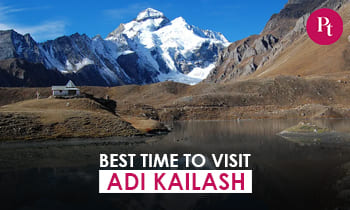
If you’re planning this sacred Himalayan pilgrimage, understanding the Adi Kailash weather should come before permits and bookings. The best time to visit Adi Kailash is decided by the mountain itself.
This 5,945-metre peak — also called Chota Kailash or Little Kailash — sits in Pithoragarh district, Uttarakhand, near the India-Tibet border. Here, one heavy rain spell can shut the road beyond Dharchula for days. Local drivers and KMVN staff repeat the same advice: time it right.
Quick Overview:
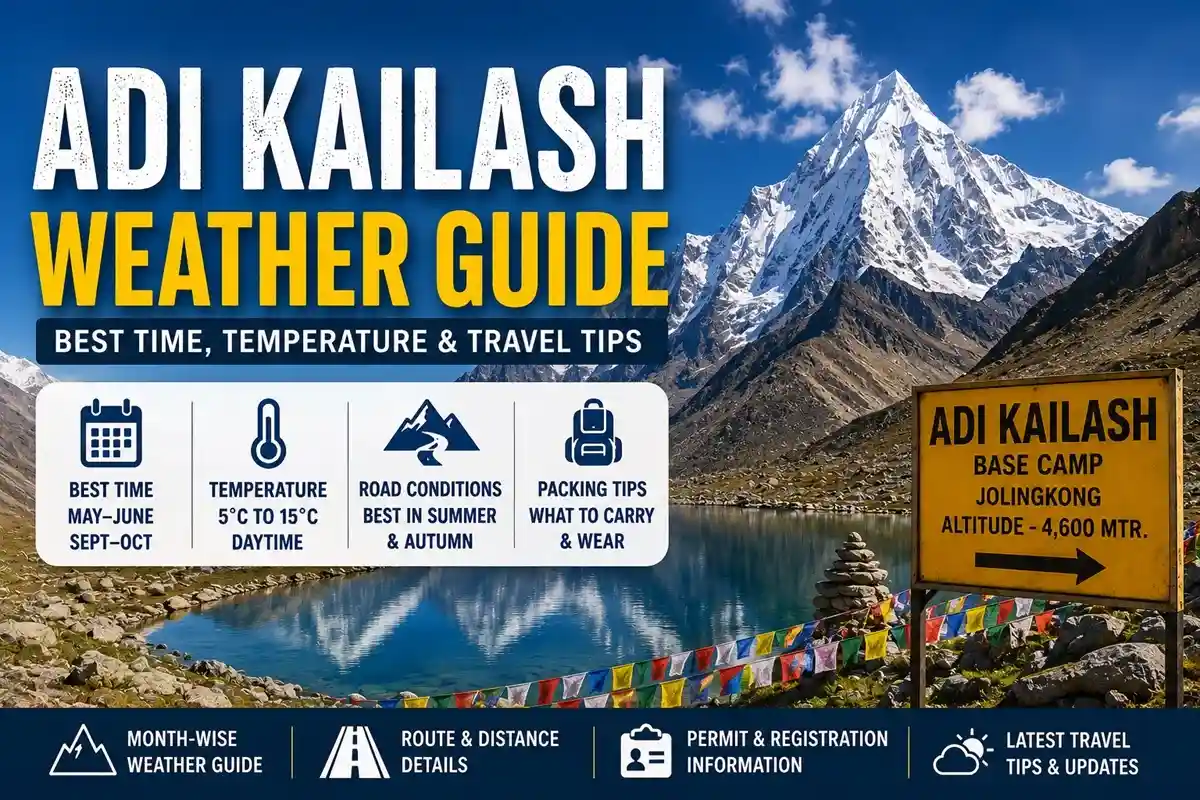
- Best time to visit: May to June and September to October.
- Daytime temperature: Around 5°C to 15°C.
- Weather conditions: Clear skies with pleasant trekking conditions.
- Road conditions: The Dharchula–Jolingkong route is generally safest and most accessible.
- Avoid July–August: Heavy monsoon rains can trigger landslides and road closures.
- Avoid November–April: The route remains closed due to heavy snowfall.
Adi Kailash Weather: Season-by-Season Breakdown
The route climbs through a huge altitude range — Dharchula (~940 m), Gunji (~3,200 m), and Jolingkong, the base area, at roughly 4,600 m. The Adi Kailash climate you experience changes dramatically within one day’s drive.
Adi Kailash Weather in May–June: The Golden Window
The yatra generally opens in early May once road clearance and government approval are complete. For 2026, the season commenced on 1 May, as reported by the district administration.
- Day: 8–15°C at Gunji; 3–10°C at Jolingkong
- Night: 0–5°C at Gunji; sub-zero possible higher up
- Sky: clear mornings; clouds often build after noon
Most pilgrims prefer late May to mid-June. Leftover snowfall at Adi Kailash keeps Om Parvat’s natural “ॐ” sharply visible. Morning darshan is better because peaks usually cloud over by midday.
Can I Visit Adi Kailash in Monsoon (July–August)?
Short answer: it’s best avoided. The route may stay open, but Dharchula weather turns unpredictable and rain-soaked slopes give way.
The Tawaghat–Gunji road condition worsens at known vulnerable stretches — Mangti Nala, Elagad, Koolagad, and Najang are among the points most frequently affected during monsoon. Blockages can strand pilgrims in Budhi or Gunji for 2–4 days.
If monsoon travel is unavoidable, keep three buffer days and carry sufficient cash — there are no ATMs beyond Dharchula.
Adi Kailash Weather in September–October: Clearest Skies
Adi Kailash weather in September is the most photogenic of the year. Post-monsoon air is washed clean, and Jolingkong weather delivers deep blue skies with a mirror-still reflection in Parvati Sarovar.
- Day: 5–12°C at higher camps
- Night: –2°C to –8°C at Jolingkong by mid-October
- Closing: the season typically winds down by end-October, though early snowfall can close the higher road sooner
During peak autumn weekends, KMVN guest houses fill fast. Booking early is strongly recommended.
Winter (November–April): Completely Closed
Jolingkong temperatures drop below –15°C, snow buries the road, and no permits are issued. Use these months to prepare your documents for the next season.
Month-Wise Adi Kailash Temperature Chart (Approximate, Gunji–Jolingkong)
| Month | Day Temp | Night Temp | Conditions | Verdict |
| May | 8–14°C | 0–4°C | Clear, residual snow | Excellent |
| June | 10–15°C | 2–6°C | Mostly clear | Excellent |
| July | 12–16°C | 5–8°C | Heavy rain, landslides | Avoid |
| August | 12–16°C | 5–8°C | Peak monsoon risk | Avoid |
| September | 8–13°C | 0–4°C | Crystal-clear skies | Best views |
| October | 4–10°C | –2 to –8°C | Cold, early snow possible | Good (go early) |
| Nov–April | Sub-zero | Below –15°C | Route closed | Not possible |
Figures are indicative; mountain weather changes rapidly, often within hours.
High-Altitude Weather Facts Every Pilgrim Should Know
- Oxygen: levels fall noticeably above 3,000 m; at Jolingkong the air holds roughly 40% less oxygen than the plains.
- UV intensity: high-altitude sun burns fast even at 5°C — SPF 50+ is essential.
- Wind chill: afternoon winds can make 5°C feel below freezing.
- Rapid changes: clear mornings can turn to hail or snow flurries by 2 PM.
- Snowfall probability: highest in early May and after mid-October.
Altitude Sickness (AMS): The Real Weather Risk
Cold rarely hospitalises pilgrims — altitude does. Watch for headache, nausea, breathlessness, and disturbed sleep.
- Spend one acclimatisation night at Gunji before Jolingkong.
- Drink 3–4 litres of water daily; avoid alcohol.
- Walk slowly; rest if your pulse stays high.
- Consult your doctor about preventive altitude medication before travel.
- Descend immediately if symptoms worsen — basic medical posts exist along the route, but facilities are limited.
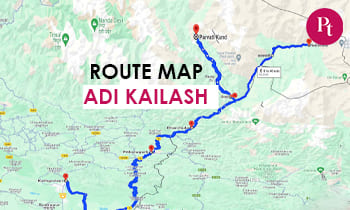
Route Details & Distance Chart (Approx.)
| Stretch | Distance | Weather Impact on Road |
| Kathgodam → Pithoragarh | ~190 km | Paved; winter-morning fog |
| Pithoragarh → Dharchula | ~93 km | Paved; monsoon landslide zones |
| Dharchula → Gunji | ~70 km | BRO gravel track; most weather-sensitive |
| Gunji → Jolingkong (base) | ~25 km | 4×4 only; snow lingers into May |
| Gunji → Nabhidhang (Om Parvat view) | ~20 km | Clouds decide ॐ visibility |
Vehicles often reach close to the base, but the final walking distance depends on current road status, vehicle permissions, and season. At nearly 15,000 feet, even a short walk demands slow pacing.
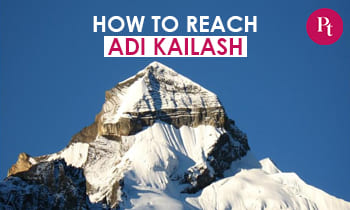
How to Reach
- Air: Pantnagar Airport (~250 km from Pithoragarh); Naini Saini airstrip has limited flights.
- Train: Kathgodam is the nearest major railhead, well connected to Delhi and Lucknow.
- Road: Kathgodam/Haldwani → Pithoragarh → Dharchula, then registered 4×4 taxis on the border road.
Pilgrims from Delhi-NCR usually take an overnight train to Kathgodam and start the hill drive early — mountain weather is calmest before noon.
Registration & Inner Line Permit
As per current guidelines, every pilgrim needs an Inner Line Permit (ILP) from the SDM office, Dharchula. Online pre-registration is available on the Uttarakhand tourist-care portal, but pilgrims presently still collect the physical permit in person.
Carry Aadhaar or passport, 5–6 photos, and an MBBS-issued medical fitness certificate (within 30 days). Apply 5–10 days ahead. Permits are issued only while the route is open (roughly May–October).
Restrictions may apply for foreign nationals and OCI card holders in this border zone — check the latest district administration guidelines. Avoid unofficial agents; fake-permit cases have been reported.
Accommodation & Weather Comfort
- Dharchula: KMVN rest house and budget hotels (approx. ₹800–₹2,000/night)
- Gunji: KMVN huts and homestays — basic rooms, hot vegetarian meals
- Nabi & Kuti: traditional Rung-family homestays; carry a sleeping-bag liner for cold nights
- Electricity and hot water are unreliable beyond Dharchula; pack a power bank.
Weather-Smart Packing List
- Thermals, fleece, down jacket, windproof shell (layering beats one heavy coat)
- Waterproof shoes, woollen cap, gloves, UV sunglasses
- SPF 50+ sunscreen, lip balm, rain poncho
- Personal medicines, ORS, doctor-advised altitude medication
- Torch, power bank, cash for the full trip
Budget Breakdown (Approx., 2026)
A 6–7 day package from Kathgodam costs roughly ₹20,000–₹35,000 per person, though prices vary widely by operator and inclusions. Permit-related fees total around ₹1,500–₹2,500.
Helicopter darshan from Pithoragarh operates through limited operators, needs advance booking, and flies only in clear-weather windows — treat it as a bonus, not a plan. Booking early is recommended during the May–June rush.
Senior Citizen & Family Tips
- Many operators set an upper age limit around 70 years, though policies vary; pilgrims aged 60–70 usually need extra medical documentation.
- Seniors should prefer the May–June window — milder nights, easier acclimatisation.
- Families usually choose KMVN or registered-operator packages with oxygen support over self-drive plans.
- Verify the KMVN helpline and road status locally before departure, as contact details can change.
Key Takeaways
- Best windows: May–June and September–October
- Avoid: July–August landslides; winter closure (Nov–April)
- Coldest point: Jolingkong — sub-zero nights even in October
- Real risk: altitude sickness, not cold — acclimatise at Gunji
FAQs
What is the best time to visit Adi Kailash?
May–June and September–October. September offers the clearest skies of the year.
What is the best month for Adi Kailash?
September — post-monsoon air gives the sharpest views of the peak and Om Parvat.
Can I visit Adi Kailash in monsoon?
It’s best avoided; July–August landslides frequently block the Tawaghat–Gunji road.
What is the Adi Kailash weather in May?
Approx. 8–14°C by day at Gunji, near-freezing nights, with leftover snow on higher slopes.
What is the temperature at Jolingkong?
Roughly 3–12°C by day in season; nights fall to –2°C to –8°C by October.
Is September better than May for the yatra?
For views, yes — clearer skies. May offers slightly warmer days and fresh-season energy.
Will I see snowfall at Adi Kailash?
Likely in early May and after mid-October; heavy snow closes the route in winter.
How cold does it get at night?
Sub-zero at Jolingkong through most of the season; carry a down jacket even in June.
Does it rain every day in monsoon?
Not daily, but rain is frequent and unpredictable — road risk matters more than rain itself.
How is Om Parvat weather for darshan?
Clear mornings from Nabhidhang give the best ॐ visibility; clouds usually gather by afternoon.
Is the Inner Line Permit mandatory?
Yes, for every pilgrim, issued at SDM Dharchula as per current guidelines.
Can senior citizens do this Himalayan pilgrimage?
Yes — many operators accept pilgrims up to around 70 with medical fitness proof.
Is there mobile network on the route?
Patchy after Dharchula, nearly absent beyond Gunji — inform family in advance.
Is helicopter darshan reliable?
No; flights are weather-dependent, operator-limited, and often rescheduled.
Final Word
The Adi Kailash weather is the true schedule-keeper of this journey to Shiva’s abode. Choose May–June for warmer days, or September for the year’s clearest Himalayan skies — and skip the monsoon entirely.
For families, seniors, and first-timers, a KMVN or registered-operator package in either golden window offers the safest darshan of Chota Kailash. Verify the latest official notifications, book early, and respect the altitude — the mountain’s calendar is short, and the queue of devotees is long.


 Call
Call WhatsApp
 Enquiry