
Adi Kailash vs Kedarnath is a comparison many Shiva devotees end up making, since both sit in Uttarakhand’s Himalayas yet feel completely different in practice. Kedarnath is a Jyotirlinga and part of the Char Dham circuit, drawing massive crowds; Adi Kailash is a quieter, remote border pilgrimage in Kumaon. This guide compares them factually, including the on-the-ground experience, so you can choose based on fitness, time, and budget.
Quick Comparison Table
| Factor | Adi Kailash | Kedarnath |
|---|---|---|
| Location | Pithoragarh, Kumaon, near India-Tibet border | Rudraprayag, Garhwal Himalayas |
| Approx. altitude | ~5,945 m (peak); ~4,500 m darshan point | ~3,583 m (temple) |
| Trek distance | Short walk near Jolingkong; mostly motorable | ~16 km one-way from Gaurikund |
| Documents needed | Inner Line Permit, ID, medical check | Char Dham registration (online/offline) |
| Typical duration | 7–10 days | 3–5 days |
| Approx. cost per person | ₹35,000–1,50,000 | ₹10,000–40,000 (trek); helicopter adds cost |
| Crowd levels | Low to moderate | Very high, especially May–June |
| Helicopter option | Limited, not standard | Widely available from Phata, Guptkashi, Sirsi |
All costs, dates, and registration details are approximate and subject to seasonal government updates — confirm current figures before booking.

Route and Accessibility
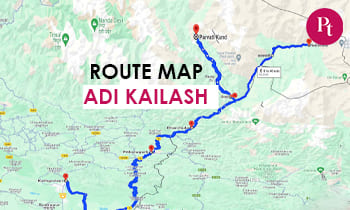
Adi Kailash follows Kathgodam → Pithoragarh → Dharchula → Gunji → Jolingkong, entirely within Kumaon near the India-Tibet border. Kedarnath follows Haridwar → Rishikesh → Rudraprayag → Guptkashi → Sonprayag → Gaurikund → Kedarnath, inside the Kedarnath Wildlife Sanctuary. Kedarnath has better transport infrastructure, more hotels, and a shorter overall trip — but that’s not the same as being physically easier, since its final stretch is a demanding trek. Adi Kailash involves a longer journey with far less walking, so “accessible” and “easy” mean different things depending on which yatra you’re asking about.
Trek Distance, Altitude and Difficulty
Kedarnath requires an uphill trek of roughly 16 km from Gaurikund (1,982 m) to the temple (3,583 m), gaining about 1,600 metres over 6 to 8 hours; pony, palki, or helicopter options exist for those who can’t walk it. Adi Kailash is largely motorable, with only short stretches on foot near Jolingkong, though its peak sits far higher at around 5,945 metres. In short: Kedarnath’s trek is harder day-to-day, while Adi Kailash’s overall altitude exposure is greater.
Altitude Sickness and Health Precautions
Both pilgrimages sit high enough for acute mountain sickness (AMS) to be a genuine concern. Watch for headache, nausea, or breathlessness on either route, and descend if symptoms worsen — severe cases can progress toward HAPE or HACE, which need urgent medical attention. A pulse oximeter is a useful, lightweight addition to your bag on both yatras. Anyone with heart, lung, or blood pressure conditions should consult a doctor beforehand, and travel insurance covering high-altitude evacuation is worth considering for either trip.
Permits and Registration
Kedarnath requires mandatory Char Dham registration via registrationandtouristcare.uk.gov.in or counters in Rishikesh and Guptkashi — without it, pilgrims can’t pass the Sonprayag/Gaurikund checkpost. Adi Kailash requires an Inner Line Permit from the Dharchula SDM office, including ID verification and a medical check, since the route runs through a restricted border zone. Kedarnath’s process is faster given pilgrim volume; Adi Kailash’s reflects border security rather than crowd control.
Cost and Practical Basics
Kedarnath packages generally run ₹10,000–40,000 without a helicopter; a round-trip helicopter leg adds a meaningful premium, priced per season and helipad. Adi Kailash runs ₹35,000–1,50,000, reflecting its longer, remoter logistics. On practical basics, Kedarnath has denser mobile coverage, more ATMs, and wider food options along the route; Adi Kailash’s network thins out quickly past Dharchula, and cash should be carried in advance since ATMs disappear beyond it.
The Journey Experience
Numbers aside, the two feel very different. Kedarnath means crowds, bhajans, market stalls, and a constant flow of pilgrims and helicopters near the temple — a vivid, communal atmosphere. Adi Kailash means quiet border villages, army and ITBP presence, long silent stretches, and a much smaller number of fellow pilgrims. Neither is better — one suits those who want shared devotional energy, the other suits those seeking solitude.
Best For: Traveler Type
| Traveler Type | Better Fit |
|---|---|
| Senior citizens | Kedarnath (helicopter option) or Adi Kailash (motorable route) — both workable with a medical check |
| Families with children | Kedarnath, given more facilities and shorter duration |
| First-time pilgrims | Kedarnath, for simpler registration and established infrastructure |
| Solo/quiet-seeking travelers | Adi Kailash, for lower crowds and remote scenery |
| Budget travelers | Kedarnath without helicopter |
| Photographers | Adi Kailash, for untouched Himalayan and border landscapes |
Packing and Common Mistakes
Kedarnath packing leans toward rain gear, a poncho, trekking poles, and sturdy shoes with good grip, since the trail can turn wet and slippery quickly. Adi Kailash packing leans toward heavier thermals, windproof layers, and your physical permit copy, since nights near Jolingkong get considerably colder than Gaurikund’s forecast suggests. A common mistake on both routes is starting the day’s travel too late — Kedarnath’s trail restricts upward movement after a set afternoon cutoff, while Adi Kailash’s mountain roads are best covered in daylight hours before weather turns. Another frequent misstep is skipping acclimatization stops to save time, which raises AMS risk on either yatra far more than it saves in hours.
Historical Context and Spiritual Significance
Kedarnath was devastated by the 2013 Uttarakhand floods, with heavy loss of life; its current 16-km trail was rebuilt afterward. Adi Kailash’s access was shaped by the 1962 Indo-China war, which closed the region to civilians for years. Spiritually, Kedarnath is one of the twelve Jyotirlingas and part of the Char Dham Yatra, while Adi Kailash is regionally revered within the Panch Kailash tradition as a resting place of Shiva and Parvati. Both are independently significant pilgrimages rather than one substituting for the other.
Key Takeaways
- Kedarnath has stronger infrastructure and a shorter trip, but its trek is physically demanding; Adi Kailash takes longer but involves far less walking.
- Adi Kailash sees noticeably fewer pilgrims and offers a quieter, more remote experience than Kedarnath’s crowded peak season.
- Kedarnath is generally cheaper without a helicopter; Adi Kailash costs more due to its longer, remoter logistics.
- Altitude sickness is a real risk on both, so basic health precautions apply regardless of which yatra you pick.
- Neither pilgrimage is spiritually “better” — Kedarnath is a Jyotirlinga and Char Dham site, Adi Kailash is part of the Panch Kailash tradition.
In the Adi Kailash vs Kedarnath decision, let your fitness, timeline, and crowd tolerance guide you — both are genuinely sacred Himalayan journeys, just very different ones.
FAQs on Adi Kailash vs Kedarnath
Q1. Is Adi Kailash more difficult than Kedarnath?
Not exactly — Kedarnath’s trek is harder day-to-day, while Adi Kailash’s overall altitude exposure is higher.
Q2. Which is cheaper, Adi Kailash or Kedarnath?
Kedarnath is generally cheaper without a helicopter, typically ₹10,000–40,000, versus ₹35,000–1,50,000 for Adi Kailash.
Q3. Do I need a special permit for Kedarnath?
Yes, a mandatory Char Dham registration, available online or at counters in Rishikesh and Guptkashi.
Q4. Do I need a permit for Adi Kailash?
Yes, an Inner Line Permit from the Dharchula SDM office, since it lies in a restricted border zone.
Q5. Which has more crowds, Adi Kailash or Kedarnath?
Kedarnath sees far higher pilgrim volume, especially in May–June and September–October.
Q6. Is helicopter access available for both?
Kedarnath has well-established helicopter services; Adi Kailash’s helicopter options remain limited and unreliable.
Q7. Which is better for senior citizens?
Both can work with a medical check — Kedarnath via helicopter, Adi Kailash via its mostly motorable route.
Q8. Is altitude sickness a risk on either yatra?
Yes, both involve high elevation; watch for headache, nausea, or breathlessness and descend if symptoms worsen.
Q9. Which offers a quieter experience?
Adi Kailash, with far fewer pilgrims and a remote, border-village atmosphere compared to Kedarnath’s crowds.
Q10. Can I visit both Adi Kailash and Kedarnath on one trip?
It’s possible but demanding, since they’re in different regions with separate registration processes; most pilgrims plan them separately.


 Call
Call WhatsApp
 Enquiry